
Dryer Vent Cleaning vs Lint Trap: What's the Difference?
The Short Answer
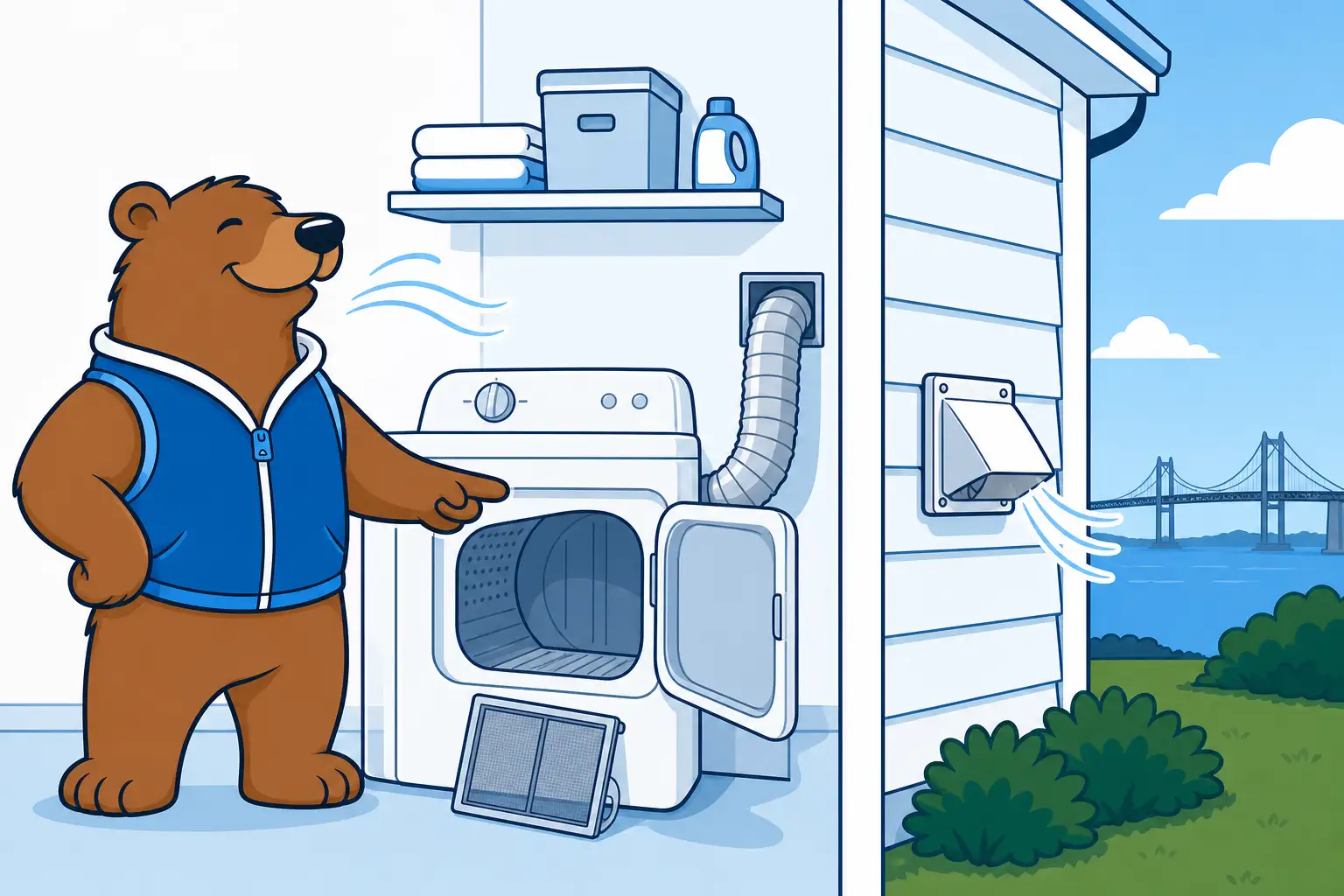
Cleaning the lint trap means removing lint from the removable screen after each load. Dryer vent cleaning clears the hidden exhaust path behind the dryer, through the wall, and out of the home. The lint trap is not the dryer vent. Long Island homeowners need both: daily lint screen cleaning and professional vent cleaning at least once a year.
Dryer Vent Cleaning vs Lint Trap: What Is the Short Answer?
Cleaning the dryer lint trap is the small job you do after every load. Professional dryer vent cleaning clears the hidden clothes dryer exhaust path behind the machine, through the wall duct, and out to the exterior vent hood or roof termination. You need both, because the lint screen catches only part of the lint before the rest moves deeper into the vent system.
A lint trap is the removable lint screen inside or near the dryer door. The dryer vent is the exhaust system after the dryer drum and blower wheel. That path can include the lint screen housing, transition duct, flex duct, rigid metal duct, semi-rigid aluminum duct, wall duct, elbows, booster fan, bird guard, vent flap or damper, and the final outside exit.
Here is the plain comparison:
| Question | Lint trap cleaning | Professional dryer vent cleaning |
|---|---|---|
| What it cleans | Removable lint screen and light lint near the opening | Transition duct, wall duct, exterior hood, roof termination when safely accessible, and airflow path |
| Who does it | Homeowner | Our technicians |
| How often | After every load | At least once a year, more often for long runs or heavy use |
| Tools | Hands, soft brush, careful vacuuming | Dryer vent brush, rotary brush, vacuum, HEPA vacuum at the work area when needed, and airflow check |
| Main result | Keeps fresh lint from choking the screen | Pulls packed lint and debris out of the exhaust so air leaves the home properly |
Where Does Dryer Lint Actually Go?
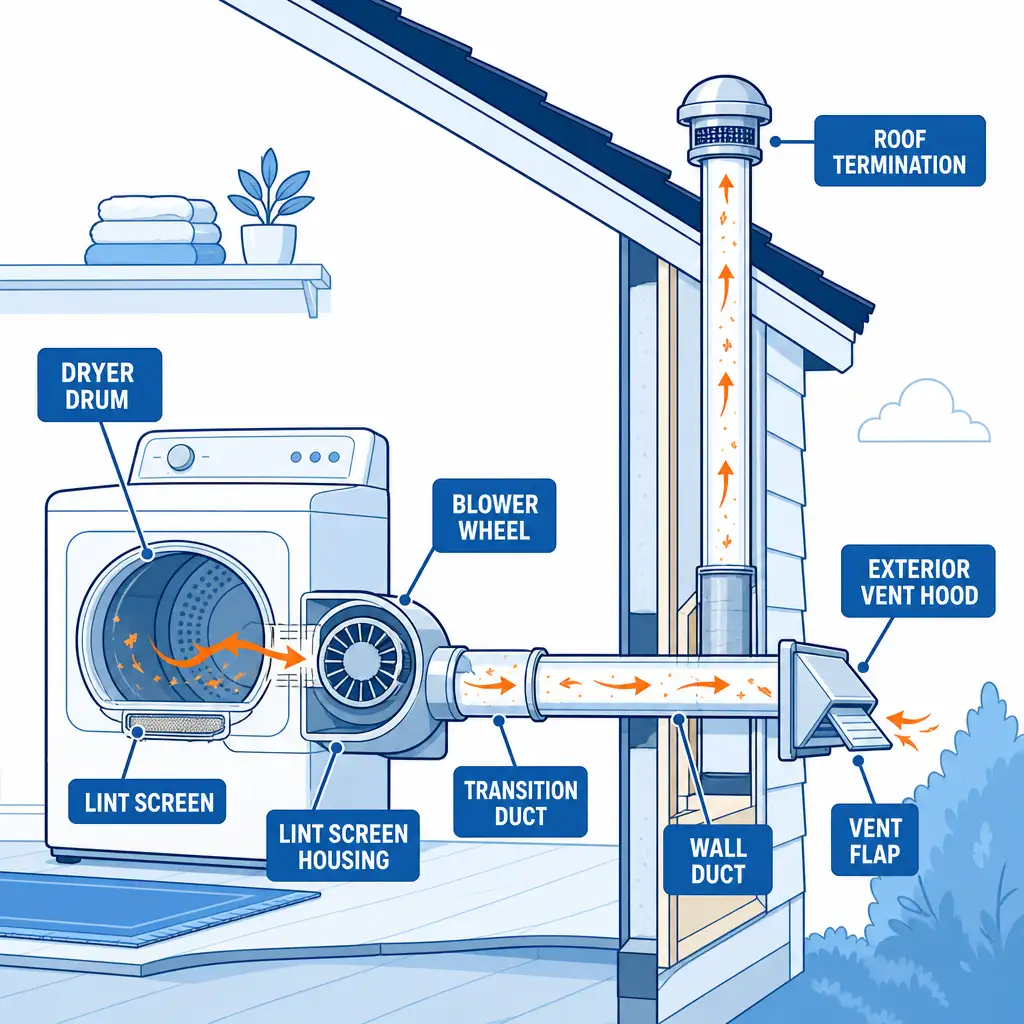
Lint starts in the dryer drum, gets pulled by the blower wheel, hits the dryer lint trap, and then continues into the exhaust if the screen does not catch it. From there, lint travels through the transition duct, the wall duct, and the exterior vent hood. Any bend, crushed section, bird guard, or roof termination catches more lint over time.
Most homeowners in Nassau County and Suffolk County only see the lint screen. That is why a clean screen can give a false sense of security. The wall duct may still hold packed lint, especially in a Cape with laundry in the basement, a Huntington home with a long sidewall run, or a Brookhaven house with a second-floor laundry closet.
The transition duct is the short connector behind the dryer. It should not be crushed, kinked, or made from unsafe material. Rigid metal duct and semi-rigid aluminum duct handle airflow better than flimsy flex duct, and manufacturer installation instructions matter.
The wall duct is the hidden part. It runs through a wall, ceiling, crawlspace, basement, or attic before reaching the outside. Codes such as International Residential Code IRC M1502 and the New York State Residential Code focus on dryer exhaust because lint, heat, moisture, and restricted airflow create real safety and performance problems.
What Should You Clean Yourself After Every Load?
Clean the lint screen after every load, and do not skip it because the screen looks only half full. That small habit keeps airflow open at the dryer face and stops loose lint from being pulled deeper into the exhaust. You can also wash residue off the lint screen when dryer sheets leave a waxy film.
Safe homeowner cleaning includes:
- Pulling lint off the lint screen after each cycle.
- Washing the screen with warm water and mild soap when water no longer passes through the mesh easily.
- Vacuuming the lint screen housing gently with a narrow attachment.
- Checking that the dryer is not pushed back hard against the transition duct.
- Looking outside to see whether the exterior vent flap opens while the dryer runs.
Do not ram a long brush deep into a hidden wall duct if you cannot control where it goes. DIY tools push lint into elbows, disconnect loose ducts, or jam debris into a roof termination. If you smell burning, see the vent flap stay closed, or find a bird nest at the hood, stop and schedule dryer vent cleaning.
Before our technicians arrive, clear the area around the dryer, move laundry baskets, and make sure we can reach the outside vent if it is on the side of the house. In condos, co-ops, and HOA communities, check access rules for roof areas, mechanical rooms, or shared exterior walls before the appointment.
What Does Professional Dryer Vent Cleaning Include?
Our professional dryer vent cleaning starts with inspection, then we clean the accessible lint screen housing, transition area, wall duct, and outside termination. We disconnect where it is safe and reachable, brush and vacuum the exhaust path, clear the exterior vent hood, confirm the vent flap or damper moves, run an airflow test, and clean the work area before we leave.
For a standard accessible setup, our technicians work from the dryer side and the outside exit. We use a dryer vent brush, rotary brush, vacuum collection, and a HEPA vacuum at the laundry area when it helps keep loose dust and lint contained. The goal is simple: lint comes out of the exhaust path, and air moves out of the house instead of backing up around the dryer.
We also look for problems cleaning alone does not fix. That includes crushed flex duct, disconnected ducts, missing vent covers, stuck dampers, bird guards packed with lint, and booster fans that need separate access. If we see unsafe installation conditions, we explain them plainly before doing extra work.
The NFPA clothes dryer safety guidance supports cleaning the lint filter and the dryer exhaust vent. Our position follows that guidance: clean the lint trap every load, and schedule professional dryer vent cleaning at least once a year. Homes with heavy laundry use, long duct runs, roof exits, or pets need attention more often.
Why Do Long Island Homes Have Different Dryer Vent Problems?
Long Island homes vary a lot, so dryer vents clog in different places. A ranch in Islip may have a short sidewall run. A Cape in Oyster Bay may push exhaust through a basement route with several elbows. A condo in Hempstead may exit through a shared exterior wall, while a North Shore home may terminate through the roof.
Long basement runs collect lint at elbows and low spots. Second-floor laundry rooms often use longer hidden wall ducts. South Shore homes near nesting areas can get bird debris at the hood or bird guard. Tight utility rooms make it easy for a dryer to crush the transition duct when it gets pushed back into place.
Roof terminations need extra care. The blockage is not always visible from the laundry room, and roof access depends on pitch, weather, height, and community rules. In a condo or HOA building, management may control roof or exterior access. We handle the accessible cleaning first, then write up the situation if roof access, a booster fan, or building approval changes the scope.
Gas dryer and electric dryer vents both need clear exhaust. A gas dryer also vents combustion byproducts through the clothes dryer exhaust, so restrictions deserve prompt attention. We do not treat a gas dryer as optional or casual, we make sure the exhaust path is open and the dryer area is left clean.
What Should You Expect on Pricing, Specials, Quotes, and Booking?
Our advertised special offer for dryer vent cleaning is $79 for a standard accessible dryer vent cleaning. That covers the core service: inspection, accessible lint trap housing and transition area cleaning, wall duct cleaning, exterior hood clearing, airflow check, and cleanup. If the setup is unusual, we explain the added work before moving ahead.
Situations that can legitimately change the scope include roof vents, very long runs, booster fans, disconnected ducts, bird nests, unsafe flex duct, blocked access, stacked laundry that cannot be moved safely, and condo or HOA access restrictions. Those are not hidden fees. They are different job conditions, and we put the quote in writing so you can review it at home before approving extra work.
You can see our current specials, call 631-900-2634 between 8 AM and 7 PM ET, or schedule service online anytime. Based on our 331-job scheduling review, the median time from booking to visit was 4 days, with an average of 5.5 days. In that same review, we completed 22 same-day visits and 46 next-day visits, and our arrival windows are 3 hours. The 8:00-11:00 AM window is the most requested.
We serve Long Island, including Nassau County and Suffolk County, with Queens and Brooklyn as secondary areas. If you are comparing service timing across Hempstead, Oyster Bay, Huntington, Islip, or Brookhaven, the main difference is access and route availability, not a different cleaning standard. You can also check the broader Long Island service areas we cover.
Which Should You Choose for Your Home?
This is not a tie, because lint trap cleaning and professional vent cleaning solve different problems. Choose daily lint trap cleaning for every load, no exceptions. Choose professional dryer vent cleaning when the hidden exhaust path needs to be cleared, and schedule it at least once a year for a normal Long Island home.
Choose lint trap cleaning yourself when:
- You just finished a load and need to clear the lint screen.
- The lint screen looks dusty, waxy, or coated from dryer sheets.
- You can safely vacuum the shallow lint screen housing without forcing debris deeper.
- You want to keep fresh lint from entering the exhaust path.
Choose our professional cleaning when:
- A full load takes more than one cycle.
- The laundry room gets hot or humid.
- Clothes or the dryer top feel hotter than normal.
- The exterior vent flap does not open strongly.
- You smell burning or see lint around the outside hood.
- Your vent exits through the roof, basement, garage wall, or a long hidden run.
- You have a booster fan, bird guard, condo vent, or second-floor laundry room.
If you are doing both, you are doing it right. The lint trap catches new lint at the dryer. Our service removes the buildup that already passed the screen and settled in the exhaust system.
What Signs Show the Vent Is Clogged Even If the Lint Trap Looks Clean?
A clean lint screen does not prove the vent is clear. Watch the dryer, the room, and the outside hood. Long dry times, heat around the machine, a weak exterior flap, lint collecting outside, and a burning smell all point to restricted clothes dryer exhaust. The blockage is usually past the screen, not on it.
Restricted exhaust makes the dryer work harder. Moist air stays in the drum longer, heat builds in the cabinet and laundry room, and the appliance runs longer than it should. With the lint gone, the dryer exhaust path releases heat and moisture outdoors the way it was designed to.
NFPA, the U.S. Fire Administration, and the Consumer Product Safety Commission all treat dryer exhaust maintenance as a real safety issue. We do not use scare tactics, but we do take lint seriously. Lint is dry fuel, and a clogged exhaust holds that fuel near heat and moving air.
If you want to compare this with other home-safety services, keep the categories separate. Dryer vent cleaning clears the clothes dryer exhaust. It is not HVAC duct cleaning, and it is not chimney sweeping.
How Is This Different From Air Duct Cleaning or Chimney Sweeping?
Dryer vent cleaning clears the exhaust path from one appliance. Air duct cleaning clears HVAC supply and return ducts. Chimney sweeping removes soot and creosote from a fireplace or heating flue after an inspection shows buildup. The tools, safety risks, pricing, and inspection standards are different, so the services should not be bundled together in your mind.
For HVAC ducts, the EPA says cleaning should be based on conditions such as visible mold, pests, or excessive debris, not a fixed calendar schedule. That is why we inspect first and clean when the system shows it needs cleaning. If you are comparing HVAC work, read our guide to the cost of air duct cleaning in Nassau County or our air duct cleaning service page.
Chimneys are a separate safety category. Creosote forms from wood smoke, not dryer lint, and chimney inspection follows different standards. If your concern is a fireplace, stove, or flue, start with our chimney cleaning page or read about what creosote is and why it is dangerous.
The simplest rule is this: clean the lint screen yourself every load, have the dryer exhaust professionally cleaned at least once a year, inspect HVAC ducts by condition, and inspect chimneys annually. That keeps each system on the right maintenance plan instead of treating every vent in the house as the same thing.
FAQ
Why does my dryer still need two cycles after I clean the lint screen?
The lint screen is only the first stop in the airflow path. If a load still takes two cycles, lint is usually packed deeper in the transition duct, wall duct, exterior hood, or roof termination. The dryer is heating, but moist air is not leaving fast enough. Professional cleaning removes that hidden buildup so exhaust moves outdoors properly.
Is a roof termination cleaned the same way as a sidewall vent?
No. A sidewall vent is usually reached from the laundry area and the exterior wall. A roof termination may require different tools, roof access, and safe weather conditions. We clean what is safely accessible, check airflow, and explain any access limits before extra work. Condo or HOA rules can also affect roof access.
Does a gas dryer need more urgent vent attention than an electric dryer?
Both need a clear exhaust path, but a gas dryer deserves special attention because the dryer exhaust also carries combustion byproducts out of the home. If a gas dryer runs hot, smells unusual, or dries slowly, do not keep running extra cycles. Clear exhaust is part of safe operation for both gas and electric machines.
Can a bird guard cause a dryer vent clog?
Yes. A bird guard protects the opening, but lint can collect on the guard and choke the exit point. We see this most on exterior hoods exposed to nesting activity or windblown debris. The dryer may look fine inside while the outside flap barely moves. Clearing the exit restores the final release point for exhaust.
Where is DIY dryer vent cleaning most likely to go wrong?
DIY cleaning goes wrong when a homeowner pushes a brush deep into a hidden duct without seeing the elbows, length, or connections. The brush can pack lint tighter, separate a loose duct, or miss a roof termination. Cleaning the lint screen, shallow housing, and visible hose area is reasonable. Long runs, booster fans, and roof exits belong with a technician.
Frequently Asked Questions
The lint screen is only the first stop in the airflow path. If a load still takes two cycles, lint is usually packed deeper in the transition duct, wall duct, exterior hood, or roof termination. The dryer is heating, but moist air is not leaving fast enough. Professional cleaning removes that hidden buildup so exhaust moves outdoors properly.
Written by
MikeField Technician
Mike is a field technician at FreshBear. He cleans dryer vents, air ducts, and chimneys in Long Island homes, so the guides under his name come from the jobs he runs: what a vent line actually looks like when it comes apart, and what he finds behind the dryer. Everything published under his byline is checked against that first-hand experience.