
What Is Creosote and Why Is Creosote Buildup Dangerous?
The Short Answer
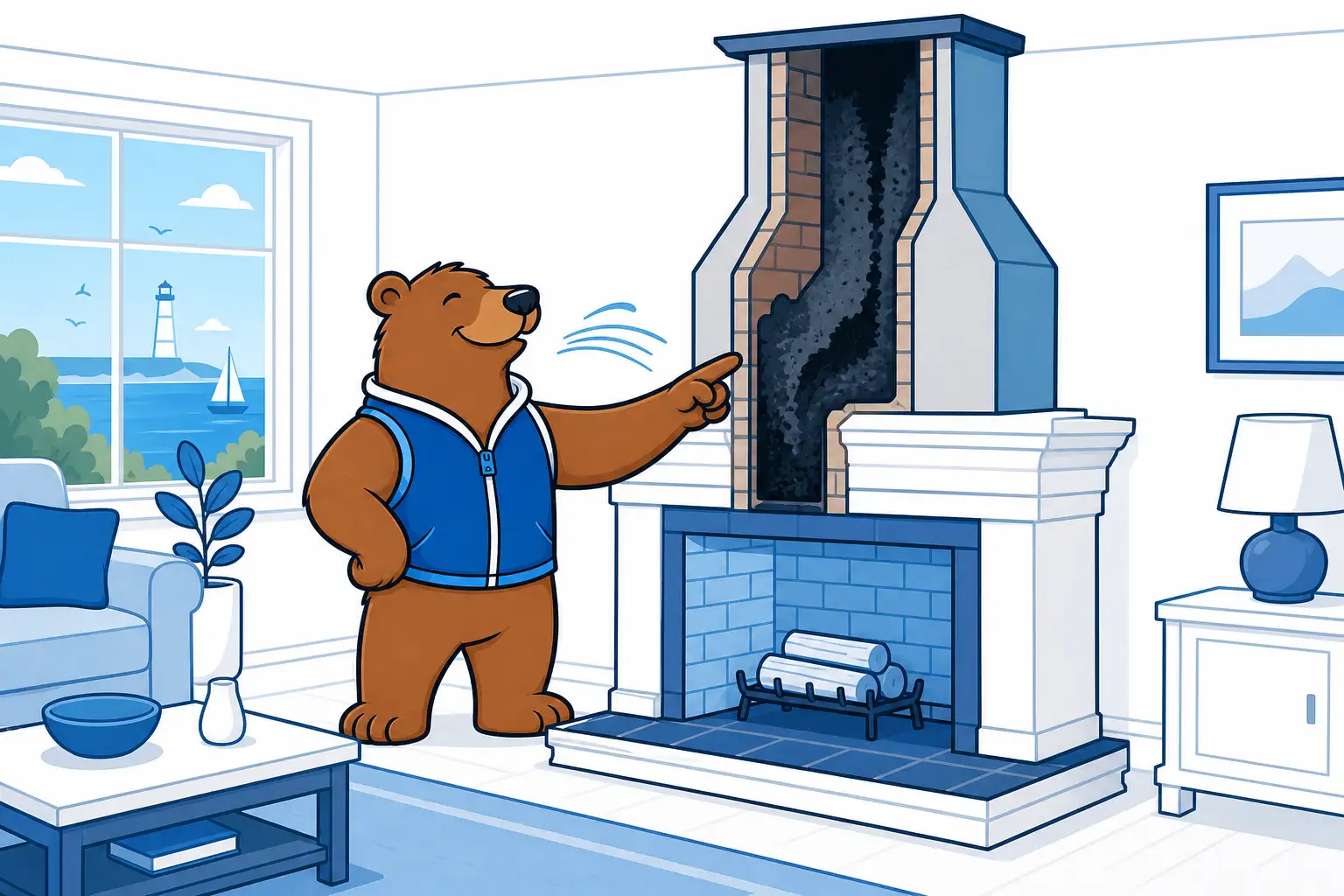
Creosote buildup is a sticky, tar-like residue left when wood smoke cools inside a chimney. It is more flammable and harder to remove than ordinary soot. In a fireplace or wood stove, it narrows the flue, weakens draft, feeds chimney fires, and lets smoke or carbon monoxide spill back into the home if the chimney is not inspected and cleaned when needed.
What is creosote buildup in plain English?
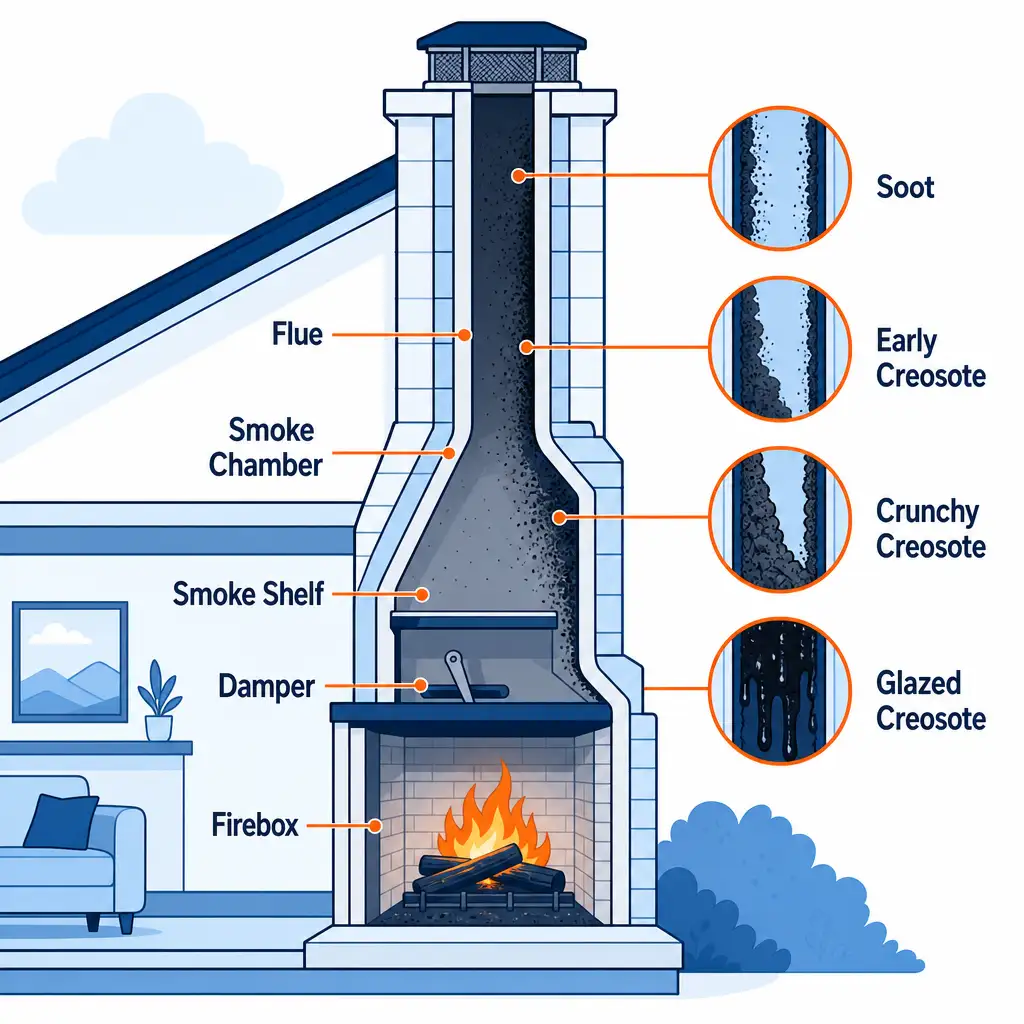
Creosote is the sticky, tar-like residue left after wood smoke cools inside the chimney. Soot is mostly dry black powder. Creosote starts soft or flaky, then turns crunchy, tar-like, or shiny as it hardens. In a wood-burning fireplace, wood stove insert, prefab fireplace, or masonry chimney, it collects inside the flue, smoke chamber, smoke shelf, and damper area.
Think of soot as the fine black dust left by burning. It brushes off more easily and often sits in the firebox or near the damper. Creosote is different because it is heavier, stickier, and more combustible.
Homeowners often hear chimney pros describe stages of creosote. The exact language varies, but the practical difference is easy to understand:
| Deposit type | What it looks like | What it means |
|---|---|---|
| Soot | Dry black powder | Normal burn residue, still needs removal when buildup is present |
| Early creosote | Flaky or dusty black coating | Brushable in many chimneys during a standard sweep |
| Crunchy creosote | Hard, puffy, tar-like chunks | Heavier buildup, often from smoky or cool fires |
| Glazed creosote | Shiny, hard black coating | Bonded deposit that often needs special treatment or a separate repair discussion |
A clean firebox does not prove the whole chimney is clean. The most important deposits often sit above your line of sight, especially in the smoke chamber, smoke shelf, bends, and upper flue.
Why is creosote dangerous in a chimney?
Creosote is dangerous because it adds burnable fuel inside the chimney and shrinks the path smoke uses to leave the house. A chimney fire starts when that residue ignites. Heavy deposits also weaken draft, push smoke back toward the room, hide liner damage, and raise the risk of carbon monoxide entering living space instead of leaving through the flue.
The Chimney Safety Institute of America warns that creosote is a major chimney-fire concern and supports regular inspection for fire prevention. Our position follows NFPA 211: inspect the chimney every year, then sweep when the inspection finds buildup. You can read CSIA guidance on preventing chimney fires for the same core point.
The risk is not only fire. A blocked or restricted flue changes the way the whole system drafts. Smoke belongs above the roofline, not in the living room. When the flue narrows, the damper sticks, or debris blocks the chimney cap, smoke and carbon monoxide have less room to exit.
Creosote also hides damage. A terra-cotta flue liner with cracks, gaps, or missing mortar joints needs attention because heat and gases can reach areas that were not built to handle them. A stainless steel liner also needs inspection if staining, warping, corrosion, or poor connections show up.
What causes creosote to build up faster?
Creosote forms faster when smoke is cool, wet, or slow moving. Green wood, damp firewood, low-temperature fires, closed dampers, oversized fireboxes, restricted air, and long idle periods all leave more unburned particles in the flue. A hot, steady fire with seasoned firewood sends less residue into the chimney than a smoky, smoldering fire.
The fuel matters. Seasoned firewood burns cleaner because it has had time to dry. Green wood holds more moisture, so more heat goes into boiling water out of the log instead of moving smoke up the flue. Kiln-dried wood is often drier than ordinary stacked firewood, but it still needs proper storage so it does not absorb rain or ground moisture.
Airflow matters too. If the damper is not fully open, the chimney cap is clogged, the smoke shelf is loaded with debris, or the flue is cold, draft weakens. Weak draft means smoke hangs around longer, cools faster, and leaves more residue behind.
Appliance type changes the pattern. A traditional open wood-burning fireplace sends a lot of warm room air up the chimney. A wood stove insert burns differently and often sends cooler exhaust into the liner when operated too low. A prefab fireplace has manufacturer limits that must be respected, so aggressive scraping or wrong brushes can damage the system.
Why do Long Island homes see creosote problems?
Long Island homes see more chimney trouble when older masonry, damp coastal weather, and occasional fireplace use meet in the same flue. Long Island coastal salt air does not create creosote by itself, but moisture intrusion cools chimney walls and helps deposits stay sticky. Nor'easters, missing caps, cracked crowns, and old terra-cotta liners make that pattern more common.
We service homes across Nassau County and Suffolk County, from Hempstead and Oyster Bay to Huntington, Smithtown, Brookhaven, and Babylon. Many older Long Island colonials, capes, ranches, and split-level homes have masonry chimneys that were built decades ago. Some still have original terra-cotta flue liner sections. Others have a stainless steel liner added after a heating appliance change.
The North Shore and South Shore both bring moisture challenges, but in different ways. North Shore homes often deal with older masonry and shaded roofs that stay damp. South Shore homes see salt air, wind-driven rain, storm exposure, and flashing failures after rough weather.
Moisture intrusion matters because a damp chimney stays colder. Cold chimney walls cool smoke before it exits. That creates more condensation and sticky deposits. A cracked chimney crown, missing chimney cap, loose chimney flashing, or open mortar joints turn a small fireplace habit into a bigger chimney problem.
Occasional-use fireplaces are another local issue. Many Long Island homeowners light a few fires around holidays, storms, or cold weekends, then let the fireplace sit. Short fires often never heat the flue fully. The chimney starts cold, smoke condenses quickly, and residue remains even if the fireplace only gets used a handful of times.
What signs tell you your chimney may need an inspection?
Common warning signs include a strong smoky or tar-like smell, black flakes falling into the firebox, poor draft, smoke rolling into the room, stains above the fireplace opening, or a shiny black coating visible near the damper. Some deposits are higher in the flue, so a clean-looking firebox does not prove the chimney is clean.
Use your senses, but do not rely on them alone. A fireplace can smell normal and still have heavy deposits above the smoke chamber. A damper can open smoothly while the upper flue is restricted. A chimney cap can look fine from the yard while the screen is clogged with soot, leaves, or nesting material.
Watch for these signs before your next fire:
- A campfire smell that gets stronger on humid days
- Black flakes, chips, or tar-like pieces in the firebox
- Smoke stains on brick, stone, mantel surfaces, or the fireplace surround
- Slow-starting draft, especially on cold or windy days
- Smoke spilling out when you open the glass doors or screen
- A damper that sticks or looks coated
- White staining on outside masonry, which points to moisture movement
A carbon monoxide alarm is not a chimney inspection tool. It is a safety device. If it sounds, leave the home and follow the alarm manufacturer's emergency instructions before you call for service.
When should you stop using the fireplace until it is inspected?
You should stop using the fireplace if smoke backs into the room, the odor turns sharp or tar-like, flames or loud rushing sounds appear in the flue, the carbon monoxide alarm sounds, or you see thick shiny deposits near the damper. Let the system cool, do not add another fire, and schedule inspection before the next burn.
Also stop if you notice storm damage. After nor'easters or strong coastal wind, check from the ground for a missing chimney cap, shifted chase cover, cracked crown, loose brick, or damaged chimney flashing. Do not climb the roof for a closer look. If water entered the firebox or you see rust on the damper, the chimney needs inspection before use.
Stop using the fireplace after any suspected chimney fire, even if the fire seems to go out. Signs include a loud rushing sound, sudden intense heat, dense smoke, cracked flue tiles, or puffy black chunks falling into the firebox. The next fire can find the same weak spot faster.
Can you check or remove creosote yourself?
You can do simple checks from inside the room, but you should not treat chimney cleaning like a normal household chore. Look for odor, flakes, visible black coating, and a damper that does not open cleanly. Leave roof access, powered sweeping, liner evaluation, glazed-deposit treatment, and camera inspection to trained chimney technicians with the right tools and protection.
Safe homeowner checks are limited. With the fireplace cold, you can open the damper, shine a flashlight upward, look for loose debris, and note odor or staining. You can also confirm the hearth is clear and that no boxes, rugs, or furniture sit too close to the opening.
Do not scrape the flue liner with metal tools. Do not use a shop vacuum for chimney soot. Do not remove a chimney cap from the roof. Do not burn chemical logs as a substitute for inspection. Some products change creosote texture, but they do not replace brushing, containment, debris removal, and liner evaluation.
DIY work is especially risky on prefab fireplaces and lined systems. The wrong brush can damage a liner. Aggressive tools can loosen mortar, scratch stainless steel, or miss dangerous deposits in the smoke chamber. A professional chimney inspection protects the system before cleaning starts.
What does our professional chimney cleaning include?
Our standard chimney cleaning visit starts with inspection, because sweeping only makes sense after we see the chimney condition. We protect the work area, open access points, brush and vacuum the chimney system, remove loose soot and brushable creosote, and review visible defects. If we find damage, water entry, blockage, or glazed material, we pause and explain the next step.
A proper visit is not just a brush up the flue. Our technicians look at the firebox, damper, smoke shelf, smoke chamber, flue opening, visible liner, chimney cap, crown, and flashing from safe access points. We check the draft path so smoke has a clear route from the fireplace to the top of the chimney.
During chimney cleaning, our crews set containment around the fireplace, use chimney brushes sized for the system, control dust with vacuum equipment, remove debris from the firebox area, and clean the accessible smoke path. Loose soot and brushable deposits come out of the chimney instead of staying in the flue as fire fuel.
After cleaning, we explain what we found in plain language. If the chimney is ready for normal use, we say so. If we find a cracked crown, missing cap, damaged terra-cotta flue liner, deteriorated smoke chamber, rusted damper, loose flashing, or signs of moisture intrusion, we show you the concern and discuss the quote before repair work starts.
You may hear terms from NFPA 211, CSIA, or the National Chimney Sweep Guild. The homeowner version is simple: inspect every year, sweep when deposits are present, and quote repair work before doing it.
Does a basic cleaning remove glazed creosote?
A basic chimney sweep removes soot, ash, and brushable creosote from the parts of the chimney we can safely access. Glazed creosote is different. It is a hard, shiny, tar-like coating that bonds to the liner and usually needs special treatment, repeated applications, mechanical removal, or a repair conversation before anyone promises a clean flue.
This is where honesty matters. If a chimney has glazed material, a normal brush does not turn it into a clean liner in one pass. Pushing harder is not the answer. The wrong approach damages terra-cotta clay, stainless steel, or prefab components.
We separate brushable cleaning from specialty treatment. If our technician finds glazed creosote, we explain what we see and what the next safe option is. That might mean a written quote for treatment, further inspection, liner repair, or replacement discussion, depending on the condition of the flue.
A basic cleaning also does not include rebuilding a crown, replacing a chimney cap, repairing chimney flashing, relining a flue, removing heavy animal nesting, fixing water damage, or correcting code issues. Repairs involving liners, clearances, or appliance connections need review against manufacturer instructions, NFPA 211, and the New York State Residential Code. Local permit requirements can vary by town or village, so that part should be checked for the specific property.
How do quotes, specials, and extra work stay clear?
We keep chimney pricing clear by separating cleaning from repairs and by getting approval before extra work begins. We do not add unapproved chimney work to the bill. A special offer covers the service scope shown on the offer, while caps, liners, crowns, flashing, animal debris, water damage, and glazed-deposit treatment get reviewed and quoted separately.
We do not list a final chimney price inside this article because chimney work depends on the actual condition of the flue, fireplace, liner, cap, and masonry. If you want pricing context before calling, use our Chimney Sweep Cost Long Island: Price Guide instead of guessing from a generic national range.
If we have a seasonal offer running, the current specials page explains what the offer covers. A special should not create confusion. It should tell you the service scope, what is included, and what sits outside the offer.
Written quotes matter when the job moves beyond basic cleaning. If we find glazed creosote, liner damage, a missing cap, cracked crown, failed flashing, or water entry, you can ask for a written quote and review it at home before approving work. We would rather pause than pressure you into a repair you have not had time to understand.
We use the same honesty rule across services. The EPA says air duct cleaning should be based on actual conditions, and we apply the same inspect-first thinking to chimneys: inspect every year, clean when the inspection shows buildup, and quote repairs before starting them.
How do you book creosote cleaning on Long Island?
You can schedule by calling 631-900-2634 from 8 AM to 7 PM ET, or use our book an appointment form whenever it works for you. Our calendar often runs several days ahead, with some same-day and next-day openings. Before fireplace season, we recommend booking before your first planned burn, not after the first smoky night.
Based on our completed jobs since May 2026, the average booking lead time was 5.6 days, with 25 same-day and 57 next-day visits completed. Our arrival windows are 3 hours, and the 8:00 to 11:00 AM window is the most requested based on our completed jobs.
For fall and early winter, give yourself more room. The first cold week, a holiday weekend, or a coastal storm can tighten the schedule across Nassau County, Suffolk County, Queens, and Brooklyn. If you know you want to use the fireplace for Thanksgiving, winter holidays, or a planned family visit, book before that week arrives.
Before we arrive, let the fireplace cool completely. Remove fragile items from the mantel and hearth. Clear a path from the entry door to the fireplace. Keep pets secure. Tell us if you smelled smoke, saw water, had a carbon monoxide alarm, noticed storm damage, or recently moved into the home.
If you have a wood stove insert, prefab fireplace, or newer stainless steel liner, share that during booking. If you have photos of the fireplace, cap, crown, or visible staining, keep them ready. They help us understand the system before the visit, but the final recommendation still comes from the onsite inspection.
What do homeowners ask us before booking?
Homeowners usually ask about timing, scope, pricing, online booking, and written quotes before they schedule. Those are fair questions. A chimney visit should not feel mysterious. We explain what the cleaning includes, what the inspection finds, what sits outside a basic sweep, and what needs homeowner approval before extra work begins.
How far in advance do I need to book?
Plan on booking several days ahead when possible. Based on our completed jobs, scheduling has averaged 5.6 days, and we have still completed same-day and next-day visits when the route allowed it.
What exactly is included in the cleaning?
A standard visit includes inspection, containment, brushing, vacuum control, removal of loose soot and brushable deposits, and a plain explanation of visible chimney conditions. Repairs, glazed treatment, caps, liners, and water-entry fixes are separate conversations.
Are there hidden fees on top of the advertised chimney cleaning price?
We do not add unapproved chimney work to the bill. If the chimney needs repairs or specialty treatment, we explain the issue and quote it separately.
Can I book online instead of talking on the phone?
Yes. Use our online appointment form through the contact page at any hour, or call 631-900-2634 from 8 AM to 7 PM ET if you want to discuss fireplace symptoms first.
Can I get a written quote to discuss at home first?
Yes. If inspection finds repair work, glazed creosote treatment, liner issues, cap work, crown repair, or flashing work, you can request a written quote before approving it.
Frequently Asked Questions
Plan on booking several days ahead when possible. Based on our completed jobs, scheduling has averaged 5.6 days, and we have completed same-day and next-day visits when openings were available.
Written by
FreshBear Field TeamField Technicians
The FreshBear field team handles air duct, dryer vent, and chimney cleaning across Long Island, Queens, and Brooklyn. Every guide is based on what our technicians actually see in local homes, reviewed for accuracy before publishing.