
Chimney Sweep Cost Long Island: Price Guide
The Short Answer
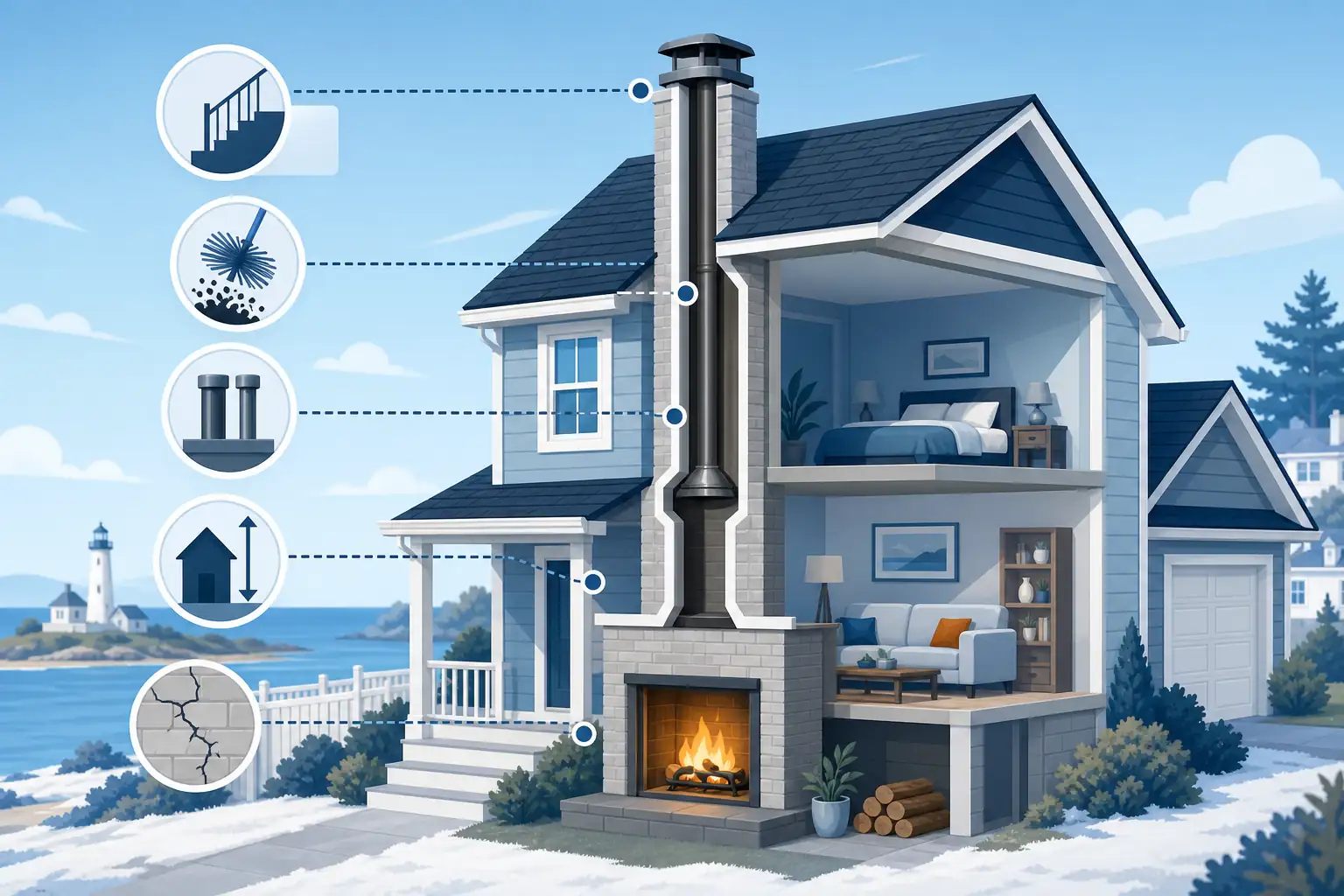
For chimney sweep cost Long Island homeowners can plan around, we start with an inspection instead of publishing a flat chimney price. Access, buildup, flue type, chimney height, and safety issues all move the quote. We inspect first, explain the findings, and give you a written price before work starts.
For chimney sweep cost Long Island homeowners can plan around, we start with an inspection instead of publishing a flat chimney price. Access, buildup, flue type, chimney height, and safety issues all move the quote. We inspect first, explain the findings, and give you a written price before work starts.
| Price factor | Why it changes the quote | Long Island examples we look for |
|---|---|---|
| Amount of soot or creosote | Heavier buildup takes more labor and may require a different cleaning approach | Wood-burning fireplaces used through winter, especially in older Nassau County capes and ranches |
| Chimney height and roof access | Steeper roofs, taller chimneys, and tight side yards can make setup harder | Colonials and split-level homes in Suffolk County with higher rooflines |
| Flue count and appliance setup | More than one flue means more inspection time and possibly more cleaning | Fireplace flue plus furnace or boiler flue in homes converted from oil to gas |
| Interior access | Finished basements, tight hearth areas, and built-ins can slow safe setup and protection | Finished basements, crawlspaces, and renovated living rooms across Long Island |
| Moisture or damage signs | Moisture, rust, loose masonry, or odor may require inspection before any sweeping decision | South Shore humidity and salt air can speed corrosion around caps and metal parts |
Why don't we publish a flat chimney sweep price yet?
We do not publish a flat chimney sweep price because we do not have enough completed chimney jobs in our closed job data to support a real price range. We would rather say that clearly than invent a number. For chimney work, our process is to inspect first, explain what we see, and provide a written quote before cleaning begins.
That may feel less simple than a coupon price, but it is more honest. A chimney is not like a short, easy dryer vent where one fixed price can be clear. Chimneys vary by fuel type, flue size, roof access, age, and how much buildup is present.
We do publish pricing where our completed jobs support it. For example, our completed whole-home air duct jobs usually land between roughly $195 and $650, with a median around $400, based on our completed jobs. Dryer vent cleaning is $79. Chimney pricing is different because we do not yet have enough closed chimney job data to publish a responsible range.
If you want us to look at your fireplace, flue, or venting setup, you can schedule a chimney inspection or chimney cleaning. We will not ask you to approve cleaning without first explaining what we found.
What moves the chimney sweep cost on Long Island?
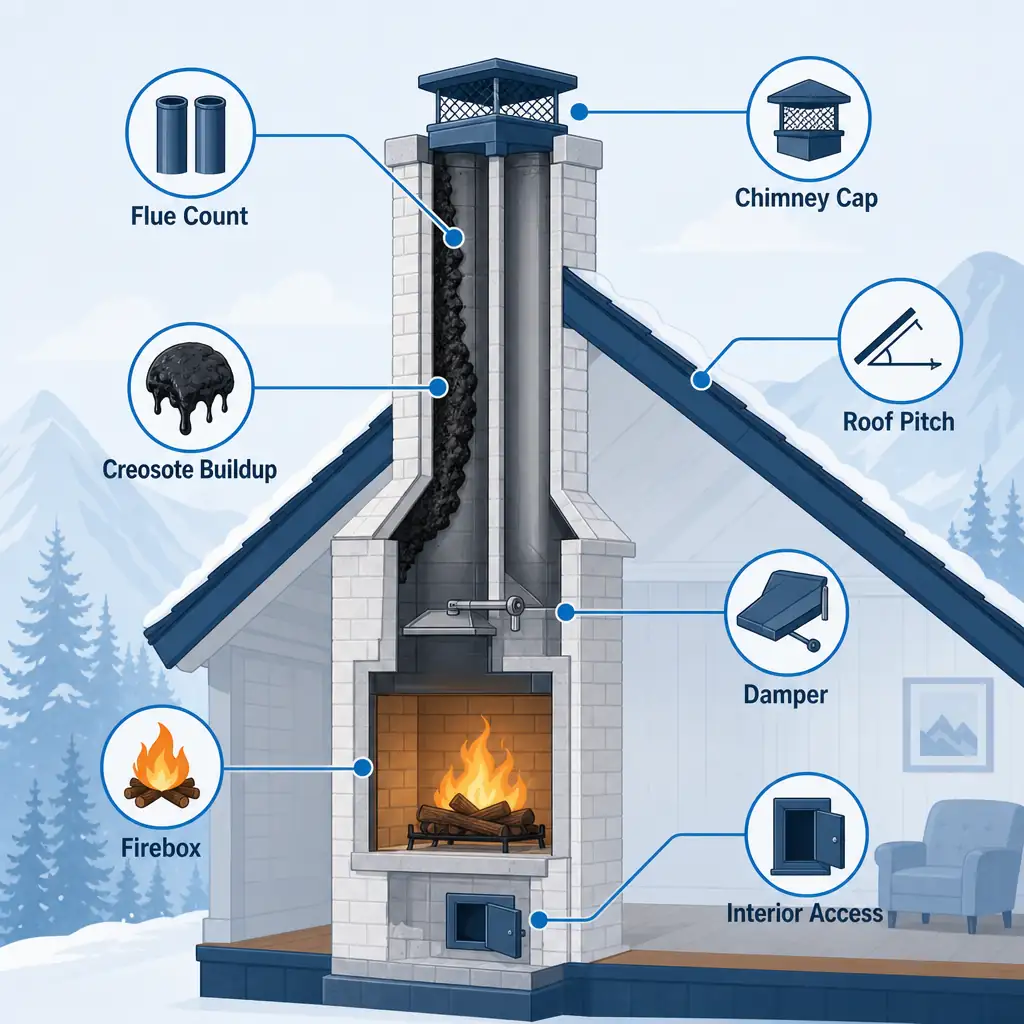
The main things that move the cost are buildup, access, chimney height, flue count, and condition. On Long Island, home age and layout matter too. A Levitt-era ranch in Nassau County may be very different from a taller Suffolk County colonial, and a renovated home may have changed venting or patched masonry from past projects.
How does buildup affect the quote?
A light layer of soot is very different from heavy creosote. Creosote can be sticky, flaky, glazed, or layered, and the approach depends on what is present. The Chimney Safety Institute of America explains that creosote buildup is one of the key concerns in chimney fire prevention, which is why inspection matters before we talk about sweeping scope.
We avoid scare tactics. Not every dark chimney means an emergency, and not every fireplace needs the same service. Our technicians look at the flue, smoke chamber area, damper area, and visible masonry before explaining the next step.
The Chimney Safety Institute of America guidance on preventing chimney fires is a useful homeowner resource because it explains why creosote and annual inspection habits matter. We follow the same practical idea, inspect the system, then clean when the inspection shows buildup that should be removed.
Why does access matter so much?
Access changes labor. Some chimneys can be inspected and swept with simple, safe access from the fireplace and roof area. Others require more careful setup because of steep rooflines, tight side yards, high chimneys, fragile caps, finished rooms, or hard-to-protect hearth areas.
Across Long Island, we see many homes with finished basements, additions, and remodels. These changes can make appliance venting less obvious. A home that converted from oil to gas may also have different venting details than it had when it was built.
Coastal conditions matter too. South Shore salt air and humidity can speed corrosion on caps, dampers, and metal chimney parts. If our technicians see rust, loose components, or moisture staining, we may need to slow down and explain the condition before any cleaning decision.
Does the number of flues change the price?
Yes, it can. One chimney structure can contain more than one flue. A fireplace, boiler, furnace, water heater, or other appliance may each use a separate venting path, depending on the home.
We do not assume that one visible chimney equals one simple cleaning. Our technicians identify what each flue serves and what can be safely inspected. If there is more than one flue involved, that can change the scope and the quote.
This is one reason phone estimates can be limited. You may know you have one fireplace, but there may be another flue tied to heating equipment. We would rather verify than quote low and change the price later.
What exactly is included in the cleaning?
A proper chimney visit starts with inspection, setup, and a clear explanation of the scope before cleaning. If cleaning is appropriate, our technicians focus on removing accessible soot and buildup from the chimney system without making a mess in the home. If we find damage, moisture, blockage, or unsafe conditions, we explain that before moving forward.
For a typical fireplace-related visit, our crew may check the firebox area, damper area, smoke chamber, and accessible flue path. We also look for visible signs of moisture, cracked masonry, missing caps, animal nesting, or heavy buildup. The exact scope depends on the system and what we can safely access.
We use protective setup inside the home because soot travels easily. That matters in Long Island homes with renovated living rooms, light-colored stone surrounds, built-ins, or finished basements near utility venting. Clean work habits are part of the job, not an upsell.
If the inspection shows the chimney should not be swept until another issue is addressed, we will say so. For example, a blockage, damaged liner, loose masonry, or active moisture problem may need another step. We do not want to push a cleaning that does not solve the real issue.
Are there hidden fees on top of the advertised price?
We do not advertise a flat chimney sweep price and then add surprise fees after arrival. Since chimney conditions vary, we inspect first and give a written quote before the work begins. If the scope changes because of something we could not see at first, we explain it and get approval before doing extra work.
Be careful with very low chimney ads that promise a simple number before anyone sees the system. A $99 special may only cover a narrow service, a single easy flue, or a basic inspection. The problem is not a special by itself. The problem is when the ad does not explain what is excluded.
Here are fair questions to ask before booking any chimney service:
- Does the price include inspection first?
- Does it cover one flue or more than one flue?
- What happens if there is heavy creosote?
- Is roof access included if needed?
- Will I get a written quote before cleaning starts?
- What conditions would stop the cleaning?
We are comfortable with those questions. Clear scope protects you and protects our technicians from rushing into work that should be evaluated first.
How does chimney pricing compare with our other home services?
We publish prices for services where our data supports it, and we avoid prices where it does not. Dryer vent cleaning is $79. Air duct cleaning has a $97 whole-home basic cleaning anchor, and most completed whole-home air duct jobs land between roughly $195 and $650, with a median around $400, based on our completed jobs.
That difference is not a sales trick. It is a data issue. We have completed job pricing for air ducts and dryer vents, but not enough completed chimney jobs to give a responsible chimney price range yet.
If you are comparing home maintenance costs, our dryer vent cleaning page explains the $79 dryer vent service. Dryer vents are different from chimneys because the NFPA recommends cleaning the dryer exhaust vent at least once a year, and many dryer runs are easier to define before arrival.
For HVAC systems, we take an inspect-first approach too. The EPA says air duct cleaning should be based on conditions such as visible mold, pests, or excessive debris, not a fixed timer. You can read the EPA's homeowner guidance on whether you should have the air ducts in your home cleaned.
If you are pricing duct work in the area, our related guide to the cost of air duct cleaning in Nassau County breaks down how vent count, returns, condition, and access affect HVAC cleaning quotes. The same principle applies to chimneys, the system has to be seen before a fair quote makes sense.
How far in advance do I need to book?
Most visits are booked about 4 to 5 days out, though same-day and next-day slots are often available. Based on our recent scheduling data, 68 of the last 331 jobs ran same-day or next-day. Arrival windows are 3 hours, and the 8:00 to 11:00 AM window is usually the most requested.
Fall and early winter can be busier for chimney calls because homeowners start using fireplaces again. If you want a morning appointment, it is smart to book earlier. If you are flexible on the arrival window, we can often find a sooner opening.
You can call 631-900-2634 from 8 AM to 7 PM ET, or use our online form to book an appointment at any time. Online booking is helpful if you want to upload notes, ask for a written quote, or schedule without a phone call.
We serve Long Island, including Nassau County and Suffolk County, along with Queens and Brooklyn. You can also review our service areas if you are not sure whether your town is in range.
Can I get a written quote to discuss at home first?
Yes. You can ask for a written quote before approving chimney cleaning, and you can take time to discuss it at home. We do not want you to feel pressured while a technician is standing in the living room. A clear quote should explain the scope, what is included, and what is not included.
This matters for older homes and renovated homes. A Long Island cape, ranch, colonial, or split-level may have had fireplaces, heating equipment, liners, caps, or venting changed over time. If something looks different than expected, we want you to understand the finding before deciding.
A good quote should also separate cleaning from repair recommendations. Sweeping removes buildup. It does not rebuild masonry, replace a liner, or fix water entry. If our technicians see a concern outside the cleaning scope, we explain it plainly instead of burying it inside a vague charge.
If budget is a concern, say so. We can explain what is needed now, what can wait, and what should be evaluated by the right specialist if it falls outside our chimney cleaning scope. Honest service means helping you make a safe, informed decision, not pushing the largest ticket.
What should I do before the appointment?
The best preparation is simple. Stop using the fireplace before the visit, clear the hearth area, and move fragile items away from the work space. If the chimney connects to heating equipment, make sure our technicians can reach the utility area, basement, or crawlspace access point.
Please tell us about any recent smoke backup, odor, water stains, animal noises, falling debris, or heating system changes. These details help us inspect the right areas first. If your home was recently renovated, tell us what changed, especially around the fireplace, roof, heating system, or chimney chase.
You do not need to diagnose the issue yourself. Photos can help, but they do not replace an in-person inspection. The goal is to give our technicians enough context to look carefully and quote the right scope.
What is the bottom line on chimney sweep cost Long Island homeowners should know?
The bottom line is that we will not guess at chimney pricing just to make a cost guide look complete. Chimney sweep cost on Long Island depends on the actual system, including buildup, access, flue count, height, moisture, and condition. A written quote after inspection is the fairest way to price the work.
If you see a very low ad, ask what it includes. If you see a high quote, ask what findings support it. The right answer should be specific, not vague.
We are ready to inspect, explain, and quote the work clearly. Call 631-900-2634 between 8 AM and 7 PM ET, or schedule service online 24/7.
Frequently Asked Questions
Yes. We can provide a written quote after inspection so you can review the scope at home. We want the price, included work, and any limits to be clear before you approve cleaning.
Written by
FreshBear Field TeamField Technicians
The FreshBear field team handles air duct, dryer vent, and chimney cleaning across Long Island, Queens, and Brooklyn. Every guide is based on what our technicians actually see in local homes, reviewed for accuracy before publishing.
Keep Reading
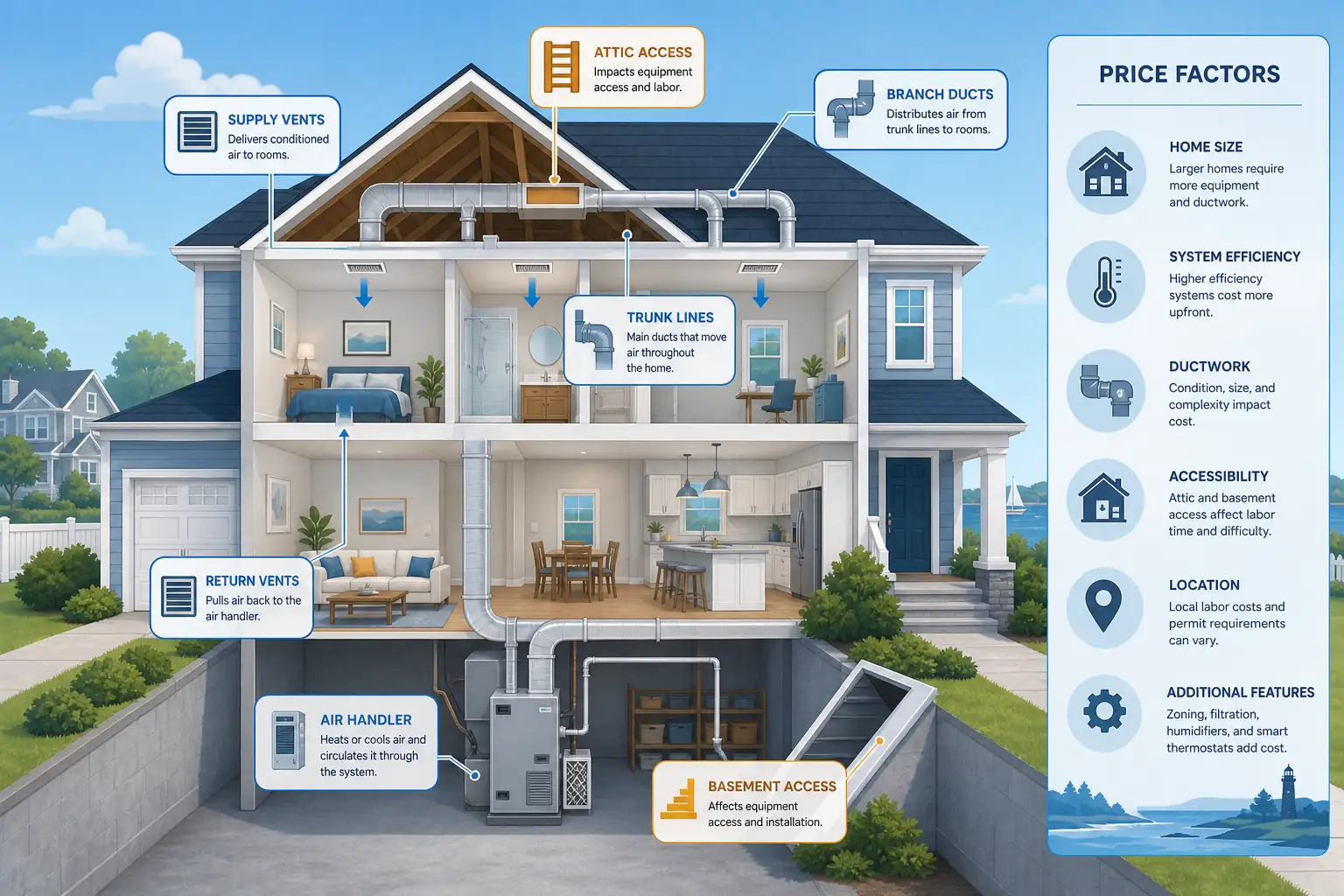
Air Duct Cleaning Cost Nassau County Guide
See what air duct cleaning costs in Nassau County, what our $97 basic offer covers, and which local home factors can move the final price.