
Chimney Cap Long Island Guide: Why Coastal Homes Need One
The Short Answer
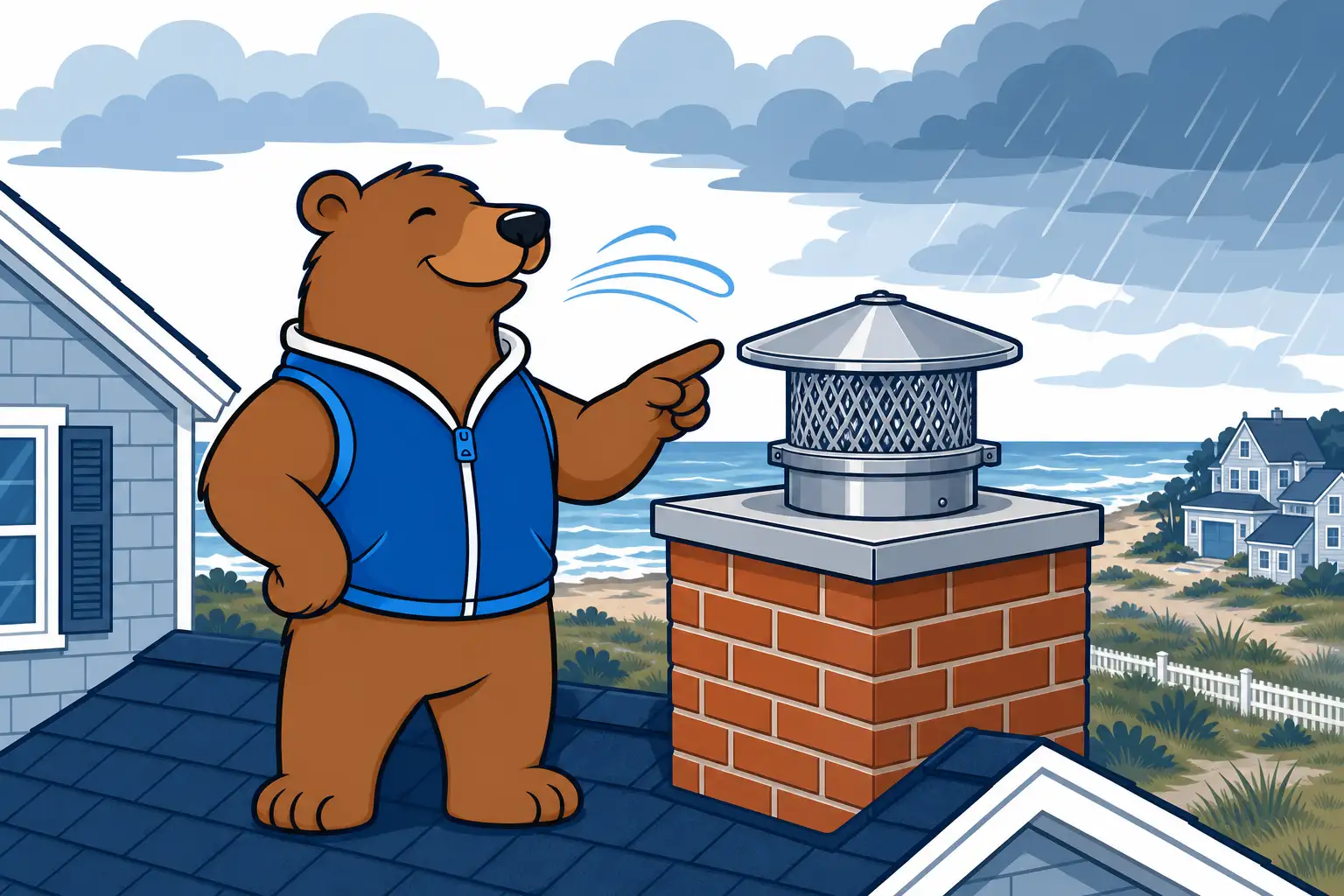
A chimney cap on a Long Island home protects the flue opening from rain, animals, leaves, sparks, and wind-driven coastal weather. Here, salt air, nor’easters, freeze-thaw cycles, and older masonry make the material and fit matter. Stainless steel usually outlasts cheap galvanized caps, but a cap does not replace chimney cleaning, masonry repair, or a proper inspection.
What does a chimney cap actually do?
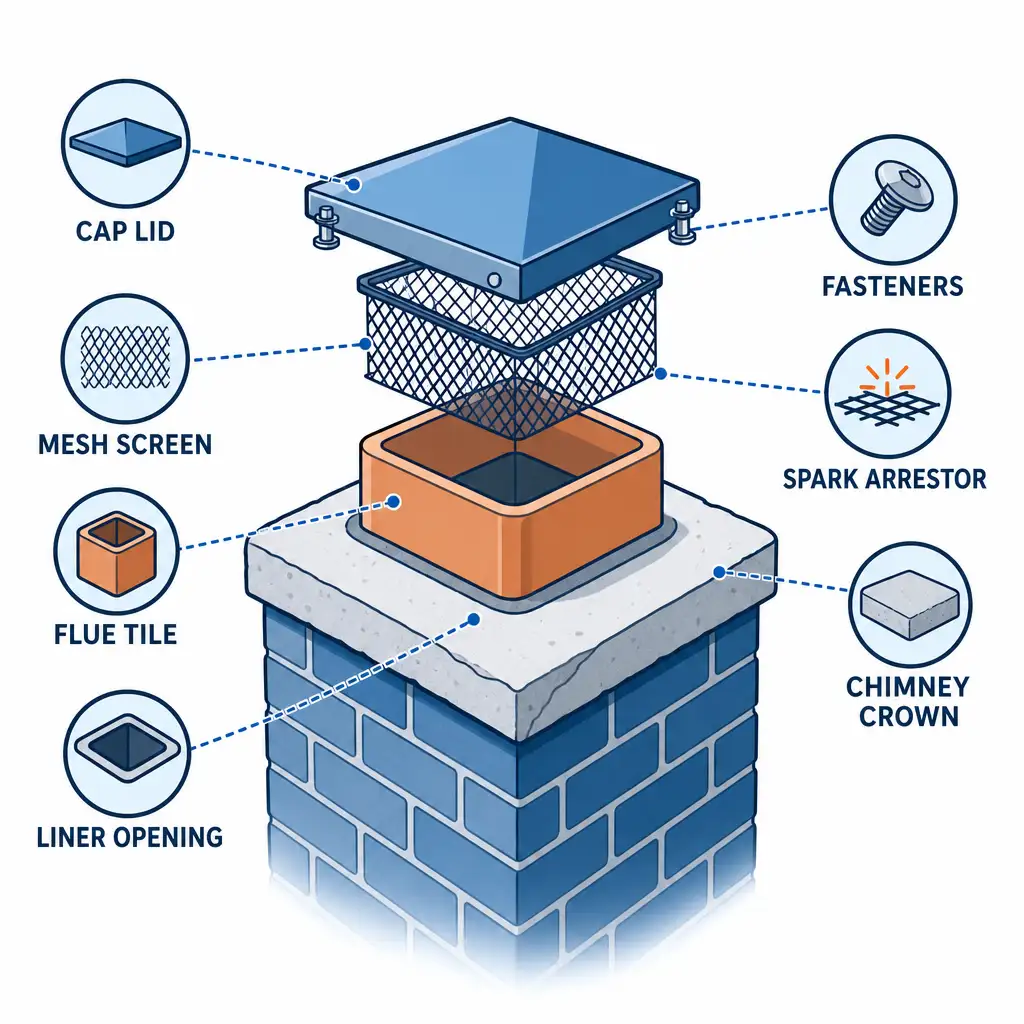
A chimney cap Long Island homeowners choose for coastal weather is the cover and screened guard that sits at the top of a flue or chimney. A good cap sheds rain, blocks animals, catches some sparks, and keeps leaves and pine needles from dropping into the flue. It is not a chimney sweep, liner repair, crown repair, or full leak repair by itself.
Most Long Island homes use one of these setups:
| Cap type | Where it fits | What it is for |
|---|---|---|
| Single-flue chimney cap | One flue tile | One fireplace, boiler, furnace, or water heater flue |
| Multi-flue chimney cap | Over more than one flue | Older masonry chimneys with two or more openings |
| Top-mount chimney cap | Fastened to the chimney crown | Covers the top of the masonry and flue area together |
| Custom chimney cap | Built to measured dimensions | Odd sizes, damaged old tops, or special clearance needs |
| Chase cover | Factory-built chimney chase | Covers the framed metal chase around a factory-built system |
A cap usually includes a lid, vertical screen or mesh, fastening points, and sometimes a spark arrestor screen. On a masonry chimney, it sits around the flue tile or mounts over the chimney crown. On a factory-built chimney, the cap must match the listed system, so we do not treat those like brick chimneys.
If you are also dealing with soot, smoke odor, or fireplace buildup, cap work is only one part of the job. We inspect the top, but a true cleaning and safety check belongs with a chimney inspection and sweep.
Why are Long Island homes harder on chimney caps?
Long Island chimneys take more weather than many inland homes because salt air, wind-driven rain, nor’easters, freeze-thaw cycles, and mature trees all hit the same small part of the roof. A chimney cap on Long Island has to resist corrosion, stay fastened in high wind, and keep debris out without choking the flue.
On the South Shore, homes near the Great South Bay and the Atlantic Ocean see salt air that attacks cheap metal. On the North Shore, homes exposed to Long Island Sound get strong wind and sideways rain during storms. In Nassau County and Suffolk County, older brick chimneys also bring another issue, many have crowns, mortar joints, and flue tiles that have been patched more than once.
We see plenty of Levitt-era capes and ranches in Nassau County with older masonry chimneys and later oil-to-gas conversions. In Suffolk County towns like Huntington, Smithtown, Babylon, Islip, and Brookhaven, longer roof lines, larger colonials, and split-levels often put chimney tops in stronger wind exposure. That local mix changes what lasts.
The main Long Island stress points are:
- Salt air corrosion on galvanized steel and low-grade fasteners
- Wind-driven rain entering open flues during nor’easters
- Freeze-thaw cycles that expand trapped water in masonry
- Leaves and pine needles from mature trees collecting on screens
- Raccoons, squirrels, and birds using uncapped flues as shelter
- Older crowns and mortar joints that let water move below the cap
Our scheduling data also shows how storm seasons affect service timing. In our analyzed job history, the median booking-to-visit lead time was 4 days, with an average of 5.5 days, and 22 same-day plus 46 next-day visits out of 331 analyzed jobs. If a cap is missing before a stormy stretch, waiting often leaves more water and debris to remove later.
What problems does a good chimney cap help prevent?
A properly fitted cap reduces water entry through the flue opening, keeps animals and nesting debris out, limits leaf buildup, catches some fireplace sparks, and shields the chimney top from direct weather. It also lowers how much rain reaches the smoke chamber, damper, chimney liner, and interior masonry from above.
Water is the biggest reason we push homeowners to take caps seriously. Rain that drops straight down an open flue reaches metal dampers, smoke shelves, liners, and appliance vent paths. Over time, that moisture leaves rust stains, odors, damaged mortar, and freeze-thaw pressure inside the chimney.
Animals are the next issue. Raccoons, squirrels, and birds treat an open flue like a hollow tree. A solid animal guard blocks entry while still leaving the opening needed for venting. The screen size matters because mesh that is too tight catches soot and debris faster, while mesh that is too open does less to stop wildlife.
For wood-burning fireplaces, a spark arrestor screen adds another layer of protection at the top. It does not make careless burning safe, and it does not replace annual chimney inspection. The Chimney Safety Institute of America explains that creosote buildup and neglected inspection are major chimney fire concerns in its guidance on preventing chimney fires.
A cap also reduces debris. Leaves and pine needles that fall into a flue trap moisture, block draft paths, and mix with soot. In neighborhoods with heavy tree cover in the Town of Oyster Bay, Town of Hempstead, Town of Islip, and Town of Brookhaven, that is a real roofline problem, not a decorative detail.
What will a chimney cap not fix?
A chimney cap will not remove creosote, repair a cracked chimney crown, stop leaks caused by bad chimney flashing, rebuild loose mortar joints, replace a missing chimney liner, or solve every draft problem. It protects the opening at the top, but it does not correct hidden damage below that point.
This is where many homeowners get frustrated. They pay for a cap, then still see a ceiling stain because the leak was coming from flashing. Or they replace a rusty cover, then still smell smoke because creosote is inside the smoke chamber. Those are different problems with different repairs.
A cap also does not make a dirty fireplace ready for burning. If the flue has creosote, nests, leaves, or heavy soot inside, that material still needs removal. Our guide to what creosote is and why it matters explains why buildup inside the system has to be treated separately from the metal cover on top.
Draft issues need careful diagnosis. A missing cap may allow wind to push air down the flue, but draft also depends on flue height, liner size, house pressure, damper condition, appliance type, and nearby rooflines. A cap should protect the opening without restricting venting, especially on oil or gas appliance flues.
Which chimney cap material is best for Long Island?
For most Long Island homes, we prefer stainless steel caps because they stand up to salt air corrosion, repeated storms, and freeze-thaw exposure better than basic galvanized steel. Copper caps also last well and look sharp, but cost and appearance preferences matter. Galvanized caps are usually the shortest-lived choice near coastal air.
Here is the plain homeowner comparison:
| Material | Best use | Long Island concern |
|---|---|---|
| Stainless steel cap | Most masonry chimneys near salt air or open wind | Strong mix of durability and practical cost |
| Galvanized steel cap | Short-term or budget-sensitive use away from harsh exposure | Rusts faster near South Shore and North Shore salt air |
| Copper cap | High-end homes or visible chimney tops | Long service life, higher material cost, changes color over time |
| Custom metal cap | Odd flues, multi-flue tops, damaged crowns, chase covers | Must be measured correctly and fastened securely |
The right cap is not only about metal. It is also about fit. A single-flue chimney cap should clamp or fasten securely to the flue tile without cracking it. A multi-flue chimney cap needs enough height and screen area so it does not crowd the openings. A top-mount chimney cap must sit squarely and shed water away from the crown.
Older masonry chimneys often need extra care before installation. If the flue tile is chipped, the crown is cracked, or the top courses of brick are loose, we tell you before we fasten anything to it. Installing a cap onto weak masonry creates a new problem instead of solving the old one.
Factory-built chimney systems are different. They are listed assemblies, which means the cap, storm collar, chase cover, and termination parts must match the system requirements. We do not force a masonry-style cap onto a factory-built chimney. We identify the setup and explain the safe path before work begins.
What is included in a chimney cap service visit?
A cap visit usually includes roof or ladder access review, a visual chimney-top inspection, measurements, cap type confirmation, installation when the correct cap is available, fastening, basic cleanup, and before-and-after photos. Chimney cleaning is separate unless it is specifically included in the approved work for that visit.
When we arrive, our technicians look at the chimney crown, flue tile, visible liner opening, mortar joints, flashing area, and access conditions. We check whether the chimney is masonry or factory-built, whether there is one flue or multiple flues, and whether the cap needs to clear a damper top, liner, or appliance vent.
We also document what we see. Before-and-after photos help you understand the difference between a missing cap, rusted cap, loose cap, undersized cap, damaged crown, and blocked screen. If a written quote is needed before anyone approves add-on work, we put the condition and scope in writing so the decision is clear at home.
Chimney cleaning is not automatically part of cap installation. If we find creosote, nesting material, heavy debris, or a restricted smoke chamber, we recommend cleaning before regular fireplace use. For broader budget planning, our chimney sweep cost guide for Long Island explains the factors that change cleaning scope without pretending every chimney is the same.
We are also honest about appointment timing. Across a newer completed-jobs snapshot, we had 497 jobs booked since May 2026, with 206 completed and closed, and the most common arrival window was 08:00. We use 3-hour arrival windows, and you can call 631-900-2634 from 8 AM to 7 PM ET or schedule your visit online anytime.
What site conditions can change a chimney cap quote?
A chimney cap quote changes when the roof is steep, the chimney is tall, access is unsafe, the crown is damaged, multiple flues need one cover, the size is custom, or the existing cap is rusted into place. Honest pricing starts with the actual roof, chimney top, and venting setup, not only the cap on a shelf.
We do not state a chimney cap price sight unseen because the same-looking house from the street can be completely different at the roofline. A low ranch in Nassau County with easy ladder access is not the same job as a tall Suffolk County colonial with a steep roof, high chimney, and custom multi-flue top-mount cap.
Legitimate add-ons are tied to real conditions, such as:
- Custom chimney cap fabrication for unusual dimensions
- Multi-flue chimney cap sizing over two or more flues
- Chase cover replacement on a factory-built chimney chase
- Crown repair before a cap can be safely installed
- Removal of a seized, rusted, or storm-damaged old cap
- Cleaning out leaves, pine needles, nests, or visible obstruction
- Extra labor for steep roof access or unsafe ladder conditions
A good quote should say what the cap service includes, what it excludes, and what changes the final amount. If a crown, flashing, liner, or masonry problem is visible, that should not be hidden under a vague cap charge. It should be explained as its own condition.
This is also where code and safety matter. The New York State Residential Code and local enforcement in towns such as the Town of Hempstead, Town of Oyster Bay, Town of Brookhaven, and Town of Islip focus on safe venting, clearances, and proper appliance exhaust. A cap should never block the path that smoke or combustion gases need to leave the home.
How do I know if my chimney cap needs service?
Call for cap service when the cap is missing, rusted, crooked, loose, undersized, clogged with leaves, packed with nesting debris, or causing visible smoke rollout after installation. Also call before waiting for your next chimney cleaning if you see water in the firebox, rust at the damper, or pieces of screen on the roof.
From the ground, look for a few simple signs. A missing cap is obvious on many masonry chimneys because you will see an open clay flue tile. Rust streaks below the cap usually point to failing metal. A cap that leans or rattles in wind needs attention before a nor’easter tests it harder.
You can also take useful photos before the appointment. Stand safely on the ground, zoom in on the chimney top, and photograph each visible side of the chimney if you can. Do not climb a steep roof for pictures. Roof access and ladder access are our problem to evaluate, not yours to risk.
Inside the house, note any new odor, water marks, rust at the damper, damp ash, animal sounds, or smoke backing up into the room. Those details tell us whether the visit should focus only on the cap or include a chimney inspection first. Annual inspection remains the smart baseline for fireplace systems, and the cap does not replace that.
If you are comparing home maintenance priorities, remember that each system has its own schedule. Chimneys need annual inspection and sweeping when buildup is found. Dryer vents should be cleaned at least once a year, and our dryer vent cleaning removes lint from the exhaust path so the vent stops holding a fire's fuel supply. Air ducts are different, we inspect first and clean when conditions show the ducts need it.
FAQ
Can one cap cover both fireplace and furnace flues on an older Long Island chimney?
Yes, a multi-flue chimney cap can cover more than one opening when it is measured and raised correctly. The cap must leave each flue enough room to vent. We check the fireplace flue, oil or gas appliance flue, liner condition, and crown layout before recommending one shared top-mount cap.
Will a smaller spark arrestor mesh keep out more debris but hurt draft?
Mesh that is too tight catches soot, leaves, and pine needles faster, especially under tree cover. That buildup restricts the screen area and affects venting. The right spark arrestor balances animal protection, ember control, and open area so smoke and appliance exhaust still leave the chimney properly.
Should I replace a rusted galvanized cap with stainless steel near the water?
Near the South Shore, North Shore, Great South Bay, Atlantic Ocean, or Long Island Sound, stainless steel is the better long-term choice for most homes. Salt air eats through cheaper galvanized metal faster. We still check the crown and flue tile first because a better cap needs a sound place to fasten.
What does white staining below the cap mean?
White staining, often called efflorescence, usually means water is moving through masonry and carrying minerals to the surface. A cap reduces water entering from the top opening, but staining can also come from crown cracks, flashing leaks, bad mortar joints, or saturated brick. That needs inspection, not guesswork.
Can a cap be installed if the chimney crown is cracked?
Sometimes, but not always. Small surface cracks may allow a cap installation with the right plan, while loose, broken, or crumbling crowns need repair first. We do not fasten a new cap to weak material because storm wind can pull against it and damage the chimney top further.
Frequently Asked Questions
Yes, a multi-flue chimney cap can cover more than one opening when it is measured and raised correctly. The cap must leave each flue enough room to vent. We check the fireplace flue, oil or gas appliance flue, liner condition, and crown layout before recommending one shared top-mount cap.
Written by
MikeField Technician
Mike is a field technician at FreshBear. He cleans dryer vents, air ducts, and chimneys in Long Island homes, so the guides under his name come from the jobs he runs: what a vent line actually looks like when it comes apart, and what he finds behind the dryer. Everything published under his byline is checked against that first-hand experience.
Keep Reading
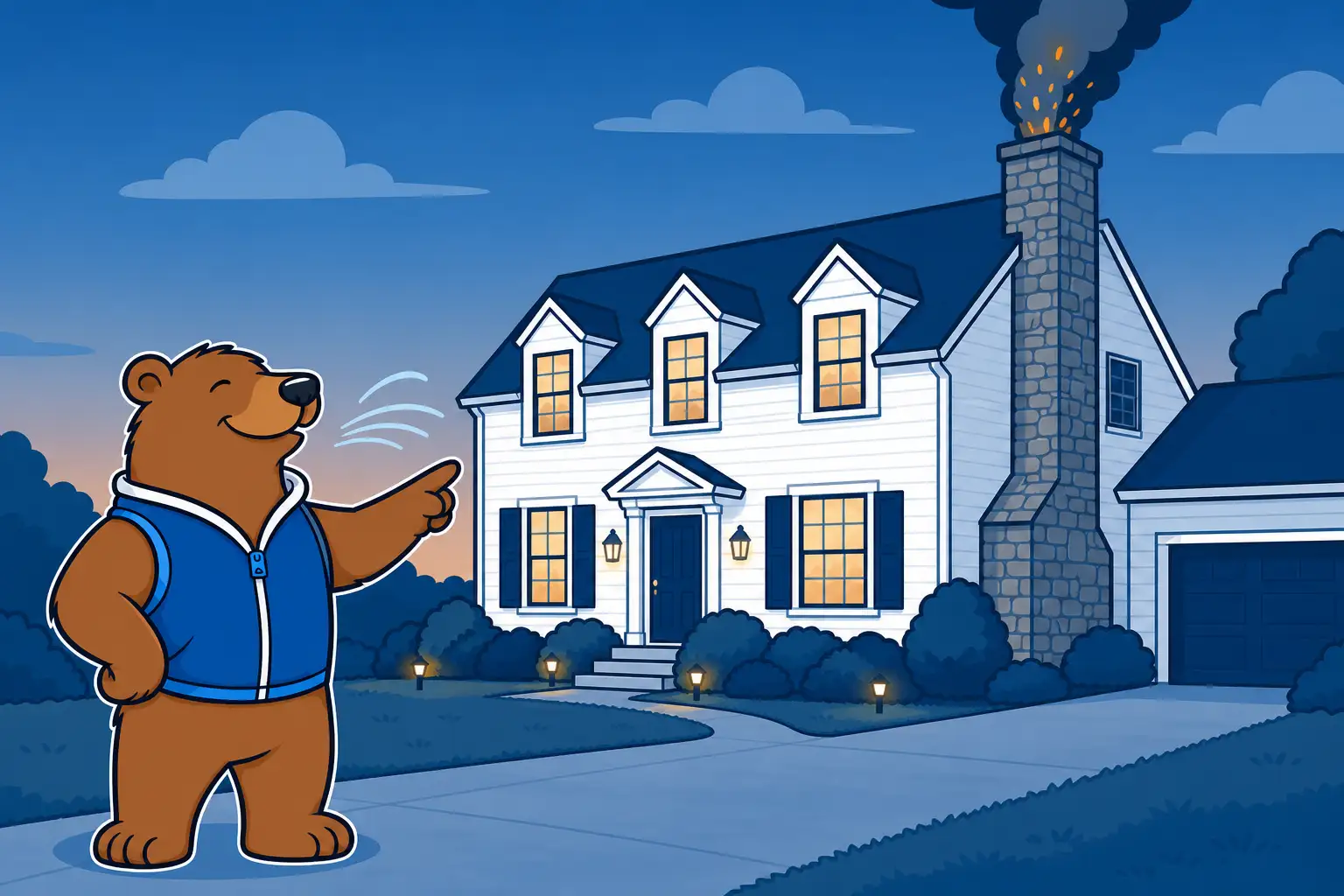
Signs of a Chimney Fire
Learn the active and after-the-fact signs of a chimney fire, what to do first, and when a Long Island fireplace is unsafe to use again.
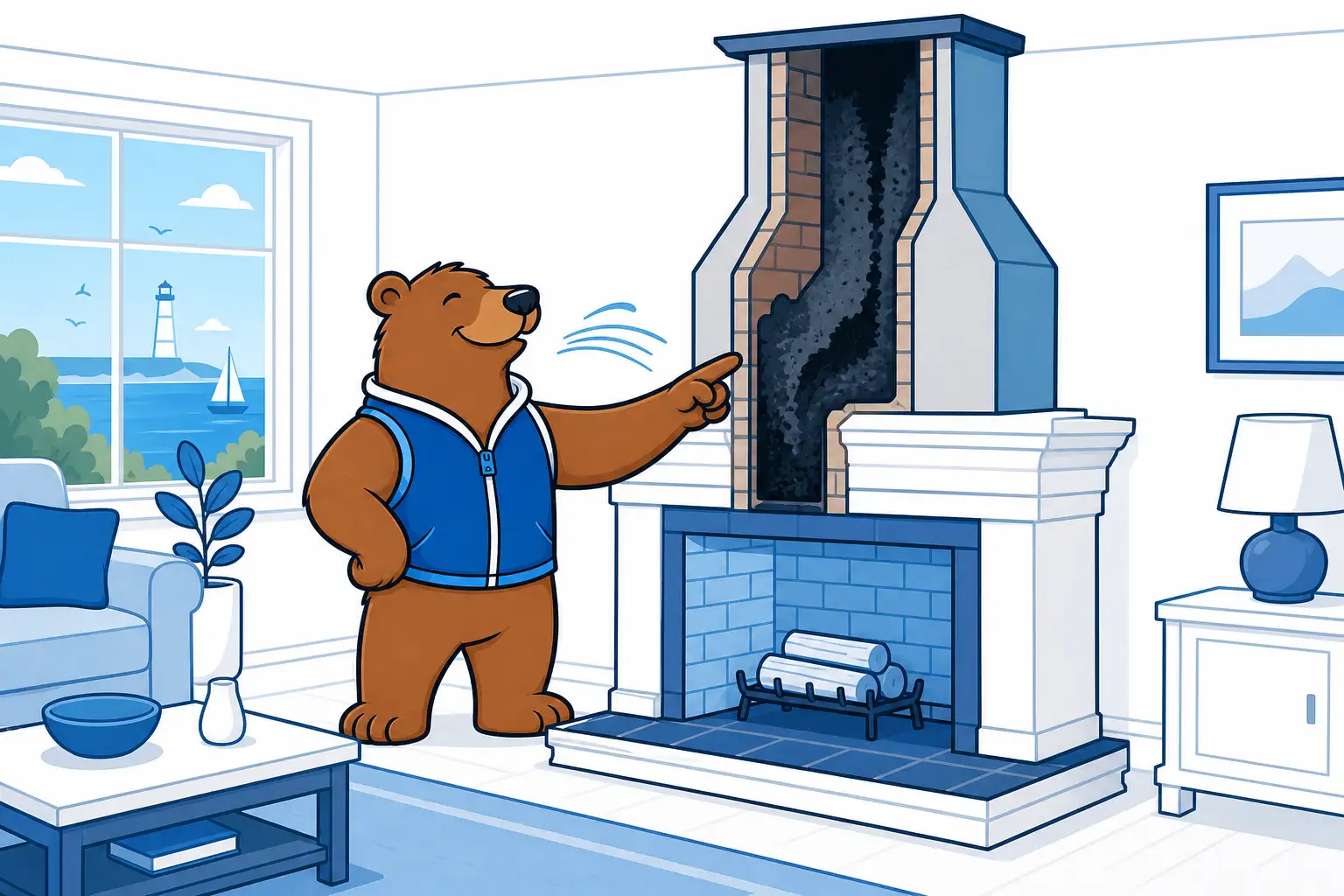
What Is Creosote and Why Is It Dangerous?
Creosote is not just soot. Learn why it forms, how Long Island weather affects chimneys, and what our cleaning visit includes.