
Dust Coming From Vents Apartment Guide for Queens
The Short Answer
If dust is coming from vents in an apartment, the source is not always the ductwork. In Queens apartments, it often comes from dirty filters, return-air dust, leaky register edges, renovation debris, PTAC units, hallway pressure, or old plaster. Duct cleaning is worth considering when visible debris, pest signs, moisture, or dust blowing from the supply register is confirmed.
Dust Coming From Vents Apartment Guide: Why does it happen in Queens?
Dust from apartment vents in Queens usually comes from one of five places: the room, the filter, the return grille, renovation debris, or true duct buildup. In many NYC apartments, the vent is only where dust becomes visible. Before paying for duct cleaning, confirm the apartment has cleanable ductwork and that the dust is actually blowing out of the HVAC supply register.
Here is the quick symptom checklist we use when a renter, co-op owner, or condo owner calls about a dusty vent:
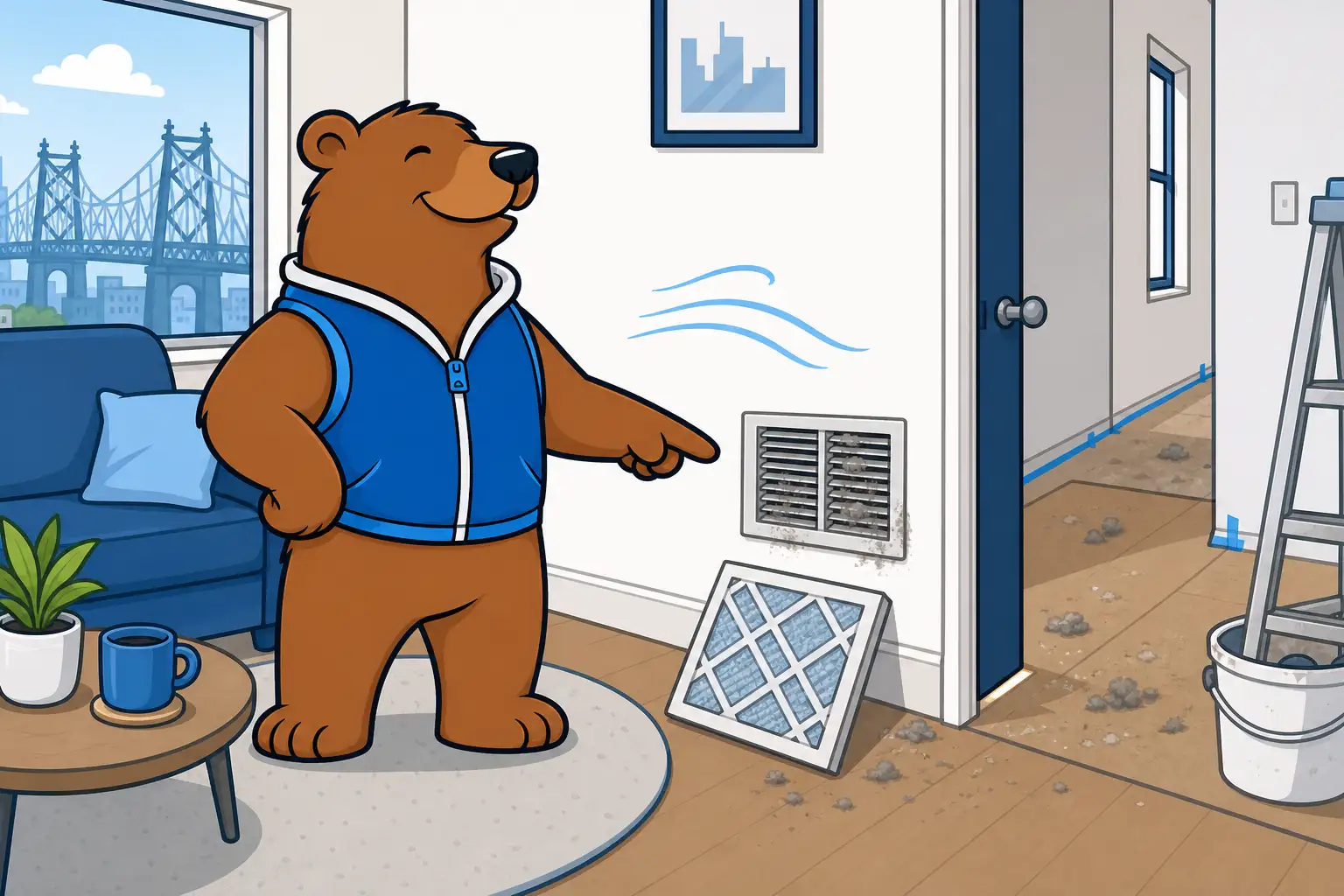
- A gray ring around the vent: This looks like a shadow or dirty outline on the wall or ceiling. It usually means room dust is sticking to airflow patterns at the register. It is not usually a duct problem if the dust wipes off and does not return quickly after filter changes and cleaning.
- A puff of dust when the system starts: This looks like a small cloud from the supply register after the heat or AC kicks on. It usually means loose debris sits inside the register, boot, or nearby duct. It is less concerning if it happens once after months of no use, then stops.
- Dust collecting fast after a new filter: This looks like furniture getting dusty again within a day or two. It usually points to filter bypass, a bad filter fit, a dirty return path, or apartment air leakage. It is not automatically a duct issue if windows, hallway gaps, or construction are feeding the room.
- White or tan grit near vents: This looks sandy, chalky, or plaster-like. It usually means construction dust, old plaster dust, or post-renovation debris. It is not normal housekeeping dust if it keeps appearing after repeated cleaning.
- Dark specks, pellets, or nesting material: This looks like pest debris, rodent droppings, or shredded material near a grille. It usually needs pest control and source cleanup before duct cleaning. Do not treat this as ordinary dust.
- Musty odor with staining near a vent: This looks like dark spotting, wet staining, or growth around a grille. It may involve moisture or visible mold growth. A duct cleaner should not sell a magic spray as proof of mold treatment.
First, is it really an air duct vent?
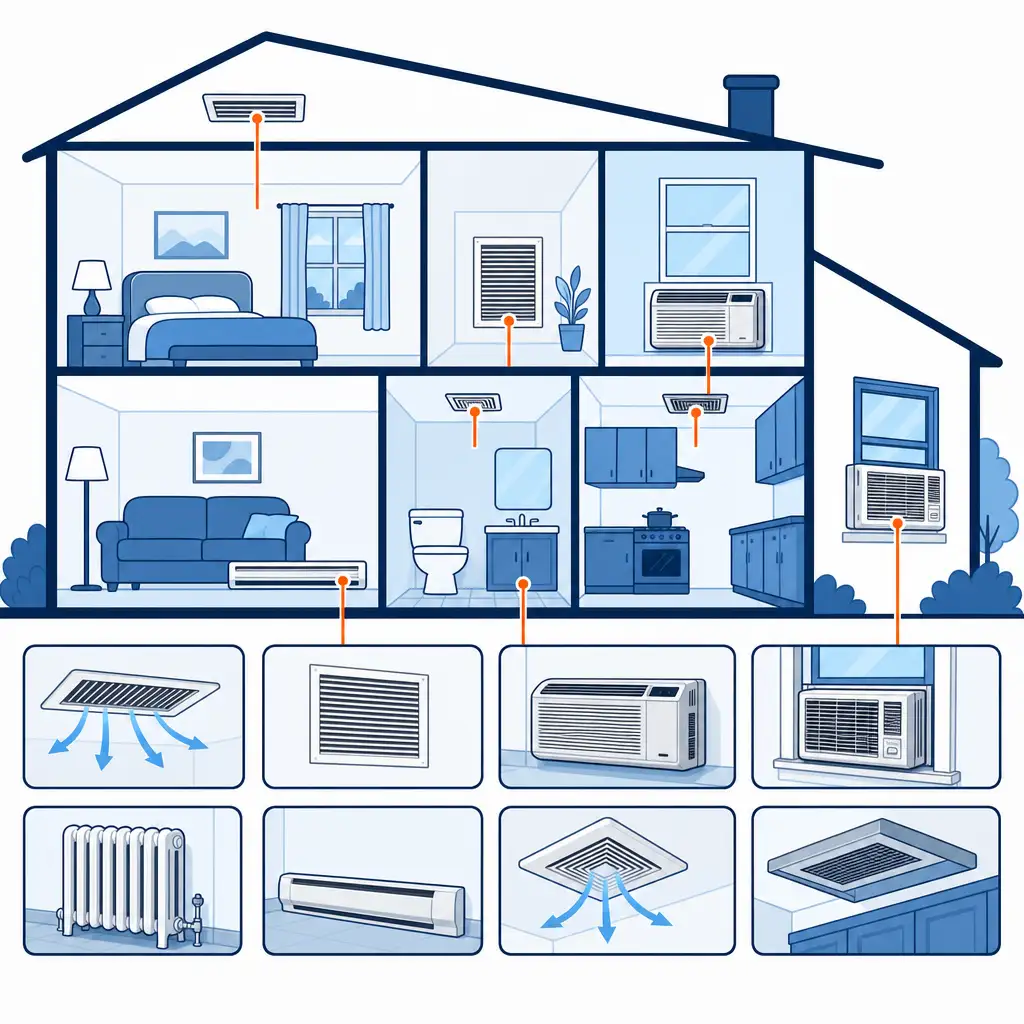
Not every Queens apartment has ductwork that we can clean. Some rental apartments and co-ops have central HVAC with supply registers and return grilles. Others use PTAC units, window air conditioners, baseboard heating, radiators, bathroom exhaust fans, or kitchen exhaust grilles. Each one collects dust differently, and only true ductwork calls for air duct cleaning.
Start by identifying what you are looking at:
| What you see | What it probably is | What dust there usually means |
|---|---|---|
| Rectangular ceiling or wall grille blowing warm or cool air | HVAC supply register | Dust may be from the duct, register, or room airflow |
| Larger grille pulling air inward | Return grille | Dust often comes from room air before it reaches the filter |
| Sleeve unit below a window | PTAC unit | Dust is usually in the PTAC filter, coil face, or room intake |
| Window-mounted AC | Window air conditioner | Dust is usually on the washable filter and fan area |
| Metal radiator or baseboard heat | Radiator dust or baseboard heating | Dust bakes onto hot surfaces and rises with convection |
| Small grille in bathroom or kitchen | Exhaust fan or kitchen exhaust | Dust and lint stick to moisture and grease, not supply duct air |
In Astoria, Jackson Heights, Sunnyside, Elmhurst, Flushing, Forest Hills, Long Island City, and Jamaica, we see many apartments where the resident says “vent” but the system is really a PTAC, radiator, or exhaust grille. In that case, duct cleaning is not the right fix. You may need a filter wash, fan cleaning, super visit, HVAC service, or building maintenance.
What are the most likely causes of dust at apartment vents?
The most common cause is not a mysterious dirty duct. It is usually a dirty air filter, a loose filter slot, return-air dust, a leaky register, hallway pressure, renovation debris, or dust already in the room. True duct contamination becomes more likely when dust blows out after startup, debris is visible inside the duct, or pests or moisture are present.
Dirty filter or wrong MERV rating
A clogged air filter loads up with lint and dust, then air looks for easier gaps around it. A filter that is too restrictive for the furnace or air handler also creates bypass if the slot is loose. That bypass sends dusty return air toward the blower compartment, evaporator coil, and ductwork.
It is not a major problem if the filter is simply overdue and the dust settles down after replacement. Match the MERV rating to the equipment or building engineer’s guidance. Higher is not always better in an apartment system if airflow drops.
Filter bypass at the filter slot
Filter bypass looks like a clean filter with dirty edges, dust streaks around the rack, or dust downstream of the filter. It usually means air is slipping around the filter instead of through it. In a condo building or post-war co-op, this may need an HVAC technician or building engineer to seal the rack.
It is not usually a duct cleaning problem by itself. If the filter slot leaks, newly cleaned ducts collect dust again because the system keeps feeding unfiltered air into them.
Dust collecting on the register from the room
A dark ring around an HVAC supply register often comes from room dust sticking to the wall where air moves across paint. Candles, cooking residue, street soot, and hallway dust make the ring darker. This is common in NYC apartments near busy roads, elevated train corridors, and buildings with strong hallway air movement.
It is not a duct problem if the register face and surrounding wall are dusty but the inside of the duct looks clean. Wipe the grille, vacuum the edge, replace the filter, and watch whether dust returns from inside the vent or from the room surface.
Renovation debris and plaster dust
White grit near vents after sanding, demolition, floor refinishing, or cabinet work usually means construction dust entered the HVAC system or settled in the register. Older pre-war apartment plaster creates fine dust that travels easily. If the system ran during work, debris can reach the return, blower, coil area, flex duct, or sheet-metal duct.
This is one of the stronger reasons to inspect the system. Our post-renovation duct cleaning guide explains how construction dust behaves in ductwork and why the cleanup needs source removal, not just a vent wipe.
Pest debris or rodent droppings
Dark pellets, shredded material, or odor near a return grille can point to pest activity. In that case, the first call is often the landlord, superintendent, building management, or a pest professional. Duct cleaning comes after the pest source is stopped and access is safe.
It is not normal dust if it appears in clusters, returns after cleaning, or sits with gnaw marks or nesting material. Do not vacuum suspected rodent droppings with a basic household vacuum.
Moisture, staining, or possible mold
Dark staining, a musty odor, or visible mold growth around a vent deserves inspection. The EPA says duct cleaning should be considered for specific conditions such as visible mold growth, vermin contamination, or excessive dust and debris, not as a fixed routine for every home. You can read the EPA’s homeowner guidance on when air ducts should be cleaned.
If there is a medical concern, we do not promise allergy, asthma, or illness relief. We remove dust and debris from the duct system when cleaning is justified. Health questions belong with your doctor, and mold confirmation may require a qualified mold assessor.
Why can Queens apartments collect extra vent dust?
Queens apartments collect dust for local, practical reasons: older plaster, street soot, elevated train corridors, window gaps, hallway air movement, shared building systems, and ongoing construction. In many buildings, negative pressure pulls dusty air through door gaps and chases. That dust lands near vents even when the duct itself is not the original source.
A pre-war apartment in Jackson Heights or Sunnyside may shed plaster dust from old walls and ceilings. A converted building in Astoria may have odd duct paths, patched openings, or return air leaks. A high-rise condo in Long Island City may have mechanical-room rules that control who can access the air handler.
Post-war co-ops in Forest Hills and Flushing often have building approval steps before in-unit work. In a rental apartment, the landlord or superintendent may control the air filter, equipment closet, rooftop access, or mechanical room. If the system serves more than one apartment, shared or stacked duct runs change the job.
Hallway pressure matters too. If your apartment door pulls air inward, dust from corridors, laundry rooms, construction work, or trash rooms can enter the unit. That dust then collects on return grilles and supply registers. Air sealing around the door, window gaps, and pipe penetrations often reduces the dust load before any duct cleaning is considered.
When is duct cleaning actually worth considering?
Duct cleaning is worth considering when inspection shows heavy visible debris, dust blowing out of supply registers, post-renovation contamination, pest debris, or moisture-related contamination inside cleanable ductwork. It is less useful when dust sits only on the outside of the grille, the apartment has no ductwork, or the filter slot keeps leaking unfiltered air.
Our honest position matches the EPA: inspect first, clean when the condition supports it. Air ducts do not need cleaning on a calendar just because a year passed. If the duct interior is clean and the problem is a PTAC filter, window leak, radiator dust, or hallway pressure, we tell you that.
When cleaning is justified, our air duct cleaning service removes built-up dust, lint, and debris from the system so the vents stop feeding that material back into the rooms. Clean ducts move more air. You feel stronger airflow at the registers the same day when buildup was blocking the path.
If you want a plain-English breakdown of what duct cleaning physically changes, read our guide to air duct cleaning benefits and limits. If the main concern is staining or growth, use our guide to signs of mold in air ducts before approving any sanitizer or mold treatment language.
What should renters, co-op owners, and condo owners check before scheduling?
Renters should check the lease, contact the landlord, and ask the superintendent who controls the HVAC equipment before hiring a cleaner. Co-op and condo owners should ask management or the building engineer about access, insurance requirements, work hours, and whether the system is shared. Approval problems cause more delays than the cleaning itself.
For a rental apartment, send photos of the grille, filter, equipment closet, and any dust pile to your landlord or super. Ask who last changed the air filter and whether the apartment has central HVAC, PTAC units, or a shared system. If there is water damage, pests, or an unresolved building condition, the NYC Department of Housing Preservation and Development (HPD) may be part of the complaint path after you follow proper notice steps.
For a co-op board or condo management office, ask these questions before scheduling:
- Who can open the mechanical closet, roof door, or service room?
- Are there required work hours or insurance documents?
- Is the air handler inside the unit, in a hallway closet, or in a shared mechanical area?
- Are the ducts private to the apartment or tied to a shared building system?
- Does the building allow negative-pressure equipment and HEPA vacuuming inside the unit?
Based on our completed jobs snapshot from 2026-08-05, we had 511 jobs booked since May 2026 and 211 completed and closed. Recent scheduling averaged 6.2 days from booking to visit, with 26 same-day and 61 next-day visits completed. Apartment approvals can add time, so line up the super or building engineer before the crew arrives.
What should be included in a proper cleaning?
A proper apartment duct cleaning starts with identification and inspection, not a sales script. We confirm the system type, look at the HVAC supply registers and return grille, check the air filter and filter slot, inspect accessible ductwork, then clean the reachable supply and return paths with source removal equipment. The goal is removal, not perfume.
For cleanable central HVAC ductwork, the scope should be clear before work starts:
- Protect the apartment work area.
- Remove and clean accessible register covers.
- Inspect supply and return openings.
- Use negative pressure where the system allows it.
- Agitate dust inside accessible duct runs.
- Pull debris out with professional vacuum equipment, including HEPA vacuum tools where appropriate.
- Check the blower compartment area and evaporator coil access when it is part of the agreed scope.
- Point out loose filters, open chases, crushed flex duct, disconnected sections, or damaged sheet-metal duct.
Apartment limitations matter. A sealed PTAC unit is not cleaned the same way as ductwork. A shared shaft in a high-rise may be off limits without building approval. A rooftop or mechanical-room air handler may require the superintendent or building engineer to open access.
What add-ons and fees should you ask about before you book?
Ask about the number of vents, access limits, system type, sanitizer language, mold claims, equipment surcharges, and building approval needs before you approve work. A low advertised price should not turn into a surprise because the apartment has more registers, long duct runs, locked mechanical access, or a scope that was never explained.
Our $97 whole-home air duct basic cleaning is the entry-level whole-home service. Based on our completed air duct jobs from July 2026, n=135, the middle of completed projects landed at $400, with the lower quarter around $196 and the upper quarter around $650. Bigger homes, heavy buildup, and add-ons push the total higher.
For a Queens apartment, the final range depends on what exists in the unit. A small condo with one accessible air handler is different from a duplex apartment with long runs, multiple returns, or board-controlled access. We explain the scope before work starts, and you can schedule your visit or call 631-900-2634 from 8 AM to 7 PM ET.
Be cautious with these add-ons:
- Sanitizer for ordinary dust: Cleaning removes the dust source. Do not buy sanitizer as a substitute for removal.
- Mold treatment without proof: Visible mold growth, moisture, and testing questions need careful handling. A spray is not a diagnosis.
- Unlimited vents claims: Ask what “unlimited” excludes, including returns, main trunk lines, access panels, and equipment cleaning.
- Access fees: Ask if locked roof, mechanical-room, or after-hours access changes the visit.
- Equipment surcharges: Ask what equipment is included and what triggers extra charges.
When should you call a professional?
Call a professional when dust blows from the supply register after startup, heavy debris is visible inside the duct, renovation dust entered the system, pest debris appears, moisture staining is present, or dust returns quickly after filter and grille cleaning. Call the landlord, super, HVAC technician, pest professional, or mold assessor first when their issue is the root cause.
Use this decision path:
- Clean what you can safely reach. Wipe the register face, vacuum the grille edge, and replace or wash the approved air filter.
- Watch the source. If dust sits on the outside only, it is probably room dust. If dust puffs out from inside the register, inspect the duct.
- Identify the equipment. Confirm central ductwork, PTAC, window AC, radiator, baseboard heating, or exhaust grille.
- Check control and access. Renters should contact the landlord or superintendent. Co-op and condo owners should ask management or the building engineer.
- Call the right trade. HVAC handles equipment faults, poor airflow from mechanical failure, filter racks, coils, and blower issues. Pest professionals handle active pests. Mold assessors handle testing and remediation plans. We handle duct inspection and cleaning when cleanable ductwork holds dust, lint, debris, or contamination.
The professional threshold is simple: if you see debris inside the duct, dust blows out when the system turns on, or the problem returns after filter and grille cleaning, get the system inspected. If the apartment has no ductwork, if the dust is only on a PTAC filter, or if hallway air is the source, duct cleaning is not the first fix.
Frequently Asked Questions
A startup puff usually means loose dust is sitting in the register, boot, or nearby duct and gets pushed out when airflow begins. If it happens once after a long off-season and stops, clean the grille and monitor it. If it repeats after filter replacement and basic cleaning, the duct or return path deserves inspection.
Written by
MikeField Technician
Mike is a field technician at FreshBear. He cleans dryer vents, air ducts, and chimneys in Long Island homes, so the guides under his name come from the jobs he runs: what a vent line actually looks like when it comes apart, and what he finds behind the dryer. Everything published under his byline is checked against that first-hand experience.