
Signs of Mold in Air Ducts Suffolk County Homeowner Guide
The Short Answer
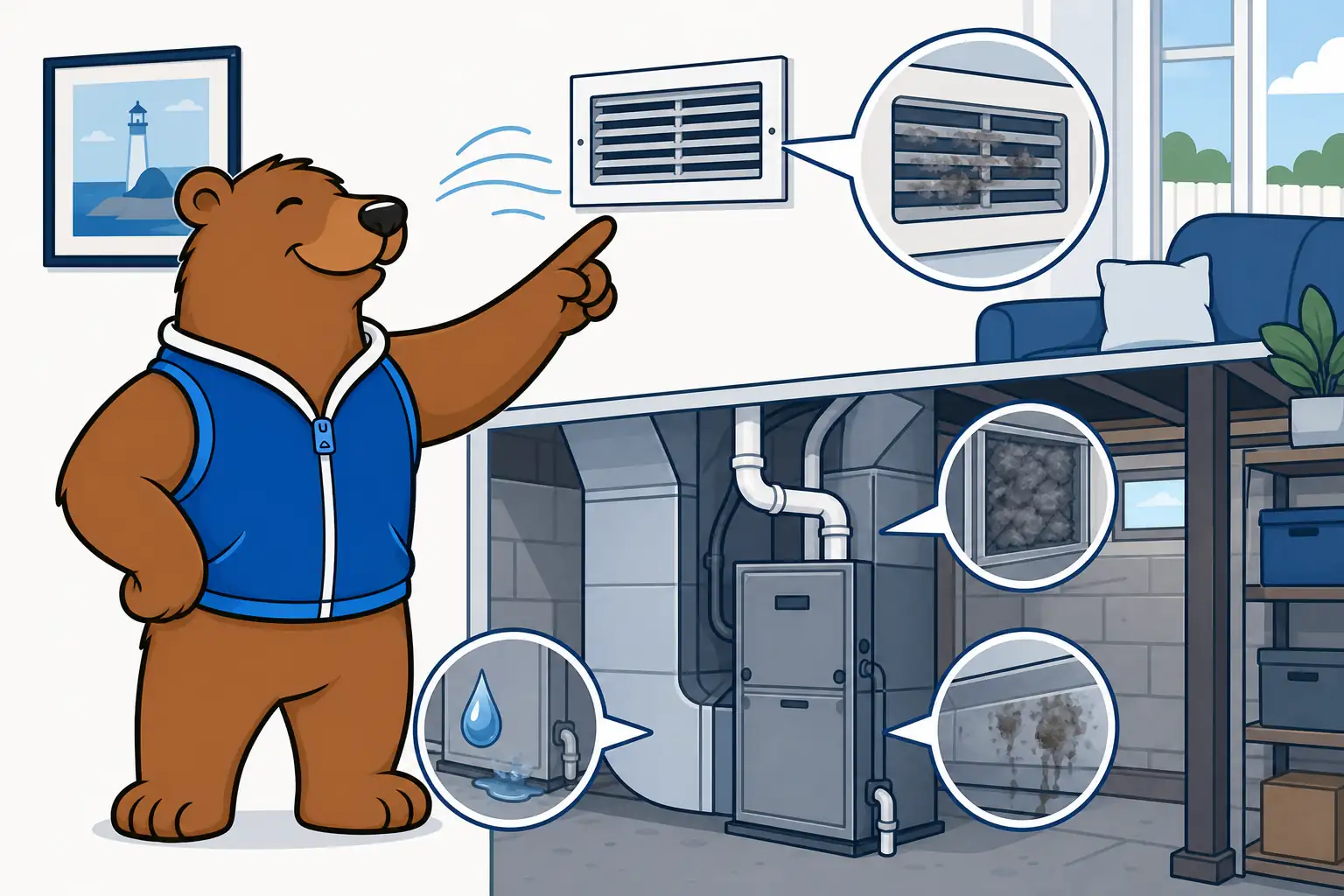
The most reliable signs of mold in air ducts Suffolk County homeowners should take seriously are visible mold-like growth, a musty odor that returns when the HVAC runs, and a moisture source such as a wet drain pan, damp crawl space, or AC condensation. Dust, soot, and black vent rings are common false alarms, so inspect first.
What Counts as a Real Sign of Mold in Air Ducts?
This guide covers the signs of mold in air ducts Suffolk County homeowners should take seriously: visible mold-like growth, a musty odor that returns with HVAC airflow, and a moisture source. In many Suffolk homes, that moisture comes from AC condensation, a damp basement, a crawl space, or a clogged condensate drain. Dust alone is not proof of mold.
The EPA says air ducts should be cleaned based on condition, such as visible mold growth, pests, or excessive debris, not on a fixed timer. That lines up with how we work: we inspect first, explain what we see, and clean when the duct system shows it needs cleaning. You can read the EPA guidance here: EPA mold and duct cleaning guidance.
The most reliable signs are clustered clues. A musty odor from one zone, visible spotting on nearby supply registers, damp insulation, a dirty evaporator coil area, and a history of water or humidity point to a real issue. One black ring around one vent often points to dust, soot, or an air leak instead.
If you are comparing possible duct mold signs in a Suffolk County home, start with what you can see safely. Do not open sealed HVAC panels, disturb suspect material, or scrape unknown growth. Take photos, note which rooms are affected, and check whether the issue appears only when the AC or heat runs.
Which 7 Signs Should Suffolk County Homeowners Check First?
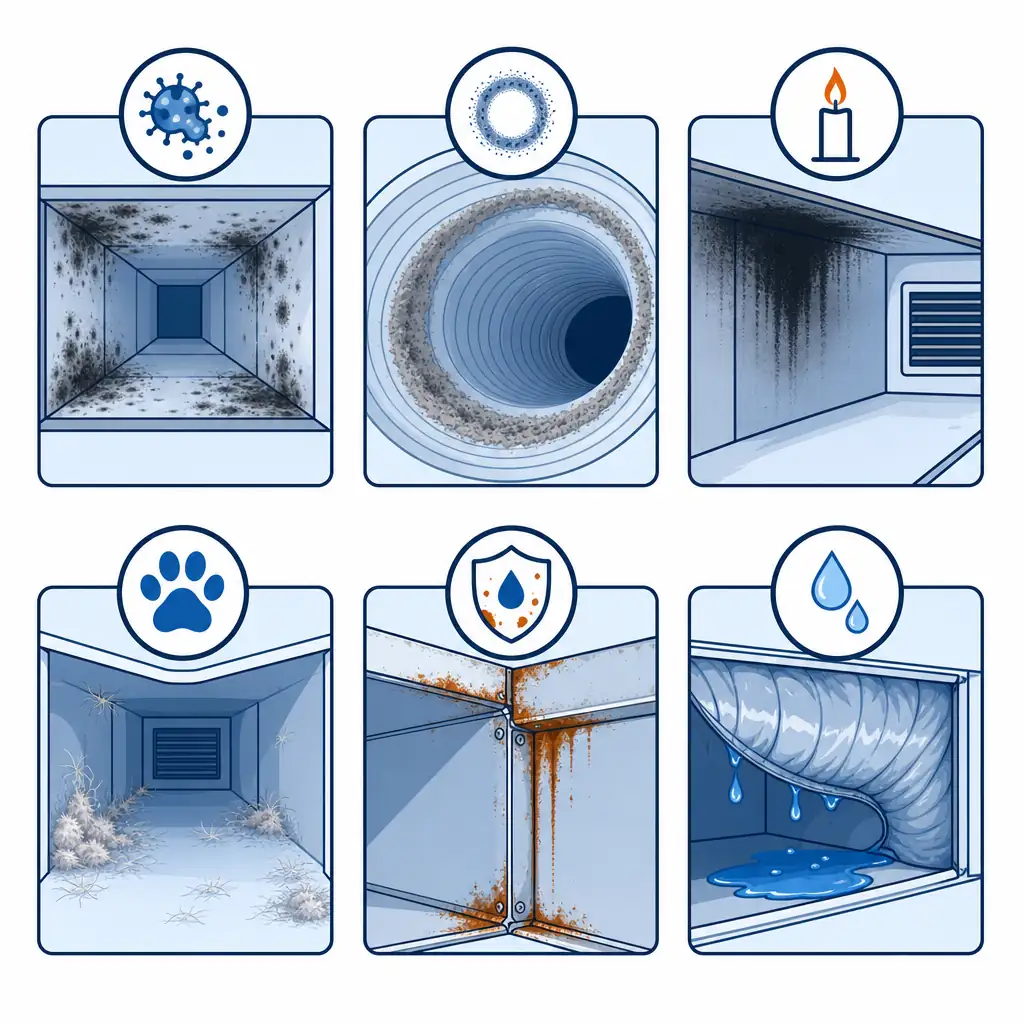
Start with the signs that connect moisture, visible material, and airflow. A single stain or dirty register is not a diagnosis. The checklist below shows what the sign looks like, what it usually means, and when it is not a problem, so you can separate duct mold concerns from normal dust, soot, and wear.
- Musty odor when the system starts: You smell damp, earthy air at supply registers for the first few minutes of AC or heat.
- Visible dark or fuzzy spotting: You see spots on register faces, inside nearby duct openings, or around the supply plenum.
- Recurring dust rings at vents: Dark rings return quickly after you wipe the register and surrounding ceiling or wall.
- Damp air handler area: The furnace blower compartment, evaporator coil area, or condensate drain pan looks wet, slimy, or stained.
- Water history near ducts: A basement, attic, or crawl space had leaks, flooding, condensation, or high relative humidity.
- Contaminated porous duct material: Duct board or fiberglass duct liner looks stained, sagging, wet, or crumbly.
- Room-specific symptoms: One addition, basement room, or second-floor zone smells worse than the rest of the house.
| Sign | What it looks like | What it usually means | When it is not a problem |
|---|---|---|---|
| Musty smell at vents | Damp, earthy smell when air starts moving | Moisture is present somewhere in the HVAC path, often near the coil, drain pan, return duct, or crawl space | If the smell is brief after a long shutdown and disappears after filter replacement and normal use, monitor it |
| Black material near a register | Dark ring on drywall, ceiling, or grille | Dust is being pulled through a gap or blown through a dirty register | If it wipes away dry and powdery, it is often dust, candle soot, fireplace soot, or pet dander, not mold |
| Fuzzy or spotted growth | Speckles, patches, or textured growth on a vent, plenum, or lining | Growth plus moisture history needs closer inspection | Rust, adhesive, old paint, or deteriorating insulation can look similar |
| Wet drain pan or coil area | Standing water, slime, rust trails, or staining near the evaporator coil | A condensate drain clog, poor drainage, or AC short cycling is feeding moisture | A small amount of condensation on a working coil is normal during cooling season, but standing water is not |
| Dirty return grille | Heavy gray dust on return grilles and filters | Return air is carrying household dust, pet hair, and lint into the system | Dust on a return grille is common because returns pull room air in |
| Stained flex duct or duct board | Brown, gray, or black staining on porous duct material | Wet porous duct material can hold contamination and may need more than cleaning | Dry age staining or old construction dust is not always active growth |
| Same rooms smell worse | Basement, attic, addition, or long duct run has stronger odor | Return-air leak, crawl space air, or duct moisture is affecting that run | A room with poor ventilation or stored items can smell musty even when ducts are clean |
Black dust is one of the most common false alarms we see. In older Cape and ranch homes, soot from candles, fireplaces, or an oil burner can cling to cold ceilings around supply registers. Return-air leaks also pull attic, crawl space, or basement dust into return ducts.
A musty smell does not always mean mold is growing inside the ducts. The odor can come from a damp filter, a clogged condensate drain pan, a dirty evaporator coil, stored basement items, wet crawl space soil, or a return leak pulling air from an unfinished area. The question is where the smell starts and whether moisture is still present.
Mold and damp debris can affect indoor air quality because airflow carries particles and odors through the home. Sensitive people may notice allergy-like symptoms around damp indoor spaces, but we do not diagnose medical conditions or promise health outcomes from duct cleaning. We focus on what we can see and clean: dust, debris, lint, odor sources, and contaminated buildup inside the system.
Why Are Suffolk County Homes Prone to Duct Moisture Problems?
Suffolk County homes deal with coastal humidity, big seasonal swings, and many HVAC systems that run hard through summer. North Shore and South Shore houses often have basements, crawl spaces, attics, and additions with long duct runs. In Huntington, Smithtown, Islip, Babylon, Brookhaven, Riverhead, Southampton, and East Hampton, moisture conditions vary house by house.
Older Cape and ranch homes often have mixed duct materials from past renovations. We see sheet-metal ductwork connected to flex duct, duct board, or fiberglass duct liner. Additions can create long supply ducts and return ducts that pass through attics or crawl spaces where temperature swings create condensation.
Summer AC is a major factor. Warm, humid air hits cold metal, and condensation forms when the surface drops below the dew point. If the evaporator coil is dirty, the MERV filter is clogged, or the AC short cycles, the system removes less moisture from the air. That leaves the duct system and home feeling damp.
A clogged condensate drain pan is another common source. The drain line backs up, water sits near the air handler, and the blower pushes damp air through the supply plenum. If that moisture reaches duct board or fiberglass duct liner, cleaning alone may not be the full fix.
Return-air leaks matter too. A return leak in a basement, attic, garage-adjacent space, or crawl space pulls unconditioned air into the system. That air can carry dust, insulation fibers, musty odors, and high humidity. Sealing the leak stops the system from feeding itself dirty air.
Where Does Mold Usually Hide in an HVAC System?
Moisture problems usually start near the cooling and drainage parts of the HVAC system, not at the room vent. Look first at the return grilles, filter slot, furnace blower compartment, evaporator coil, condensate drain pan, supply plenum, return plenum, and accessible duct interiors. Registers show clues, but the source is often deeper.
Here is the safe order we recommend for homeowners before booking:
- Supply registers: Remove the cover only if it is easy and safe. Look for dust, fuzzy spots, rust, staining, or wetness.
- Return grilles: Check for heavy dust mats, loose filters, gaps, or stains around the frame.
- Filter slot: Confirm the filter fits tightly and faces the right direction. A loose filter lets debris bypass it.
- Air handler exterior: Look for water stains, rust, drain line problems, or visible condensation.
- Condensate drain pan: If visible without opening sealed equipment, look for standing water or slime.
- Accessible duct sections: In basements, crawl spaces, and attics, look for disconnected flex duct, torn insulation, crushed runs, or damp duct board.
Do not reach into the blower compartment, coil housing, or sealed service panels unless you are trained and the power is off. Do not scrape material into the air. Photos are enough for a first call.
Sheet-metal ductwork is easier to clean when the contamination is on a non-porous surface and the moisture source is fixed. Flex duct can be cleaned when it is intact and accessible, but torn, crushed, or wet flex duct may need replacement. Duct board and fiberglass duct liner require more caution because porous material can hold contamination inside the surface.
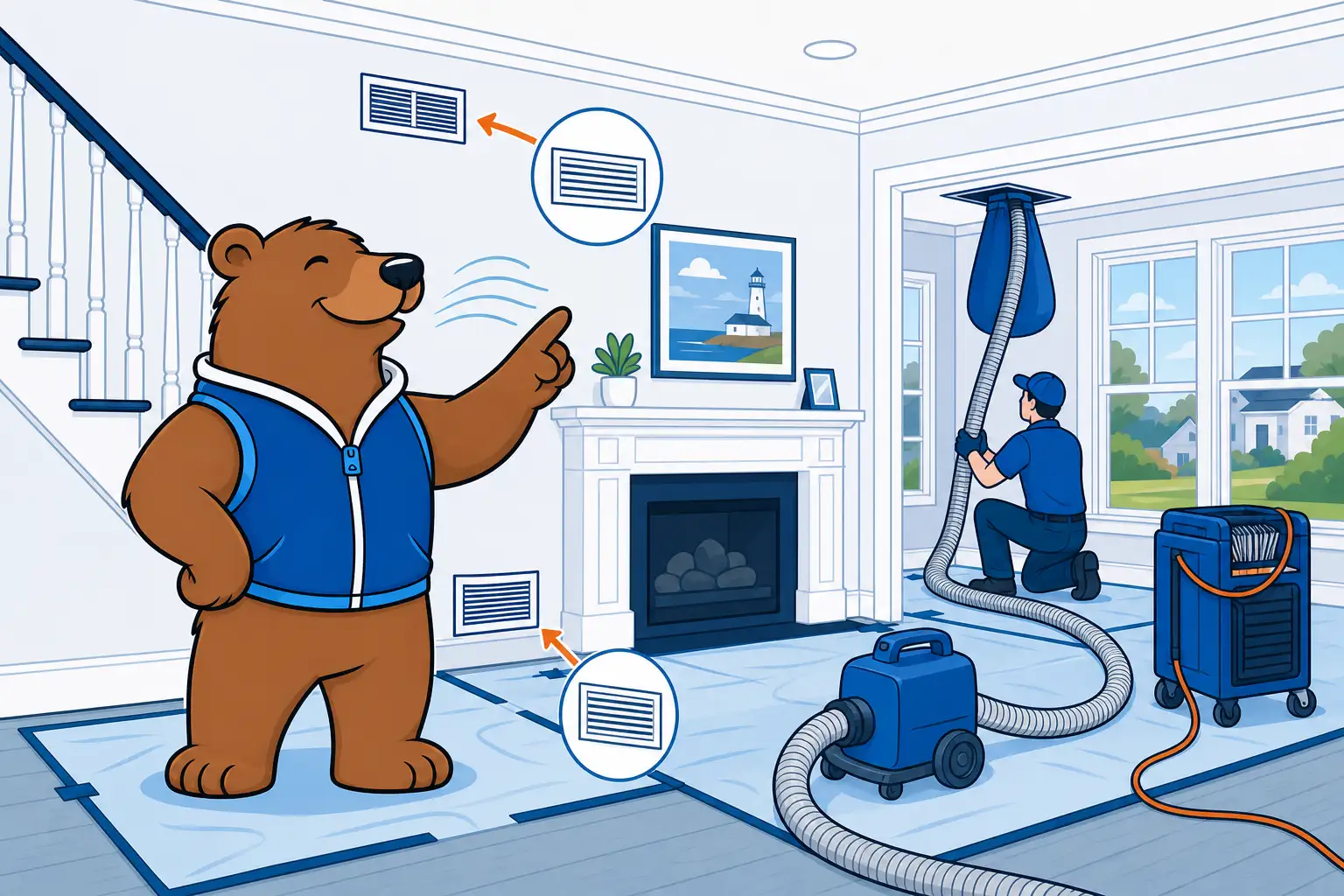
Professional duct cleaning uses negative air pressure duct cleaning to pull loosened debris toward a collection system. Our crews use agitation brushes and HEPA vacuum equipment to remove built-up dust, lint, and debris from accessible supply ducts, return ducts, trunk lines, registers, and the air handler area. Clean ducts move more air, and the vents stop feeding old buildup back into the rooms.
When Is Air Duct Cleaning Enough, and When Is It Not?
Air duct cleaning is enough when inspection shows dust, lint, pet hair, construction debris, or light surface buildup in accessible non-porous ductwork, and the moisture source is corrected. It is not enough when there is active water, widespread mold-like growth, contaminated porous duct material, or a legal mold remediation scope. In those cases, cleaning follows assessment and repair.
We clean air ducts. We do not pretend duct cleaning fixes every mold problem. If a condensate drain clog, return-air leak, roof leak, plumbing leak, or crawl space moisture problem remains, the same conditions come back.
New York treats mold assessment and mold remediation as separate licensed work under New York Labor Law Article 32. The NYS Department of Labor Mold Program requires licensed mold assessors and licensed mold remediation contractors for covered mold work. If you need mold testing, ask a licensed mold assessor, not the same contractor who will profit from remediation.
Testing is worth discussing when material is widespread, hidden, wet, or on porous duct board or fiberglass liner. A lab test can identify whether the material is mold, but the bigger question is still moisture. If the moisture source remains active, cleaning is only a temporary step.
The NADCA ACR Standard and IICRC S520 are useful reference points because they separate HVAC cleaning methods from broader mold remediation principles. In plain English, we remove accessible duct debris, but damaged porous materials, active leaks, and building-wide mold conditions need the right licensed specialist.
Here is the simple decision tree:
- Monitor: One dry dust ring, no odor, no water history, and no recurring growth.
- Book duct inspection or cleaning: Heavy dust, debris, dirty returns, visible non-porous buildup, or odors tied to airflow.
- Call HVAC repair: Standing water, AC short cycling, frozen coil, clogged drain, poor drainage, or return-air leak.
- Call a licensed mold assessor: Widespread mold-like growth, wet porous material, unclear contamination, or a real estate, insurance, or health-sensitive concern.
- Plan remediation: Assessment confirms a remediation scope, especially with porous duct material or building moisture.
What Should You Expect When You Request a Suffolk County Duct Cleaning Quote?
A duct cleaning quote should tell you what is included, what the special covers, what can change the price, and whether extra systems or unusual access are involved. We give homeowners clear ranges, written quote options, and booking choices. You can call 631-900-2634 from 8 AM to 7 PM ET or book online 24/7.
Our air duct cleaning service includes inspection of accessible vents and duct paths, cleaning of supply registers and return grilles, negative air pressure duct cleaning, agitation of accessible supply ducts and return ducts, trunk line cleaning where accessible, and cleanup around the work area. We also look at the air handler area and point out coil, drain pan, or access issues that need HVAC repair.
The $97 whole-home air duct basic cleaning is the entry-level whole-home service. Most completed whole-home air duct jobs land between roughly $195 and $650, with a median around $400, based on our completed jobs from July 2026, n=135. Bigger homes, heavy buildup, add-ons, multiple systems, inaccessible ducts, or suspected mold remediation needs push the total up.
There are no hidden fees if the scope matches the basic offer. The quote changes only when the home conditions change the work. Examples include extra HVAC systems, oversized homes, long or hard-to-reach runs, heavy contamination, disconnected ductwork, access panels that must be added, wet porous duct material, or work that belongs to a licensed mold remediation contractor.
You can review our current specials before you book. If you want a written quote to discuss at home first, ask for one. We would rather explain the scope clearly than rush you into a decision.
Booking is straightforward. Most visits are booked about 4 to 5 days out, and same-day or next-day slots are often available. Based on our completed jobs snapshot, our average booking lead time was 5.6 days, and the 8:00 AM arrival window was the most common. Arrival windows are 3 hours.
For appointment length, we do not give one standard duration before we know the number of systems, access, duct layout, and buildup. A simple inspection is shorter than a full cleaning, and a large Suffolk County home with multiple systems takes longer than a small ranch with easy basement access. We confirm the expected time before the visit.
Before our crew arrives, clear access to registers, return grilles, the air handler, basement, attic hatch, or crawl space entrance. Replace clutter with clear floor space, secure pets, and point out rooms with the strongest odor.
You can get a quote online if you prefer not to talk on the phone. If you want to confirm we serve your town, call us with your ZIP code.
What Should You Do Next If You Suspect Mold in Your Ducts?
Take three steps before hiring anyone: document what you see, check for moisture, and decide whether the issue is duct cleaning, HVAC repair, or licensed mold assessment. Photos of registers, returns, filters, the air handler area, and any water stains help us give better guidance. Stop running the system if it is spreading a strong odor or visible debris.
Use this homeowner action plan:
- Photograph the signs: Capture the register, nearby wall or ceiling, return grille, filter, air handler, and any stained duct material.
- Write down the pattern: Note which rooms smell, whether it happens with cooling, heating, or fan-only mode, and whether it started after a leak.
- Check humidity: If you have a hygrometer, note indoor relative humidity. High indoor humidity makes odor and condensation problems worse.
- Replace a dirty filter: Use the MERV filter your HVAC system can handle. A filter that is too restrictive can reduce airflow.
- Look for water: Check the condensate drain pan, drain line, basement floor, crawl space vapor barrier, attic duct insulation, and roof leak signs.
- Do not bleach ducts: Spraying chemicals into ducts without correcting moisture and containment creates more problems.
Call a professional when the smell returns after filter replacement, dark material comes back after cleaning the register, water is present near the air handler, one duct run is damp, or you see mold-like growth beyond a small vent surface. Call a licensed mold assessor when the material is widespread, wet, hidden, tied to a real estate issue, or on duct board or fiberglass duct liner.
Preventing a repeat problem is mostly about moisture control. Fix condensate drain clogs, seal return-air leaks, repair disconnected ductwork, insulate cold duct surfaces in attics and crawl spaces, and keep indoor humidity under control. Change filters on schedule and do not block returns.
Which Related Guides Should You Read Before You Book?
If you want the bigger picture, read one guide on what duct cleaning physically does and one guide on pricing. That keeps the mold question focused without turning it into a sales pitch. We also recommend checking dryer and chimney maintenance separately because those systems have different safety schedules and rules.
For a plain explanation of what our cleaning removes, read Air Duct Cleaning Benefits: What Does It Actually Do?. It explains dust removal, airflow, odor sources, and what duct cleaning does not claim to do medically.
For broader price context nearby, read our Air Duct Cleaning Cost Nassau County Guide. Suffolk County homes can have different layouts, especially with larger lots, longer duct runs, crawl spaces, and additions, but the guide helps you understand how system count, buildup, and access affect quotes.
The bottom line is simple. If you see dust, we clean dust. If you have airflow carrying old debris through the home, we remove that debris from the duct system. If you have active moisture, damaged porous material, or a mold remediation scope, we tell you before cleaning and point you toward the right next step.
Frequently Asked Questions
Usually 4 to 5 days, with some same-day and next-day openings. Based on our completed jobs snapshot, the average lead time was 5.6 days, and 8:00 AM was the most common arrival window. We use 3-hour arrival windows.
Written by
FreshBear Field TeamField Technicians
The FreshBear field team handles air duct, dryer vent, and chimney cleaning across Long Island, Queens, and Brooklyn. Every guide is based on what our technicians actually see in local homes, reviewed for accuracy before publishing.
Keep Reading
Post Renovation Duct Cleaning Nassau County Guide
Not every renovation needs duct cleaning. Learn when Nassau County homeowners should book, what is included, what costs extra, and when to wait.

Duct Cleaning Before Moving In Long Island Homes: Should You?
Moving into a Long Island home? Here is when duct cleaning is worth doing before furniture arrives, when it can wait, and how to book it without surprises.
Professional Duct Cleaning Process Long Island: What Happens?
A no-surprises walkthrough of what happens during professional duct cleaning in Long Island homes, from booking and written quotes to equipment, cleanup, and verification.