
Duct Cleaning vs Duct Replacement: Which Do You Need?
The Short Answer
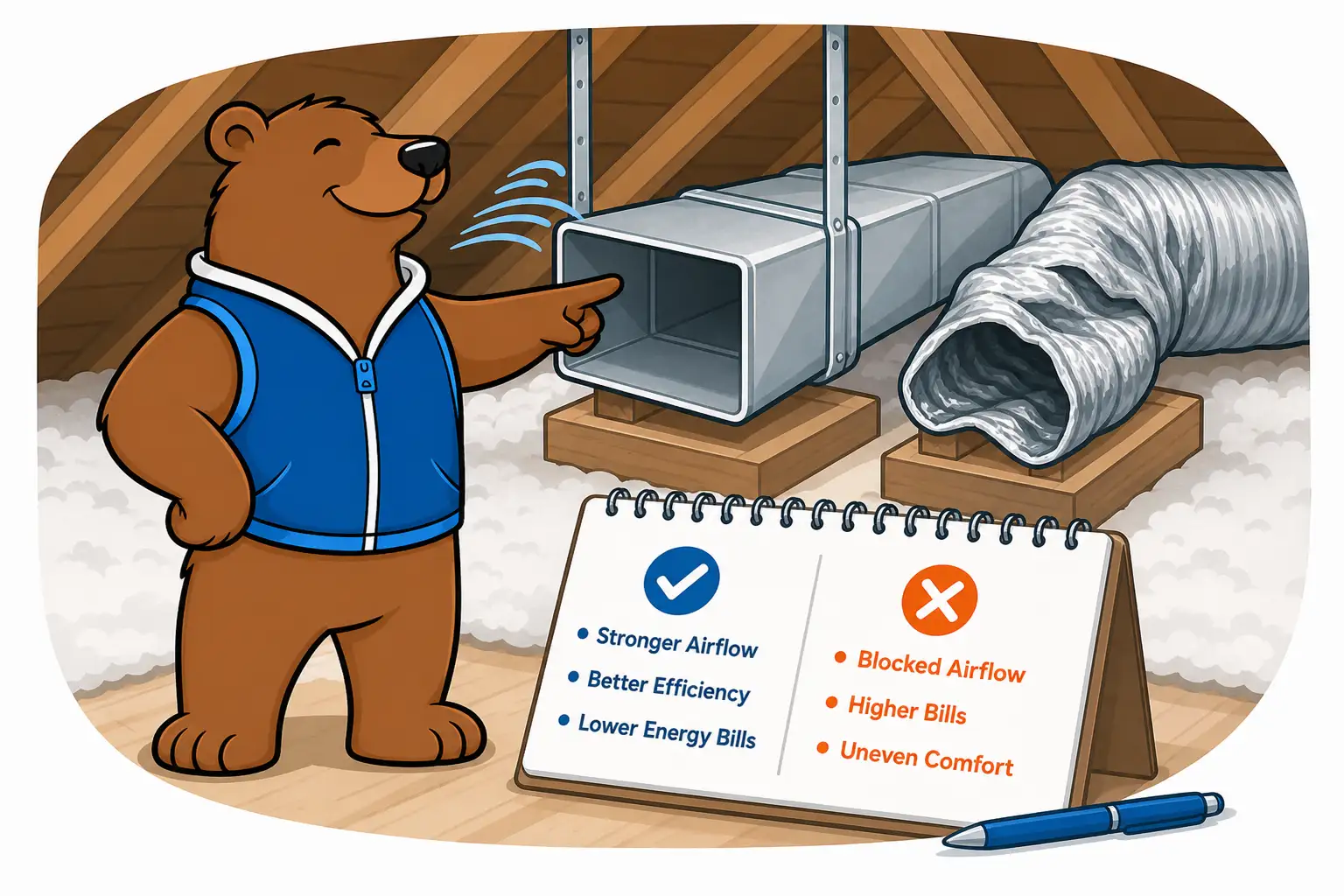
Choose duct cleaning when ducts are intact but have removable dust, debris, pest residue, or renovation material. Choose replacement when ductwork is crushed, disconnected, wet, deteriorated, contaminated in insulation or liner, wrapped with suspected asbestos, or poorly designed. We inspect accessible supply and return ductwork first, then document whether cleaning, repair, or replacement fits the evidence.
The right answer is not based on age alone. The duct cleaning vs replacement decision starts with what we can see, measure, and document inside the accessible system. On Long Island, we often inspect older Cape homes, split-level layouts, attic ducts, crawlspace ducts, and post-renovation systems where cleaning may be useful, but replacement may be the safer fix.
The EPA says air ducts should be cleaned based on conditions such as visible mold growth, pests, or excessive debris, not on a fixed calendar schedule. That supports our inspect-first approach: we clean when cleaning fits the condition, and we recommend repair or replacement when the ductwork itself is the problem. You can read the EPA’s condition-based guidance on whether air ducts should be cleaned.
How do we decide if ducts should be cleaned or replaced?
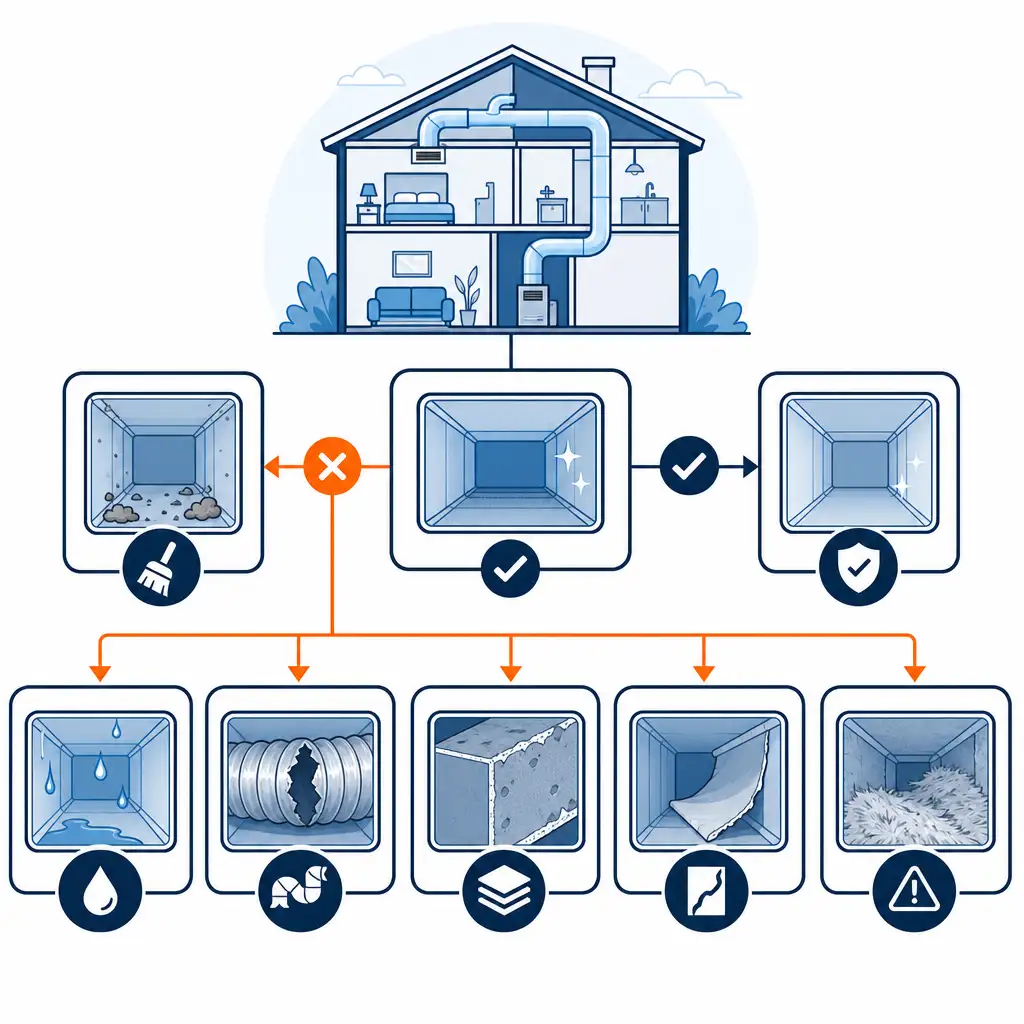
We decide by inspecting the duct condition, type of contamination, airflow complaint, moisture history, duct material, and access. Cleaning is for removable material in intact ducts. Replacement is for failed ductwork, unsafe materials, wet insulation, collapsed flex, disconnected runs, deteriorated internal duct liner, or design problems that cleaning cannot correct.
| Decision point | Duct cleaning | Duct replacement |
|---|---|---|
| Best for | Intact ducts with removable dust, debris, construction dust, or pest residue | Crushed, disconnected, wet, unsafe, obsolete, or poorly designed ductwork |
| What it can change | It can remove accessible loose debris and buildup from the duct path | It can correct damaged sections, failed materials, leakage points, or poor routing |
| What it cannot change | It will not fix crushed flex duct, bad layout, missing insulation, or disconnected branch runs | It will not automatically address dust sources inside the home unless those sources are corrected |
| Proof we want before approving work | Photos or video of accessible supply ducts, return ducts, main trunk line, branch runs, boots, plenums, and air handler areas | Photos or video showing damage, moisture, collapsed duct, failed liner, unsafe wrap, or design limitations |
| Risk of being oversold | Cleaning can be oversold when the real issue is airflow design, leakage, moisture, or equipment trouble | Replacement can be oversold when the ducts are intact and the problem is removable debris |
A real inspection is more than looking into one register. We look at accessible registers, grilles, boots, supply ducts, return ducts, main trunk line, branch runs, plenums, air handler cabinet, filter rack, blower compartment when accessible, evaporator coil area where visible, dampers, and the condition of sheet-metal ductwork, flex duct, duct board, and internal duct liner.
We also separate air quality concerns from airflow complaints. A dusty return is different from a weak second-floor bedroom. If a measured blockage was restricting airflow, removing that blockage can restore lost flow. If the problem is crushed flex, a closed damper, poor duct sizing, a disconnected run, or poor design, cleaning will not solve it.
What are the 6 checks that decide the recommendation?
The six checks are condition, contamination, airflow, moisture, material, and accessibility. Each one changes the answer. A cleanable sheet-metal trunk with loose debris is different from a wet duct board return, a collapsed flex branch, or an older run with suspected asbestos tape or wrap.
1. What condition is the ductwork in?
We look for crushed flex duct, separated joints, missing support straps, open seams, damaged boots, sagging branch runs, and disconnected sections. If a duct cannot carry air properly because it is physically failed, cleaning is the wrong primary fix. Repair or replacement should be discussed before cleaning.
Sheet-metal ductwork can often be cleaned if it is intact and accessible. Flex duct may be cleanable when it is sound, supported, and not brittle or crushed. Duct board and internal duct liner require more caution because aggressive agitation can damage soft or deteriorated surfaces.
2. What contamination is present?
Loose dust, drywall dust, sawdust, pet hair, and post-renovation debris may be removable if the duct surfaces can tolerate cleaning. Rodent or pest contamination changes the scope because droppings, nesting material, odor, and damaged insulation may be present in places that cleaning tools cannot safely restore.
If microbial growth is suspected, we do not treat that as a simple dust job. We want photos, moisture clues, and material identification. Cleaning hard duct surfaces is different from dealing with wet insulation, contaminated liner, or recurring moisture. If moisture is still active, cleaning alone is not a lasting answer.
3. Is the complaint really airflow?
One weak room may point to a duct problem, but not always a dirty duct problem. We check branch runs, dampers, registers, grilles, kinks, disconnected ducts, and obvious restrictions. If a room is weak because a flex duct is crushed in an attic, cleaning the system will not open that duct.
Massapequa split-level homes and Levittown Cape homes often have room-by-room comfort differences tied to layout, additions, attic routing, or older retrofits. In those cases, a duct design review may matter more than debris removal. ACCA Manual D, SMACNA practices, and the New York State Residential Code are the kinds of design and code references that shape proper duct work, not sales scripts for cleaning.
4. Is moisture part of the story?
Moisture changes the risk. South Shore coastal homes, crawlspace ducts, and attic ducts can face humidity, condensation, roof leaks, or insulation problems. Cleaning may remove accessible debris, but it will not correct condensation, water entry, wet fiberglass insulation, or chronic microbial growth.
If we see wet duct board, damp internal liner, stained insulation, or recurring musty conditions near the air handler, replacement can be safer than repeated cleaning. The first question is not, “Can we brush this?” The first question is, “Why did it get wet?”
5. What material are the ducts made from?
Metal ducts are usually the best candidates for mechanical cleaning when they are intact. Flex duct needs careful tool choice because inner liners can tear. Duct board and fiberglass-lined ducts need a gentler decision process because damaged fibers or deteriorated liner can make replacement the better choice.
Suspected asbestos tape or wrap is a stop sign. We do not disturb material that may contain asbestos. That situation needs proper identification and the right licensed handling before anyone approves duct cleaning, sealing, or replacement around it.
6. Can the ductwork be accessed safely?
Access matters. If the main trunk line, branch runs, plenums, or boots cannot be reached, the scope must be clear before work starts. We document what is accessible, what is not accessible, and whether access openings are appropriate for the specific system.
Hidden work creates hidden fees and bad decisions. Before adding work, a contractor should show what they found and explain why it changes the scope. We document the scope before adding work because the homeowner should not be asked to approve vague add-ons at the door.
What should a legitimate duct cleaning include?
A professional cleaning should address both supply and return sides, not just the visible register openings. It should include inspection, source removal where accessible, agitation suited to the duct material, negative pressure collection, register and grille attention, and documentation of what was cleaned and what could not be reached.
For our air duct cleaning, we inspect accessible ductwork first. When cleaning is appropriate, we loosen and collect accessible debris from the duct path using equipment matched to the system. We do not promise medical results, and we do not claim cleaning fixes duct damage or moisture problems.
A complete cleaning discussion should cover:
- Supply ducts and return ducts
- Main trunk line and branch runs
- Registers, grilles, boots, and accessible plenums
- Air handler and blower compartment access, when included and safe to service
- Filter rack condition and obvious bypass gaps
- Evaporator coil visibility, without pretending coil cleaning is automatically part of every duct job
- Duct material, including sheet metal, flex duct, duct board, and internal liner
- Before-and-after documentation where access allows it
If you want the step-by-step version, we explain the workflow in our guide to the professional duct cleaning process on Long Island. This article stays focused on the choice between cleaning and replacement.
Are advertised prices and add-ons a warning sign?
Advertised prices are not automatically dishonest, but they become a problem when the real scope is hidden until the crew arrives. Fair add-ons are tied to documented conditions. Red flags include vague sanitizer pressure, surprise per-vent fees, equipment fees not mentioned before approval, and replacement claims without photos or measurements.
Some add-ons can be legitimate. A heavily contaminated return, difficult access, a separate air handler, or a system with multiple zones can change the amount of work. The difference is proof. A fair recommendation shows what changed, why it matters, and what is included before the homeowner approves it.
Be cautious if someone quotes a very low number, then immediately says the ducts need sanitizing, mold treatment, coil work, extra access openings, or full replacement without showing the reason. Sanitizer is not a substitute for debris removal. Cleaning is not a substitute for moisture correction. Replacement is not justified just because ducts are old.
We do not repeat broad pricing claims inside a comparison article because cost depends on system layout, access, duct condition, and scope. If price is the main question, that belongs in a dedicated cost guide rather than a short paragraph here. Before you approve work, ask for the exact included components and the exact condition that triggers any added charge.
When is duct cleaning usually enough?
Cleaning is usually enough when the duct system is intact, dry, accessible, and contaminated with removable material. That can include normal dust buildup, construction dust, post-renovation debris, pet hair, move-in concerns, or visible debris inside registers and nearby duct sections, as long as the duct material can be cleaned safely.
This is common after remodeling, especially if the HVAC ran while sanding, cutting drywall, or doing floor work. If you recently renovated in Nassau County, our post-renovation duct cleaning guide explains why return ducts and filter history matter after dusty work.
Cleaning can also help when debris is blocking an accessible section. If we find a restriction in a boot, branch run, or return path and remove it, airflow to that area may improve if that restriction was the cause. If the weak room is caused by duct sizing, leakage, dampers, or equipment, the fix is different.
Cleaning can remove accessible pest debris after the pest issue is resolved, but it does not exclude pests or repair chewed ductwork. It can reduce accessible odor-holding debris, but it does not guarantee odor removal if the source is moisture, insulation, dead pests, smoking residue in building materials, or an HVAC drain issue. For realistic expectations, see our article on what air duct cleaning actually does.
When is duct replacement the better choice?
Replacement is the better choice when the ductwork cannot be cleaned safely, cannot move air properly, or remains contaminated because the material itself is compromised. Damaged flex duct, wet fiberglass, failed duct board, deteriorated liner, disconnected runs, suspected asbestos wrap, and chronic moisture problems are replacement or specialty-evaluation situations.
We usually talk about replacement or repair when we see:
- Collapsed or crushed flex duct in an attic or crawlspace
- Disconnected branch runs or open joints that need sealing or rebuilding
- Wet duct board or wet fiberglass insulation
- Deteriorated internal duct liner that may be damaged by cleaning
- Suspected asbestos tape or wrap that should not be disturbed
- Severe rodent or pest contamination in insulation or inaccessible areas
- Repeated microbial growth tied to unresolved moisture
- Poorly routed ducts that cannot deliver air evenly
- Old additions with undersized or poorly placed branch runs
Replacement can also be more cost-effective when cleaning would only treat the symptom. If a Huntington older home has leaky, poorly supported attic ductwork, repeated cleaning will not correct leakage, heat gain, or poor routing. If a North Shore older home has obsolete duct materials that cannot be cleaned without damage, replacement may protect the system better than aggressive brushing.
Duct sealing is separate from cleaning. Mastic sealant and UL 181 foil tape can be part of proper duct repair when the duct material is suitable, but they are not a magic fix for every leak or damaged run. We separate cleaning, repair, sealing, and replacement so the recommendation matches the defect.
Which should you choose for your situation?
Choose the option that matches the evidence, not the scariest sales pitch. If the ducts are intact and dirty, cleaning is the cleaner fit. If the ducts are damaged, wet, unsafe, or badly designed, replacement or repair should come first. If the evidence is mixed, approve only the sections that were documented.
Use this situation-based guide:
- You see dust or debris inside registers, but the ducts look intact. Start with inspection for cleaning. We check supply and return sides, not just the opening you can see.
- One room is weak, hot, or cold. Do not assume dirt is the cause. Ask for the branch run, damper, boot, and connection to be checked. Repair or redesign may matter more than cleaning.
- You finished renovation work. Cleaning may be useful if construction dust entered returns or the system ran during dusty work. Filter changes and source cleanup still matter.
- You smell musty air near the system. Ask for moisture clues before cleaning. A musty odor does not prove mold is in the ducts, and cleaning will not correct a wet source.
- You have older flex duct or duct board. Cleaning may still be possible, but tool choice and material condition decide it. Brittle, torn, wet, or deteriorated material may need replacement.
- You see suspected asbestos tape or wrap. Stop before disturbance. That is not a normal cleaning add-on.
- You are buying or moving into a home. Inspection can help separate normal dust from damage. Our guide to duct cleaning before moving into Long Island homes covers that decision in more detail.
The right company should be willing to tell you when cleaning is not the answer. That is especially true in the Town of Hempstead, Town of Oyster Bay, Town of Huntington, Town of Brookhaven, and older neighborhoods where additions, attic runs, and crawlspace routes can make the duct system less straightforward than it looks from the registers.
What should a Long Island inspection show before any upsell is approved?
Before you approve extra cleaning, repair, sealing, or replacement, ask to see the finding that justifies it. Photos or video should show the component, the location, and the reason the original scope changed. A vague statement like “your ducts are bad” is not enough.
A useful inspection record may show:
- Which register, grille, boot, branch run, trunk, or plenum was inspected
- Whether the issue is on the supply side or return side
- Whether the material is sheet metal, flex duct, duct board, or lined duct
- Whether contamination is loose debris, staining, pest material, or moisture-related
- Whether a section is crushed, disconnected, torn, wet, or deteriorated
- Whether access limits the cleaning result
- Whether suspected asbestos tape or wrap is present and should not be disturbed
- Whether the air handler, filter rack, blower compartment, or evaporator coil area needs a separate HVAC review
Ask these questions before you approve the work:
- What exact ducts and components are included?
- Will the supply path and return path both be addressed in the quoted scope?
- What equipment will be used for my duct material?
- What findings would change the scope?
- Will I see photos or video before approving add-ons?
- Is the recommendation cleaning, repair, replacement, or a mix?
- If replacement is recommended, which run failed and why?
- If microbial growth is suspected, what moisture source was found?
- If airflow is weak in one room, what was checked besides dirt?
- What is excluded from the quoted work?
If you want us to inspect your accessible ductwork and explain the difference between cleaning, repair, and replacement, call 516-447-8854 from 8 AM to 7 PM ET or schedule your visit online anytime. We will document the scope before adding work, and we will tell you when cleaning is not the right fix.
Frequently Asked Questions
Yes. A system can need cleaning in one area and repair or replacement in another. For example, an intact sheet-metal trunk may be cleanable, while a crushed flex branch to one room may need replacement. We document the specific component before recommending a mixed scope.
Written by
FreshBear Editorial TeamEditorial Team
FreshBear publishes practical home-service guides using primary safety guidance, documented service policies, and aggregate completed-job data when it is relevant. Automated drafts must pass source, claim, duplication, and business-fact checks before publication.
Keep Reading
How Often Should Air Ducts Be Cleaned?
Air ducts should be cleaned based on verified conditions, not a recurring calendar. Here is the EPA-based decision process for NYC homes and apartments.
Negative Pressure Duct Cleaning: How It Works
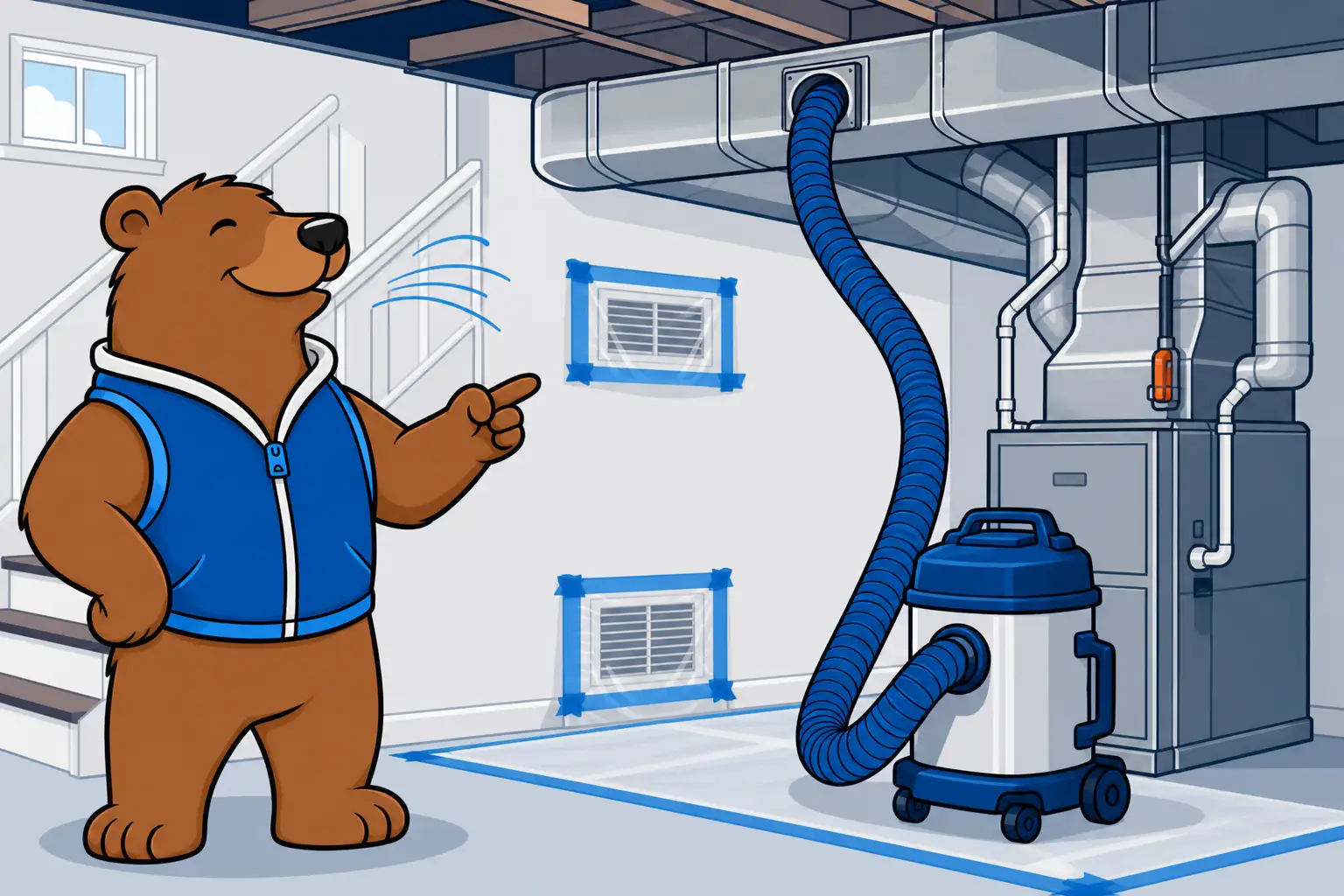
Negative pressure duct cleaning is not just vacuuming vent covers. Learn how the method works, what should be included, and how Long Island homeowners can spot real proof before booking.

What Does Air Duct Cleaning Include? Legitimate Scope Checklist
Air duct cleaning is not one universal service scope. Use this checklist to compare the included ductwork, method, access limits, proof, and exclusions.