
Professional Duct Cleaning Process Long Island: What Happens in Your Home?
The Short Answer
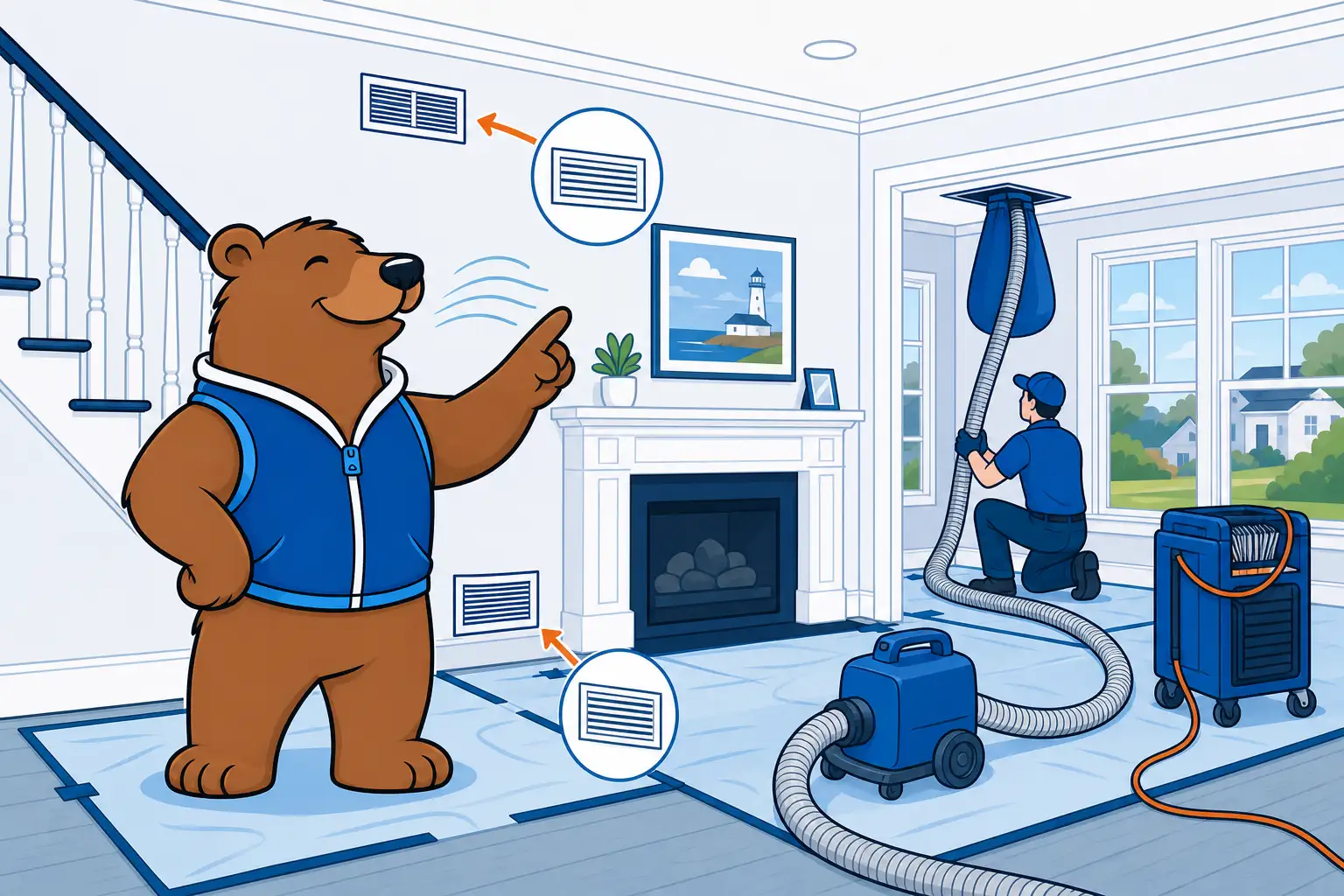
The professional duct cleaning process Long Island homeowners ask about starts with an inspection, not a vacuum hose. Our technicians count the system, confirm access, protect the home, place the ductwork under negative pressure, loosen debris inside supply and return ducts, collect it with vacuum equipment, clean the registers, then review the work before payment.
The professional duct cleaning process Long Island homeowners ask about starts with an inspection, not a vacuum hose. Our technicians count the system, confirm access, protect the home, place the ductwork under negative pressure, loosen debris inside supply and return ducts, collect it with vacuum equipment, clean the registers, then review the work before payment.
What does this guide cover about the real duct cleaning process?
This guide walks through what happens before, during, and after a professional duct cleaning visit in a Long Island home. We explain the appointment flow, what is normally included, what is not automatically included, why prices change, and how to get a written quote before approving work.
Duct cleaning is not the right answer for every house on a fixed calendar. The EPA duct cleaning guidance says air ducts should be cleaned based on conditions such as visible mold, pests, or excessive dust and debris, not simply because a certain number of years passed.
That is our position too. We inspect first, then clean when the duct system shows it needs cleaning. If the issue is a wet crawlspace, a leaking return, a clogged HVAC filter slot, or damaged flex duct, cleaning alone does not fix the cause.
For homeowners comparing options, our main air duct cleaning page explains the service at a broader level. This article stays focused on the appointment itself.
How do booking, scheduling, and quotes work before the appointment?
Before the appointment, we ask for details that affect the scope, access, and price. Long Island homeowners can call 631-900-2634 from 8 AM to 7 PM ET, or use online booking 24/7. As of July 2026, most visits are booked about 4 to 5 days out, based on our completed jobs.
We ask practical questions before we come out, including:
- Town and home type, such as ranch, Cape Cod, split-level, Colonial, condo, or co-op
- Number of HVAC systems, zones, thermostats, and air handlers
- Approximate number of supply registers and return grilles
- Whether the air handler is in a basement, attic, closet, garage, or crawlspace
- Whether the ductwork is sheet metal duct, flex duct, fiberboard duct, or a mix
- Any concerns about odor, visible debris, renovation dust, pests, moisture, or suspected mold
- Whether you want only the ducts cleaned or also want pricing for optional services
Our completed-jobs snapshot from 2026-07-19 shows an average booking lead time of 5.6 days, with 25 same-day and 50 next-day completed visits. Same-day and next-day slots are often available, but they are not guaranteed. The 8:00 AM arrival window is the most requested, and our arrival windows are 3 hours.
Busy periods often follow spring renovation projects, summer air conditioning use, and fall heating start-up. If you live in the Town of Hempstead, Town of Oyster Bay, Town of Huntington, Town of Islip, Town of Babylon, or Town of Brookhaven, booking a few days ahead gives us more room to match the right crew and equipment to your layout.
What should you do before our crew arrives?
Before we arrive, clear access to vents, returns, the furnace cabinet, air handler, and HVAC filter slot. You do not need to remove every piece of furniture, but a clear path helps our technicians protect the house, set up equipment, and avoid wasting appointment time on basic access.
Safe DIY prep includes:
- Replace or set aside a clean HVAC filter if you already bought one.
- Move small items away from supply registers and return grilles.
- Unlock basement, attic, garage, utility room, and crawlspace access.
- Secure pets in a separate room.
- Write down concerns you want us to inspect, such as one dusty room or a noisy return.
- Take note of any recent construction, water leaks, pest treatment, or HVAC repair.
Do not open duct panels, cut access holes, remove blower parts, or disturb suspected mold. Those are not safe DIY steps. If there is moisture, heavy contamination, or damaged ductwork, we need to inspect before anyone spreads debris through the system.
What happens step by step during a professional duct cleaning appointment?
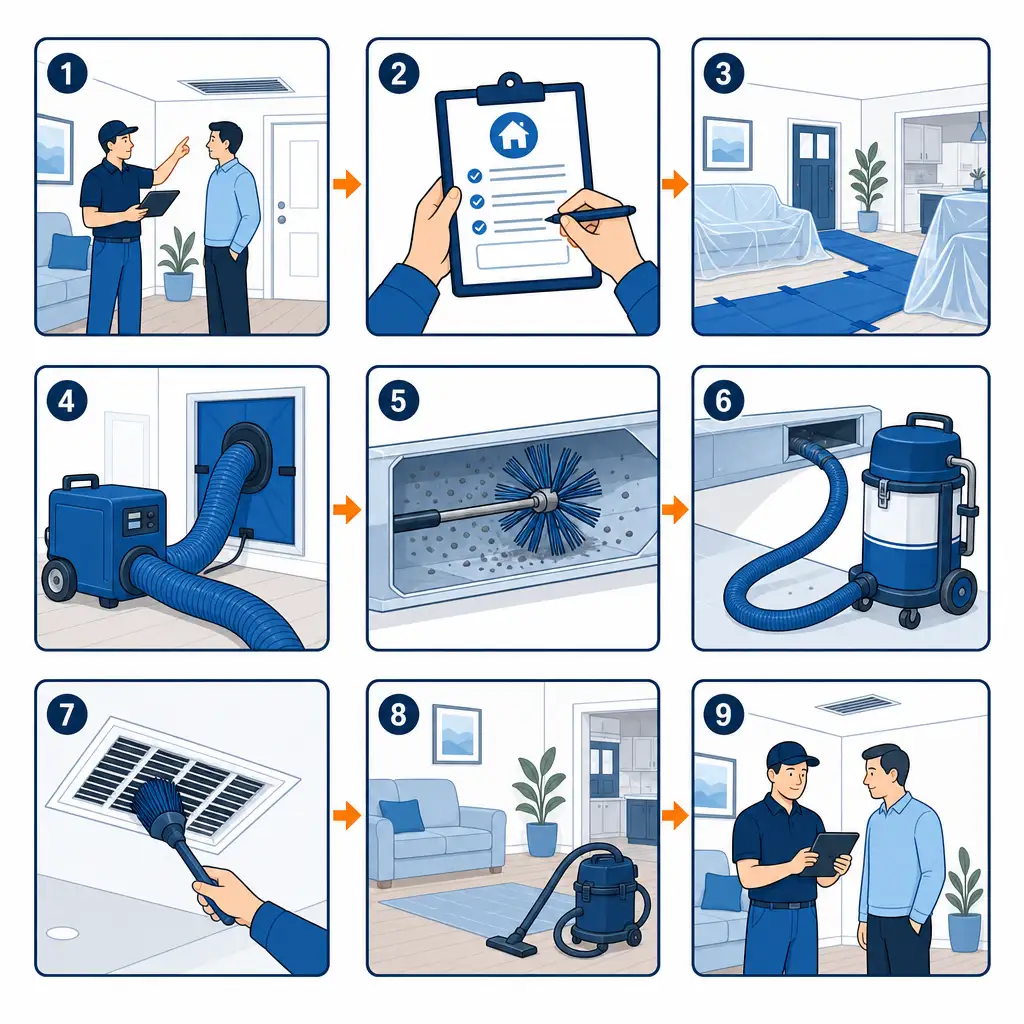
A professional appointment follows a clear order: walkthrough, written scope, home protection, equipment setup, duct agitation, vacuum collection, register cleaning, system-area cleaning, cleanup, and review. The exact access points and tools change by home, but the process should never feel vague or rushed.
Here is the step-by-step flow we use in real Long Island homes.
1. We complete a home walkthrough and written scope of work
Our technicians start by walking the home with you. We count supply registers, return grilles, branch ducts, main trunk lines, systems, zones, and access points. We also locate the air handler, blower compartment, supply plenum, return plenum, furnace cabinet, and filter slot.
This is where pricing gets confirmed. You should see what is included, what is optional, and what would create an add-on before work starts. If you need to discuss the written quote with a spouse, landlord, condo board, co-op board, or family member, say so. We give you room to review it before approving the work.
2. We protect floors, walls, furniture, and registers
Our crews place drop cloths where equipment and hoses travel. We use corner guards where hose movement could rub against wall edges. We remove and handle registers carefully, especially in older Nassau County capes and ranch homes where painted-over grilles or older screws are common.
A good cleaning should not leave the house dusty. Duct cleaning pulls built-up dust and debris into collection equipment. It does not blow it across your furniture.
3. We set up negative pressure and collection equipment
Professional duct cleaning uses controlled suction and agitation. Depending on the system layout, our technicians connect a negative air machine or HEPA vacuum to the duct system. The goal is simple: loosen debris inside the ducts and move it toward collection, not back into the rooms.
The right setup depends on the duct material and access. Sheet metal duct handles stronger agitation than fragile old fiberboard duct. Flex duct needs careful tool selection so the inner liner is not damaged.
4. We clean supply ducts, return ducts, and accessible trunk lines
We clean the duct system in sections. Our technicians work through supply registers, return grilles, branch ducts, main trunk lines, and accessible plenums. Compressed air whips and rotary brushes loosen dust and debris from the duct walls while vacuum equipment collects it.
Clean ducts move more air through open pathways. You feel stronger, cleaner airflow at the vents because the ducts stop feeding built-up dust back into the rooms.
5. We clean registers, grilles, and accessible system areas
Registers and return grilles collect dust on both sides. We clean them instead of reinstalling dirty covers over cleaned duct openings. We also inspect accessible areas around the air handler, blower compartment, blower wheel, evaporator coil area, furnace cabinet, and filter slot.
Important detail: inspection is not the same as deep mechanical service. Some components need HVAC service, coil cleaning, blower removal, or repair work outside a standard duct cleaning scope.
6. We seal access panels, clean the work area, and review results
When the cleaning is done, we close access panels, reinstall registers, remove drop cloths, and clean the work area. We review what we found, point out damaged duct sections or moisture issues, and explain any recommended next steps.
You can ask for before-and-after photos where access allows. Photos are especially useful in basement systems, attic air handlers, and main trunk lines where the homeowner cannot easily see inside.
What is included in a standard professional duct cleaning?
A standard cleaning normally includes the accessible parts of one duct system: supply registers, return grilles, supply ducts, return ducts, branch ducts, main trunk lines, accessible supply plenum, accessible return plenum, basic debris removal, and cleanup around the work areas. We confirm the exact scope in writing before work begins.
A standard one-system cleaning usually includes:
| Component | What we do |
|---|---|
| Supply registers | Remove or open, clean, and reinstall where safe |
| Return grilles | Clean grille surfaces and return openings |
| Branch ducts | Agitate and vacuum accessible runs |
| Main trunk lines | Clean accessible trunk sections and remove collected debris |
| Supply plenum | Clean accessible areas when reachable |
| Return plenum | Clean accessible areas when reachable |
| Air handler area | Inspect accessible cabinet areas and clean loose debris within scope |
| Work areas | Use drop cloths, collect debris, and leave the area clean |
This is where a NADCA-style process matters. The company should name the actual components being cleaned instead of saying only, "whole house ducts." Whole house can mean different things if there are two systems, finished basement zones, attic equipment, or a separate addition with patched ductwork.
What is not automatically included, and why can the price change?
Not every related service belongs inside a standard duct cleaning. Legitimate price changes come from extra systems, high vent counts, difficult access, heavy buildup, optional treatments, specialty components, or conditions that need repair or remediation. Hidden fees are not acceptable. Clear scope changes are acceptable when they are explained before work begins.
Common items that are not automatically included are:
- A second HVAC system or separate zone with its own air handler
- Dryer vent cleaning
- Sanitizer or antimicrobial treatment
- Mold remediation
- Evaporator coil cleaning
- Blower wheel removal and deep cleaning
- Furnace repair or air handler repair
- Sealing or replacing damaged flex duct
- Cutting new access openings where none exist
- Attic or crawlspace work with difficult, unsafe, or blocked access
Our $97 offer covers the basic whole-home air duct cleaning tier, so it is the starting scope rather than a final price for every layout. Most completed whole-home air duct jobs land between roughly $195 and $650, with a median around $400, based on completed FreshBear Air Solutions and AirPros NY jobs from July 2026, n=135. In our air-duct-only completed-job data, n=32, the median was $295 and the middle half landed between $100 and $590.
If you want to compare the special with common add-on triggers, check our current specials and our Air Duct Cleaning Cost Nassau County Guide. We still confirm the written quote on site because the real duct layout matters.
Dryer vents are separate from air ducts. The NFPA says to clean the lint filter and dryer exhaust vent as part of dryer safety, and our position is to clean the dryer exhaust vent at least once a year, more often for long runs or heavy use. If you want that service added, confirm it separately from duct cleaning. The NFPA dryer safety sheet is here: NFPA clothes dryer safety guidance.
How do Long Island home layouts change the cleaning?
Long Island duct cleaning varies because the housing stock varies. A Levitt-era Cape in Nassau County, a ranch in the Town of Hempstead, a split-level in the Town of Oyster Bay, and a larger Colonial in Suffolk County do not give us the same duct access, vent count, or equipment setup.
In Nassau County, many older ranch homes and Cape Cod homes have been renovated several times. We often see additions, finished basements, patched duct lines, and basement air handlers. That can mean short original duct runs mixed with newer branch ducts serving a den, dormer, or rear extension.
In Suffolk County, homes in the Town of Huntington, Town of Brookhaven, Town of Islip, and Town of Babylon often have larger footprints and longer duct runs. Colonials and split-level homes may have more separation between zones, longer returns, and attic air handlers serving upper floors.
Crawlspaces and coastal humidity matter too. South Shore homes can have moisture and corrosion around low ductwork, crawlspace ducts, and older sheet metal. If we see wet insulation, rusted sections, disconnected flex duct, or suspected microbial growth, we stop treating it like a simple cleaning problem and talk through the next step.
Condos and co-ops add another layer. We may need building access rules, elevator scheduling, parking details, board requirements, or proof of insurance. Some buildings limit work hours, so online booking should include those notes.
How can you verify the ducts were actually cleaned?
You verify the work by asking what was cleaned, viewing accessible before-and-after photos, checking cleaned registers and returns, and reviewing notes about any blocked, damaged, or unreachable sections. A professional crew explains the result in plain language instead of asking you to trust a vague statement.
Good verification includes:
- Photos of accessible duct interiors, trunk lines, plenums, or returns when possible
- Cleaned supply registers and return grilles
- A clear count of systems, vents, returns, and access points serviced
- Notes on anything not cleaned because it was unsafe, inaccessible, damaged, or outside scope
- A final walkthrough before payment
You should also know what duct cleaning does not prove. It does not certify that mold is gone if no mold evaluation was performed. It does not repair an undersized return. It does not fix a weak blower motor, clogged evaporator coil, or leaky duct connection. For suspected contamination, start with our guide to signs of mold in air ducts Suffolk County homeowners should know.
When is duct cleaning not enough?
Duct cleaning is not enough when the source problem remains active. Moisture intrusion, suspected mold, pest entry, damaged ductwork, disconnected flex duct, dirty coils, blower problems, and HVAC performance issues need the right repair or evaluation. Cleaning removes built-up debris from ducts, but it does not rebuild the HVAC system.
Call for a deeper inspection if you see:
- Wet insulation or condensation around ducts
- Musty odor that returns quickly after cleaning
- Visible growth on registers, inside plenums, or near the air handler
- Rodent droppings or nesting material
- Crushed or disconnected flex duct
- Rusted sheet metal duct in a crawlspace
- Weak airflow from one area only
- Dust streaking around a leaky return grille
Some fixes are safe DIY, such as replacing the HVAC filter, keeping returns unblocked, and vacuuming register faces. Other work needs a professional, including cutting access panels, cleaning inside the blower compartment, cleaning the evaporator coil, treating suspected mold, sealing duct leaks, or repairing electrical and mechanical HVAC parts.
If your goal is to understand what clean ducts do for the home, review the specific results, limits, and inspection signs before you approve work. If you are ready for a written quote, call 631-900-2634 or schedule service online.
FAQ
How far in advance do I need to book?
Most visits are booked about 4 to 5 days out, and our completed-job data shows an average lead time of 5.6 days as of July 2026. Same-day and next-day visits are often available, but the 8:00 AM window fills fastest.
Can I book online instead of talking on the phone?
Yes. You can book online 24/7 through our contact page. If your home has a condo board, co-op rules, attic equipment, crawlspace access, or multiple HVAC systems, add those notes so we can prepare the right scope.
Are there hidden fees on top of the advertised price?
There should not be hidden fees. The price can change for legitimate reasons, such as extra systems, high vent counts, difficult access, heavy buildup, optional sanitizer, dryer vent cleaning, or components outside the standard scope. We confirm the written quote before work begins.
What does the special offer actually cover?
Our $97 special applies to the basic whole-home air duct cleaning scope. Before booking, confirm how many systems are included, how vents and returns are counted, whether access work is needed, and which optional services are separate.
Can I get a written quote to discuss at home first?
Yes. If you need to review the quote with a spouse, landlord, board, or family member, tell us during the walkthrough. We put the scope in writing before you approve the work.
Does duct cleaning include the dryer vent, coils, or sanitizing?
Not automatically. Dryer vent cleaning, evaporator coil cleaning, blower wheel removal, sanitizer or antimicrobial treatment, and mold remediation are separate items unless they are listed in your written scope.
Frequently Asked Questions
Most visits are booked about 4 to 5 days out, and our completed-job data shows an average lead time of 5.6 days as of July 2026. Same-day and next-day visits are often available, but the 8:00 AM window fills fastest.
Written by
FreshBear Field TeamField Technicians
The FreshBear field team handles air duct, dryer vent, and chimney cleaning across Long Island, Queens, and Brooklyn. Every guide is based on what our technicians actually see in local homes, reviewed for accuracy before publishing.
Keep Reading
Post Renovation Duct Cleaning Nassau County Guide
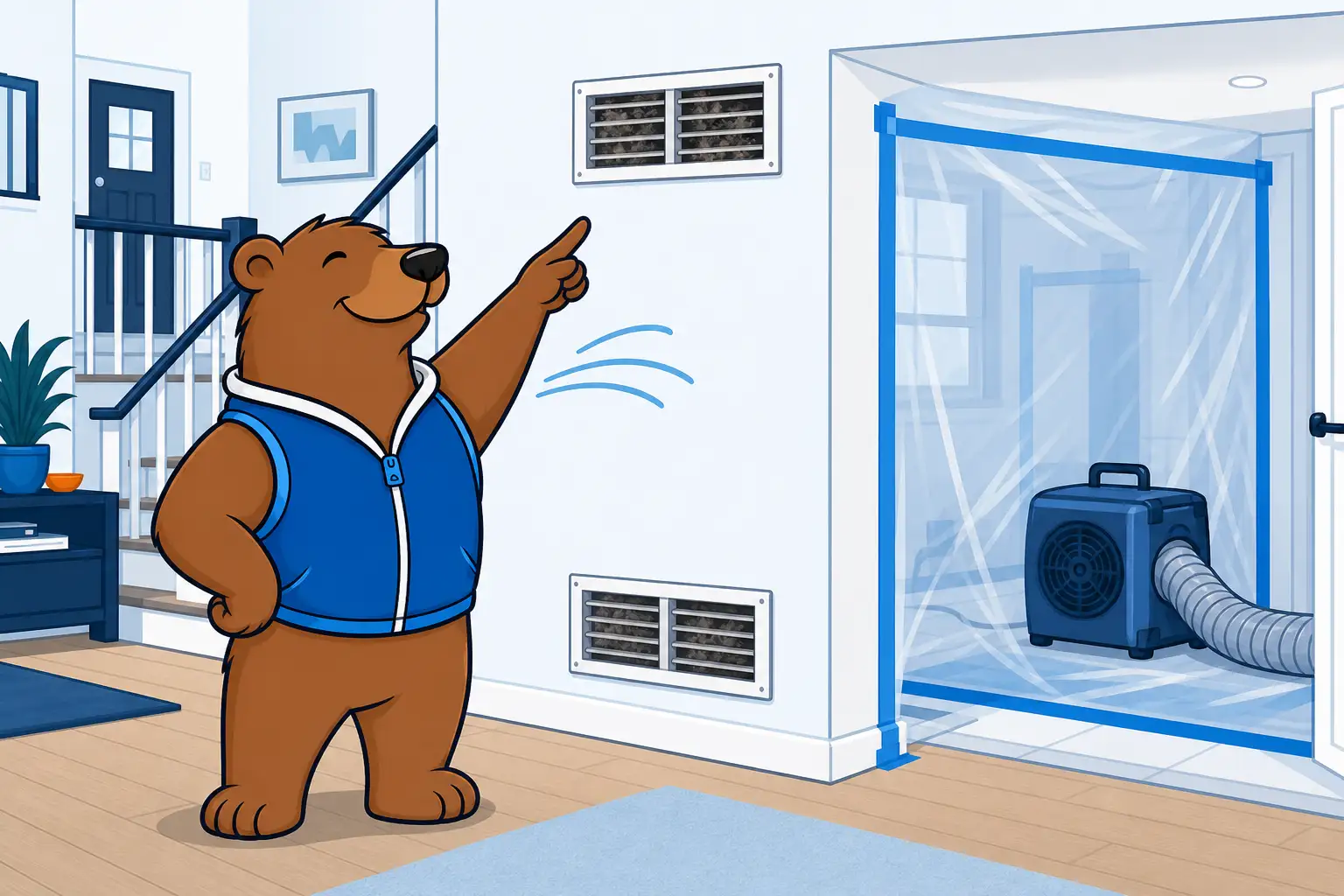
Not every renovation needs duct cleaning. Learn when Nassau County homeowners should book, what is included, what costs extra, and when to wait.

Duct Cleaning Before Moving In Long Island Homes: Should You?
Moving into a Long Island home? Here is when duct cleaning is worth doing before furniture arrives, when it can wait, and how to book it without surprises.
Signs of Mold in Air Ducts Suffolk County Homeowners Should Know
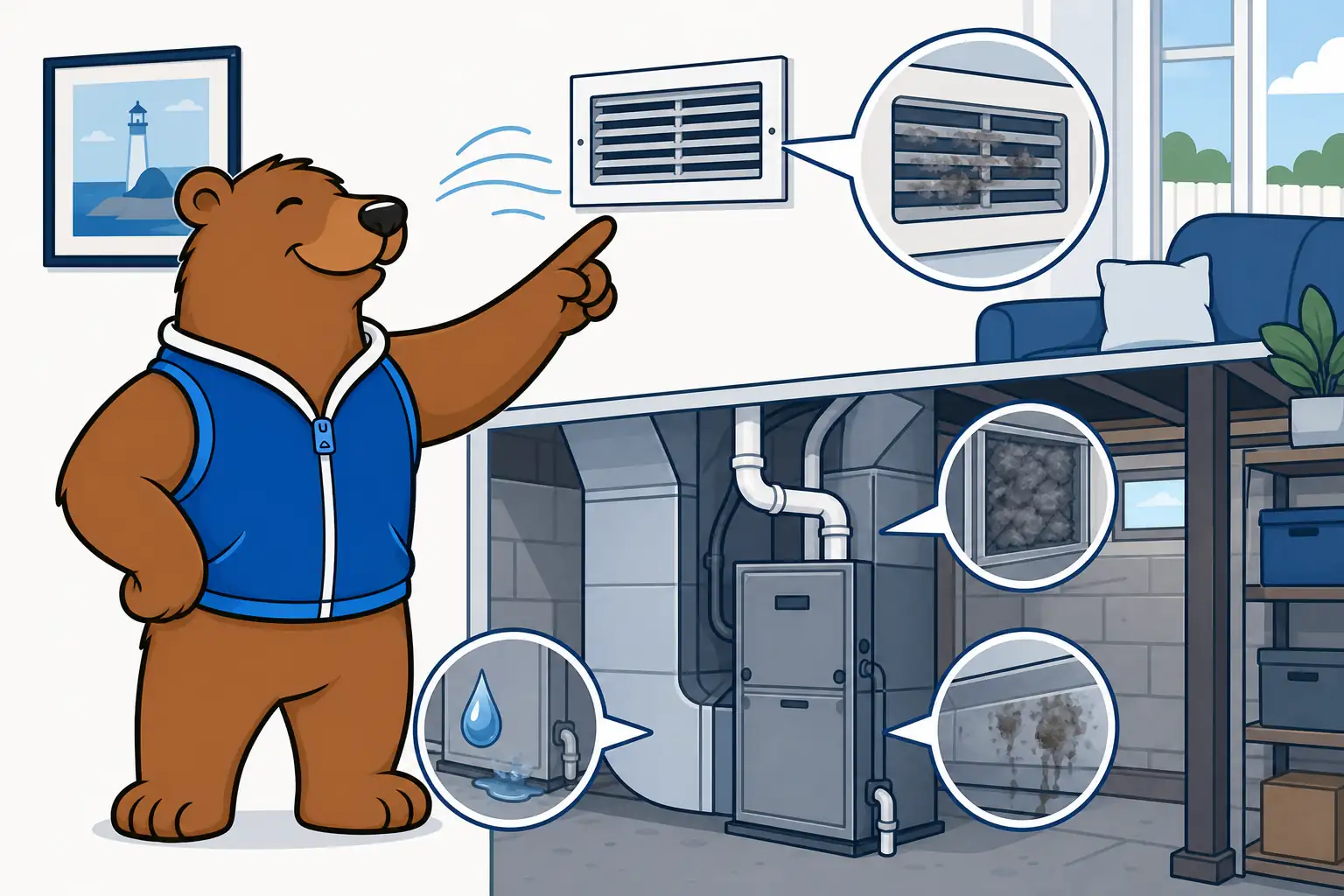
Musty vents do not always mean mold. Learn the real duct mold signs Suffolk County homeowners should check, common false alarms, and when to call a pro.