
Duct Cleaning Before Moving In Long Island Homes: Should You?

The Short Answer
Yes, duct cleaning before moving in Long Island homes makes sense if the ducts show dust buildup, renovation debris, pet dander, pest evidence, musty odor, or unknown maintenance history. If the system looks clean and the seller has real proof of recent cleaning, it can wait. We recommend inspecting first, then cleaning based on what the ducts show.
For duct cleaning before moving in Long Island homes, the right answer depends on what the system shows. If the home has unknown maintenance history, renovation dust, pet dander, rodent evidence, musty odors, or dirty registers, schedule cleaning before furniture arrives. If the ducts look clean, the HVAC system is serviced, and you have proof of recent cleaning, it can wait. The EPA supports a condition-based approach, so we inspect first and clean when the ducts show a real need.
Should you clean the ducts before moving into a Long Island home?
You should clean the ducts before moving in when the system shows buildup, debris, odor, pest signs, or renovation dust. You can wait when the ducts are visibly clean, the filter rack is sealed, and the seller provides credible proof of recent service. Duct cleaning before moving in Long Island homes is a condition-based decision, not an automatic moving chore.
That matters because moving day is the easiest time to reach registers, grilles, closets, crawlspace access, and attic HVAC equipment. Once beds, rugs, boxes, and couches are in place, the job takes more coordination.
We also stay honest about health claims. Cleaning removes dust, lint, pet dander, and loose debris from supply ducts, return ducts, trunk lines, and branch lines. The EPA does not say duct cleaning prevents illness or guarantees allergy relief, and its guidance on air duct cleaning recommends cleaning based on conditions such as visible mold, pests, or excessive debris.
If you want the larger service overview, our air duct cleaning page explains what we clean and how we handle Long Island homes with central air systems and forced-air heating.
When does it make sense in Long Island homes?
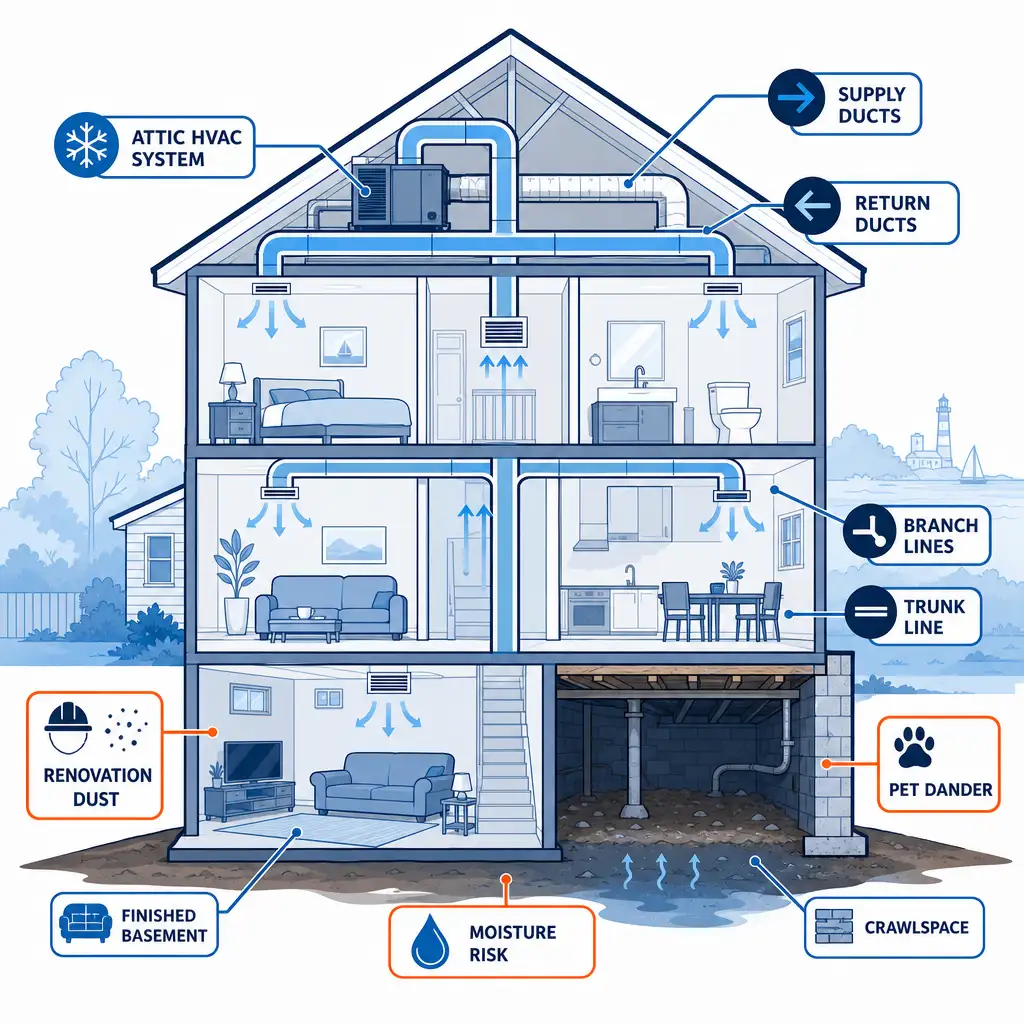
It makes sense before move-in when the home is older, recently renovated, previously occupied by pets, converted from oil to gas heat, or built with long duct runs through a crawlspace, attic, or finished basement. In these homes, ducts often collect construction dust, pet dander, sheetrock debris, old filter dust, and loose insulation before the buyer ever gets the keys.
We see the decision most often in Nassau County Levitt homes, Cape Cod homes, ranch homes, and older split-level homes that have been updated several times. Additions often leave patched sheet metal ductwork, flex duct, ductboard sections, or awkward branch lines that do not match the original layout.
In Suffolk County, homes in Huntington, Smithtown, Babylon, Islip, and Brookhaven often have larger footprints and longer duct paths. Longer runs collect more debris when filters have been neglected or return grilles have pulled dust from finished basements, garages, or utility rooms.
South Shore and Hamptons homes also bring moisture questions. Coastal humidity and salt air do not mean every duct needs cleaning, but musty odor, rust staining near registers, wet ductboard, or visible mold-like growth changes the conversation. In those cases, we separate cleaning from mold assessment so the right licensed professional is involved when needed.
Move-in cleaning is especially useful after:
- Floor sanding, cabinet work, sheetrock repairs, or flip-house renovations
- A long vacant period with unknown HVAC use
- Pet odor or visible hair inside return grilles
- Rodent droppings near ducts, air handler closets, or crawlspaces
- Dirty supply registers that blow gray dust when the blower starts
- Oil-to-gas conversion work that left soot, basement dust, or patched duct sections nearby
For a deeper look at what duct cleaning does and does not do, read our guide to air duct cleaning benefits.
When can duct cleaning wait until after you move in?
Duct cleaning can wait when the home has clean registers, a clean blower compartment, a tight filter rack, no musty odor, no pest evidence, and a documented recent cleaning from a real company. If the central air system runs cleanly and the home inspection does not flag duct issues, you can prioritize HVAC service, filters, and normal move-in tasks first.
A seller saying “the ducts were cleaned” is not enough by itself. Ask for an invoice, date, company name, scope of work, and before-and-after photos of return ducts, supply ducts, trunk lines, and the air handler area. If the invoice only says “vents cleaned,” ask whether the crew cleaned past the registers or only vacuumed the visible openings.
You can also wait if the home has a ductless system, radiator heat with separate cooling, or only a small amount of ductwork serving one addition. In those cases, the bigger need might be HVAC maintenance, filter replacement, or sealing a return leak rather than full duct cleaning.
We also pause when the job needs a different trade first. Rodent droppings call for pest cleanup and exclusion before duct cleaning. Suspected asbestos insulation near older ductwork calls for an asbestos evaluation under New York State Department of Labor guidance before anyone disturbs the area. Visible mold-like growth can require a New York State licensed mold assessor and, when confirmed, licensed remediation before routine cleaning.
Is it better to clean ducts before or after painting, floors, and renovations?
Clean the ducts after dusty work is finished and before furniture delivery whenever possible. Painting alone does not load ducts the way sanding floors, drywall repairs, demolition, or cabinet cutting does. If contractors are still creating construction dust, wait until they are done, then clean ducts before rugs, beds, and heavy furniture block access.
The best order is usually: close on the home, complete sanding or renovation work, replace or protect the HVAC filter during work, finish deep cleaning, then schedule duct cleaning. If painters are only doing touch-ups with little dust, we can work before or after them.
Floor refinishers and drywall crews create fine construction dust that slips through weak filters and open returns. Once that dust reaches return ducts, the blower compartment, supply ducts, and branch lines, normal house cleaning does not reach it. We use negative air equipment, a HEPA vacuum, and agitation tools such as a rotary brush or air whip to pull that debris out of the duct system.
If your furniture delivery is already booked, tell us which rooms will be blocked first. We can help you decide whether to clean before delivery, after delivery, or in two access phases. For vacant homes, we can often coordinate with a lockbox, agent, contractor, or family member if access is approved in advance.
What should a move-in duct cleaning include?
A standard move-in duct cleaning should include the supply and return side of the duct system, accessible registers and grilles, trunk lines, branch lines, and debris removal using negative air and agitation. The appointment should also include a basic visual check of the air handler area, blower compartment access, filter rack, and duct materials.
We do not blur air duct cleaning with other services. Dryer vent cleaning, evaporator coil cleaning, sanitizing, mold remediation, HVAC repair, duct replacement, and access panel installation are separate unless they are written into the quote.
A proper scope should state:
- How many systems are included
- Whether supply ducts and return ducts are both included
- How registers and grilles are handled
- Whether trunk lines and branch lines are accessed
- What equipment is used, such as a negative air machine, HEPA vacuum, rotary brush, or air whip
- Whether before-and-after photos are included
- What areas are excluded because of access, duct condition, asbestos concern, or moisture damage
NADCA and the NADCA ACR Standard are useful references because they separate source removal from surface-level vent vacuuming. We do not expect homeowners to know the standard by heart, but you should expect the company to explain how it reaches the ductwork behind the visible covers.
For the full step-by-step version, use our guide to the professional duct cleaning process on Long Island.
What does the special offer cover, and are there hidden fees?
Our $97 whole-home air duct basic cleaning is the entry-level advertised special, and most completed whole-home duct jobs land between roughly $195 and $650, with a median around $400 based on our completed jobs from July 2026, n=135. A written estimate should explain what changes the price before the work begins.
A real special should tell you what is included, what is not included, and what counts as an add-on. If an offer hides the number of systems, vents, returns, access limits, or required upgrades, slow down and ask for it in writing.
Legitimate price changes include extra HVAC systems, unusually difficult access, heavy construction debris, disconnected duct sections, crawlspace work, attic HVAC access, added dryer vent cleaning, coil cleaning, sanitizing, or added access panels. Questionable fees include surprise charges for basic returns, pressure to buy sanitizer without a reason, or a low price that becomes impossible to use once the technician arrives.
Based on our recent completed air-duct jobs, the median was $295 and the middle half landed from $100 to $590, n=32. That range is why we would rather explain the scope than pretend every Long Island home costs the same.
If you are comparing offers, read our Nassau County air duct cleaning cost guide before booking.
How far in advance should you book before move-in day?
Book as soon as your closing date, renovation schedule, or furniture delivery date is firm enough to plan around. Most visits are booked about 4 to 5 days out, and our recent completed-job snapshot shows an average booking lead time of 5.6 days. Same-day and next-day visits happen, but move-in jobs go smoother with more notice.
As of our 2026 scheduling data, we completed 25 same-day and 50 next-day visits in the recent job snapshot. The most common arrival window was 8:00 AM, and our arrival windows are 3 hours. If you want the first appointment of the day before movers arrive, ask early.
You can call us at 631-900-2634 from 8 AM to 7 PM ET, or book an appointment online 24/7. If you need a written quote to review with a spouse, agent, landlord, or family member, ask for it before approving the work.
You do not always need to be present for an empty home, but access must be clear and authorized. We need parking, entry instructions, thermostat access, HVAC equipment access, and permission to open registers, grilles, closets, attic doors, or crawlspace panels. The visit length depends on home size, number of systems, duct condition, and access, so we confirm the expected timing when we write the estimate.
What should you ask before booking a move-in duct cleaning?
Ask questions that force the scope, price, timing, and access plan into the open before move-in day. Good questions protect you from bait-and-switch offers and help us prepare the right equipment. The best booking conversation covers the home type, system count, duct condition, renovation dust, access points, and any add-ons you want priced separately.
Use this checklist before you book:
- Is this one HVAC system or more than one?
- Are both supply ducts and return ducts included?
- Are trunk lines, branch lines, registers, and grilles included?
- Will you use negative air and agitation, not just a shop vacuum at the vent covers?
- Will I receive a written estimate before approving work?
- What can change the quoted price?
- Are before-and-after photos included?
- Is dryer vent cleaning separate?
- Is coil cleaning, sanitizing, mold remediation, or HVAC repair separate?
- Can access be arranged if the home is vacant?
- Should I wait until sanding, drywall, or renovation work is finished?
- Do any signs point to mold assessment, pest cleanup, asbestos evaluation, or HVAC repair first?
If babies, allergy-sensitive family members, or pets are moving in, clean ducts are still a practical comfort choice when the system is dirty. We remove built-up dust, pet dander, lint, and debris from the duct system so the vents stop feeding that material into the rooms. We do not promise allergy relief or asthma improvement.
Do not forget the dryer vent. Air duct cleaning does not clean the dryer exhaust line. The NFPA says to clean lint filters and dryer vents as part of clothes dryer safety, and our dryer vent cleaning removes the lint that your dryer exhaust line holds.
If you want one simple rule, inspect before you move in, clean when the evidence is there, and get the scope in writing before work starts.
Frequently Asked Questions
Usually 4 to 5 days is a smart target, and our recent completed-job snapshot shows an average lead time of 5.6 days. Same-day and next-day visits are often available, but move-in jobs are easier when we can work around closing, contractors, cleaners, and furniture delivery.
Written by
FreshBear Field TeamField Technicians
The FreshBear field team handles air duct, dryer vent, and chimney cleaning across Long Island, Queens, and Brooklyn. Every guide is based on what our technicians actually see in local homes, reviewed for accuracy before publishing.
Keep Reading
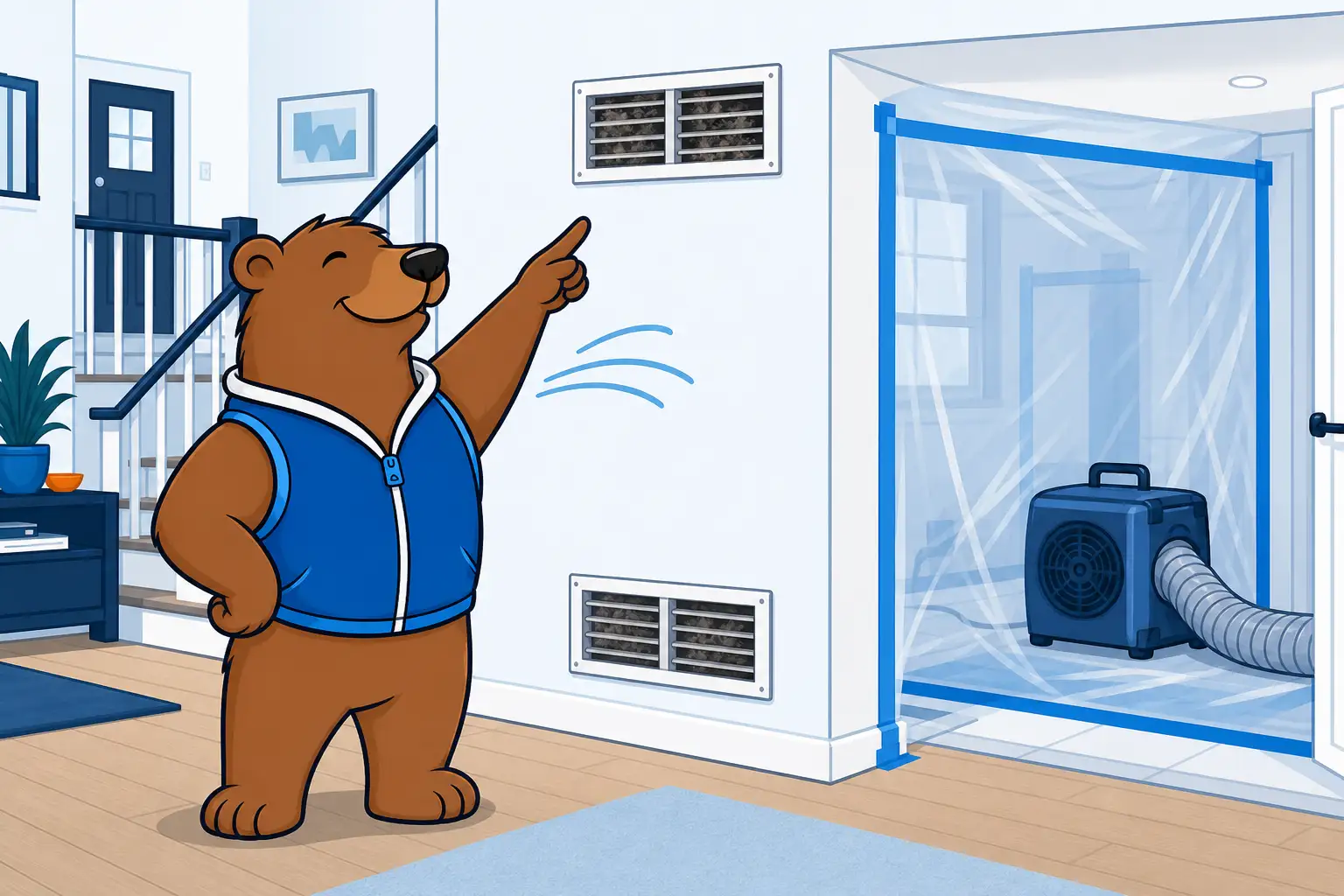
Post Renovation Duct Cleaning Nassau County Guide
Not every renovation needs duct cleaning. Learn when Nassau County homeowners should book, what is included, what costs extra, and when to wait.
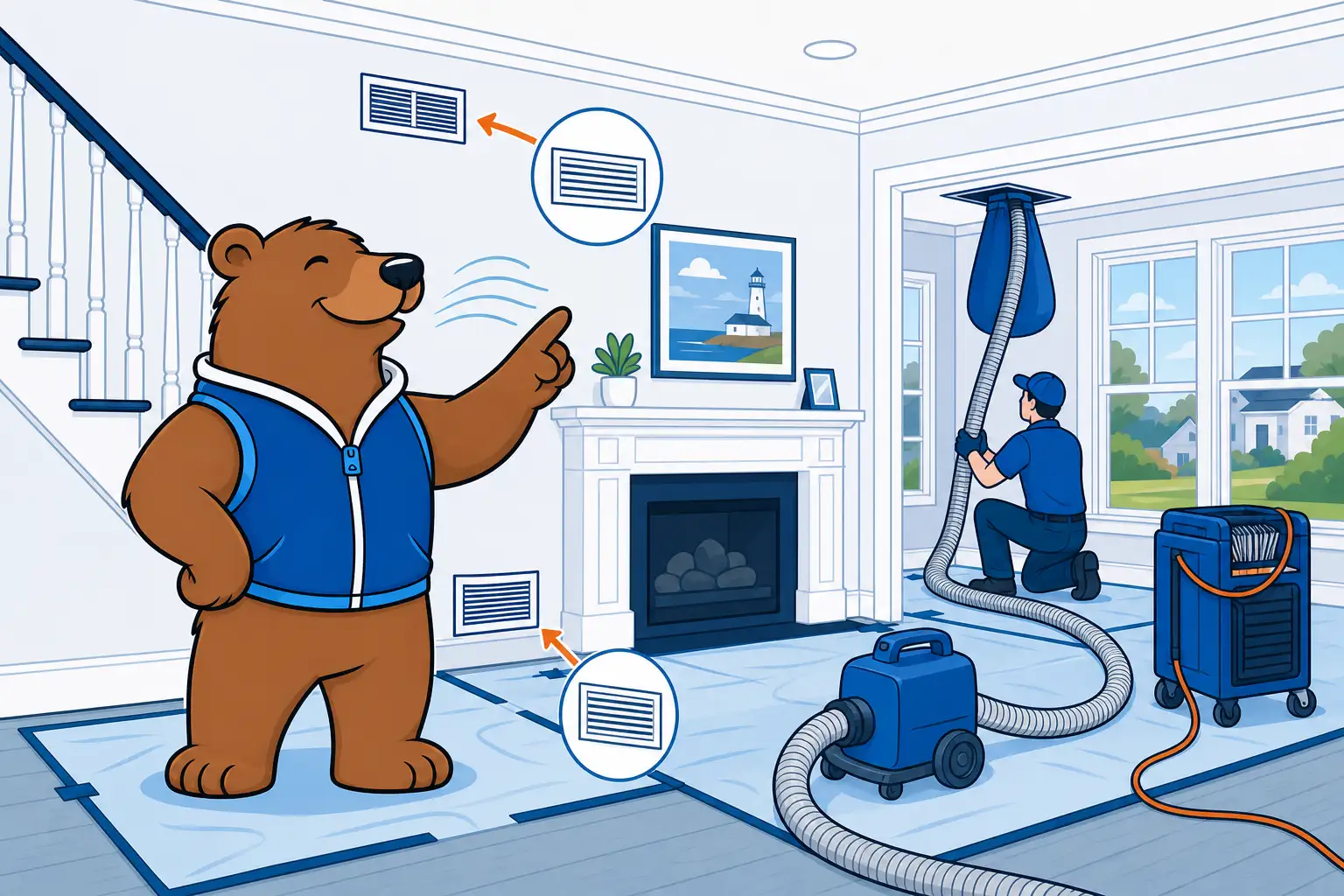
Professional Duct Cleaning Process Long Island: What Happens?
A no-surprises walkthrough of what happens during professional duct cleaning in Long Island homes, from booking and written quotes to equipment, cleanup, and verification.
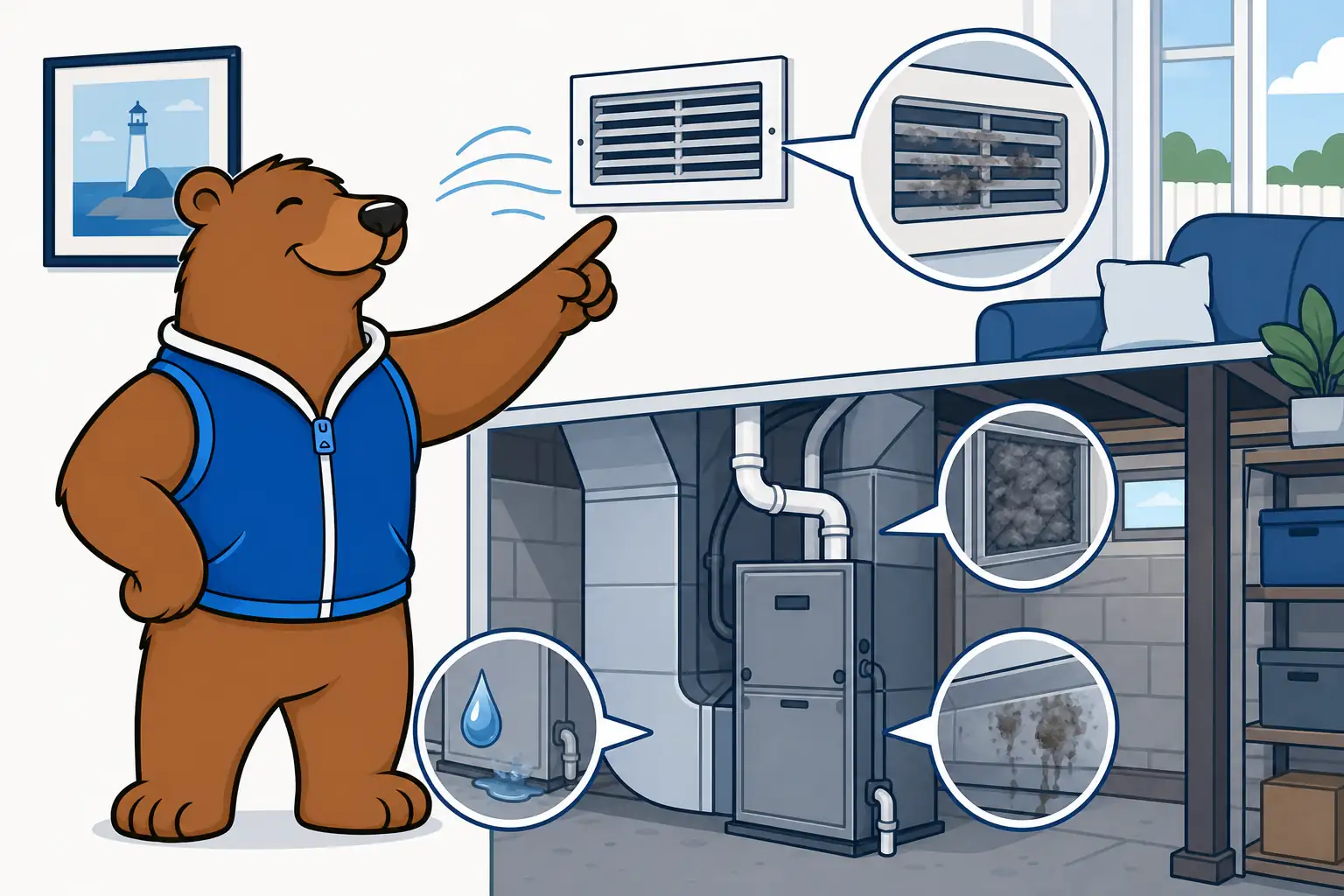
Signs of Mold in Air Ducts Suffolk County Homeowners Should Know
Musty vents do not always mean mold. Learn the real duct mold signs Suffolk County homeowners should check, common false alarms, and when to call a pro.