
How Long Does Air Duct Cleaning Take?
The Short Answer
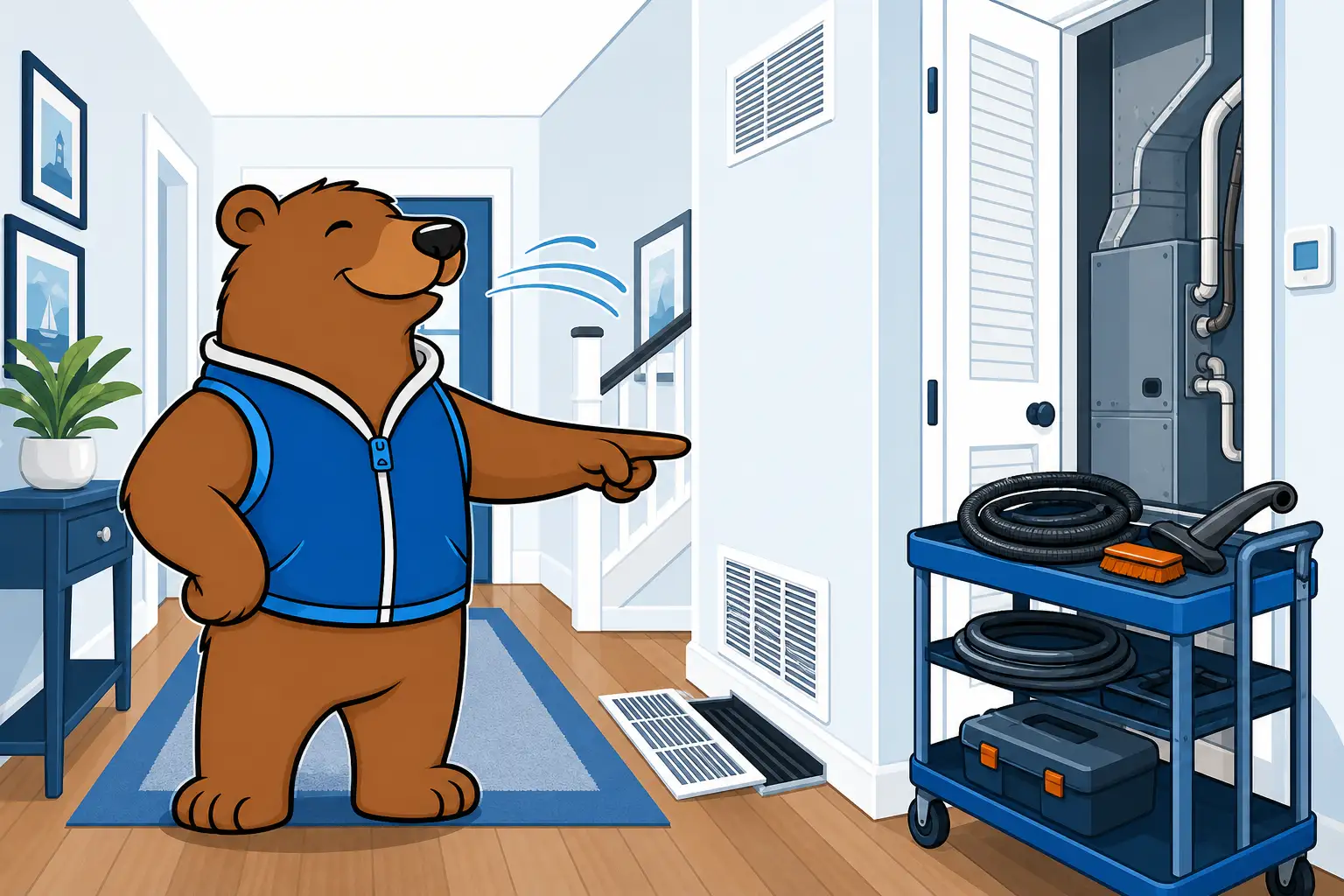
Most Long Island air duct cleaning appointments take 2 to 5 hours, depending on duct count, HVAC access, home layout, and whether there is a second system. A small condo may take about 1.5 to 2.5 hours, while a larger Colonial, Hi-ranch, or two-zone home can take 5 to 7 hours or more.
So, how long does air duct cleaning take?
For a Long Island home, air duct cleaning usually takes 2 to 5 hours in one visit. A small condo or slab home can be closer to 1.5 to 2.5 hours, while a larger Colonial, Hi-ranch, split-level, or home with a second HVAC system often needs 4 to 7 hours. The real answer depends on duct count, access, and scope.
A real duct cleaning appointment is not just a quick pass at the visible vents. Our technicians inspect the HVAC system, protect the work areas, connect negative-pressure equipment, clean supply ducts and return ducts, work through registers and grilles, address accessible trunk lines and branch lines, and clean up before the final review.
If a coupon promises a true whole-home job in one hour, ask what is actually included. A short visit can be legitimate for a very small system or an inspection-only appointment. It is not realistic for a full house in Massapequa, Levittown, Garden City, Smithtown, Commack, Huntington, Brookhaven, Islip, Hempstead, or Oyster Bay with many vents, returns, and zones.
We clean ducts because dirty ductwork keeps feeding dust back into the rooms. Our air duct cleaning service pulls built-up dust, lint, and loose debris out of the system, so your vents stop blowing that material across the home.
What are typical time ranges for Long Island homes?
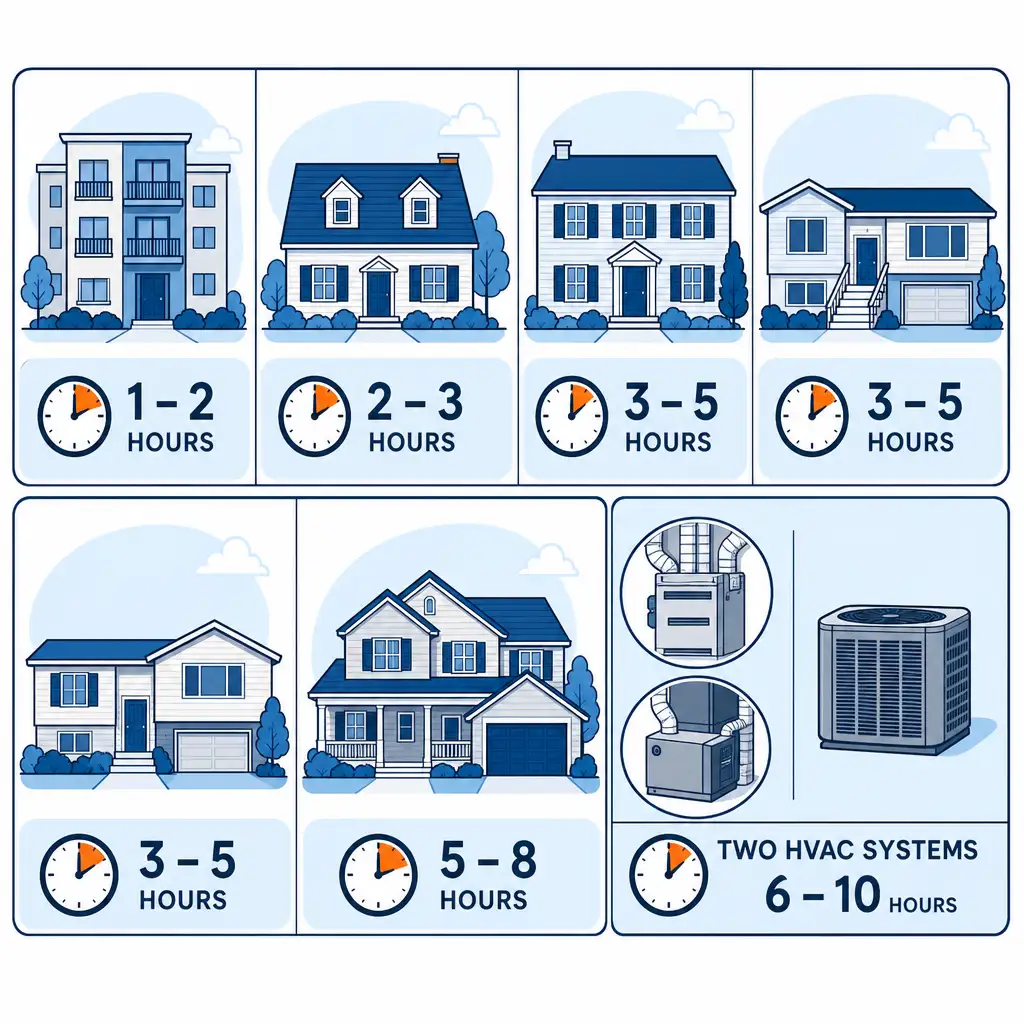
Most Long Island duct cleaning visits fit into a 2 to 5 hour window, but home style matters. A compact condo has fewer registers and shorter branch lines. A larger Nassau County or Suffolk County home with additions, finished spaces, and multiple zones has more work points and more equipment access issues, so the appointment runs longer.
Use this as a planning guide before you book:
| Home or system type | Common setup | Realistic appointment planning range |
|---|---|---|
| Small condo, apartment, or slab home | 1 HVAC system, low duct count | 1.5 to 2.5 hours |
| Cape, ranch, or small single-family home | 1 HVAC system, moderate duct count | 2 to 4 hours |
| Average Colonial, split-level, or Hi-ranch | 1 HVAC system, more supply and return points | 3 to 5 hours |
| Larger home or home with additions | 1 system, long runs or difficult access | 4 to 6 hours |
| Home with a second HVAC system | 2 systems, separate zones, more trunks | 5 to 7 hours or more |
| Post-renovation cleaning | Fine dust in ducts and returns | Add time for heavier debris and protection |
The number of vents matters, but it is not the only factor. Return ducts usually take longer than many homeowners expect because they move a lot of air and collect heavy dust. Trunk lines also take time because they are the main highways of the duct system.
A second HVAC system does not always double the appointment, but it adds a second set of supply ducts, return ducts, access points, and setup steps. If one air handler is in an attic and another furnace is in a basement, our crews plan extra time for safe movement and equipment staging.
What is usually included in a standard air duct cleaning appointment?
A standard duct cleaning appointment should include a system walkthrough, vent and register access, supply duct cleaning, return duct cleaning, negative-pressure collection, agitation with tools such as a rotary brush or air whip where appropriate, accessible trunk work, basic cleanup, and a final review. The exact scope should be explained before the work starts.
Here is what we expect to confirm before cleaning begins:
- Number of HVAC systems and zones
- Supply vents, return grilles, and overall duct count
- Air handler, furnace, or central air conditioning access
- Whether the evaporator coil or blower compartment is part of the requested scope
- Whether access panels are already present or need to be discussed
- Any signs of pests, visible mold-like growth, water damage, or heavy construction dust
The EPA says duct cleaning should be based on condition, such as visible mold, pests, or excessive debris, not a fixed calendar schedule. That matches our inspect-first approach. We do not tell every homeowner to clean ducts on a timer. We clean when the system shows it needs cleaning, and the EPA duct cleaning guidance supports that condition-based decision.
A standard air duct cleaning is different from HVAC maintenance. HVAC maintenance checks performance, refrigerant, electrical parts, filters, belts, drains, and equipment operation. Duct cleaning removes dust and debris from the duct system. If your system has mechanical trouble, such as weak cooling from a bad motor, that is an HVAC repair issue.
It is also different from dryer vent cleaning. Dryer vent cleaning clears lint from the dryer exhaust path, which is a separate fire-safety service. The NFPA advises cleaning the dryer lint filter and exhaust vent as part of clothes dryer safety, and we offer dryer vent cleaning as its own service.
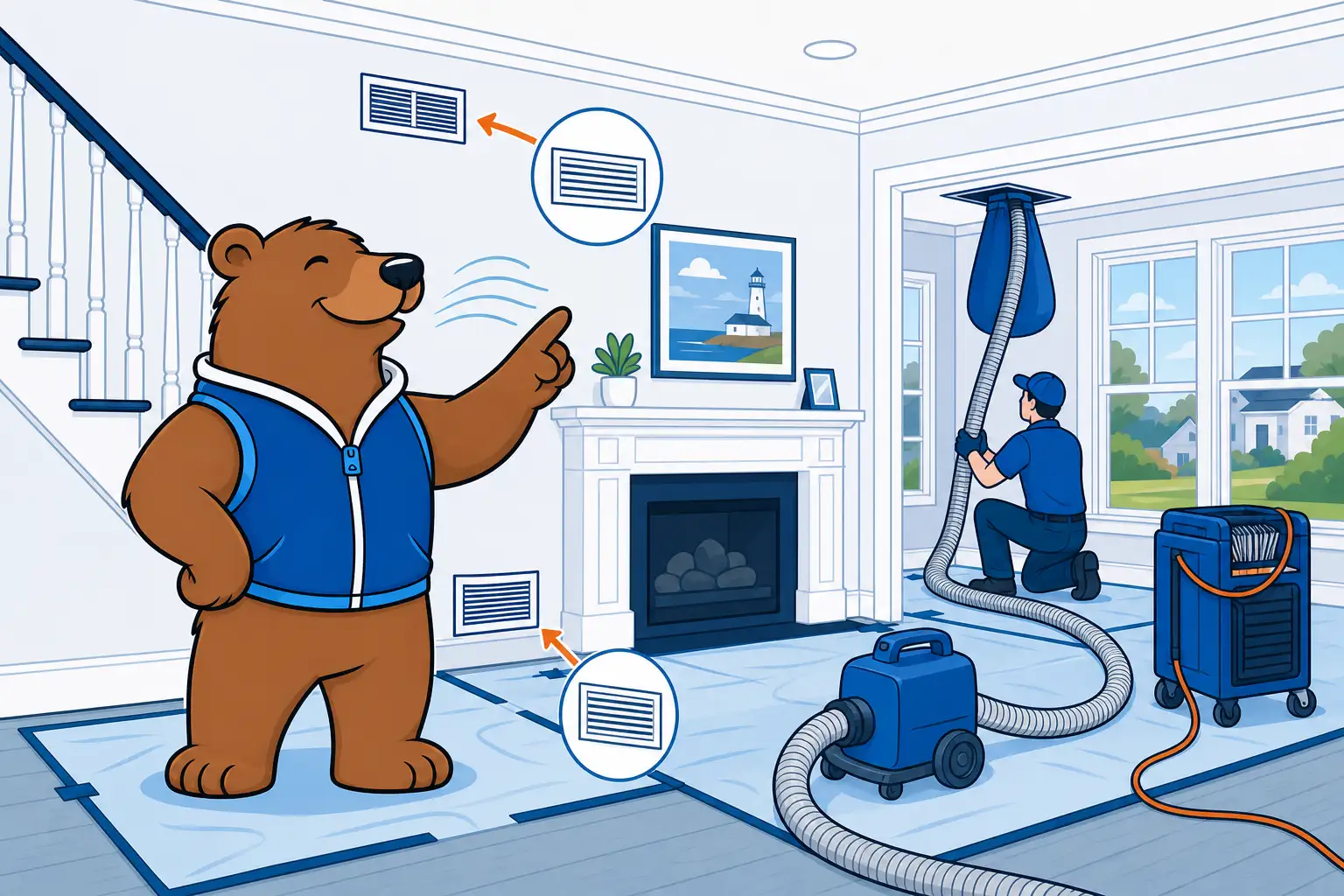
For a step-by-step look at the equipment and sequence, see our guide to the professional duct cleaning process on Long Island.
Where does the time actually go during the visit?
Most of the visit is spent on access, setup, source removal, and cleanup, not just the visible vent covers. The negative air machine or HEPA vacuum has to be positioned correctly, registers and grilles need attention room by room, and the supply and return sides need separate cleaning passes.
A typical visit breaks down like this:
| Step | What happens | Typical time impact |
|---|---|---|
| Walkthrough | Count vents, inspect access, confirm scope | 15 to 30 minutes |
| Protection and setup | Lay down protection, stage hoses, place vacuum equipment | 20 to 45 minutes |
| Register and grille work | Remove, clean, or access vent openings | 30 to 90 minutes |
| Supply duct cleaning | Agitate and collect dust from supply branches | 45 minutes to 2 hours |
| Return duct cleaning | Clean high-dust return pathways and grilles | 30 to 90 minutes |
| Trunk and access work | Reach main trunk lines and access panels as needed | 30 minutes to 2 hours |
| Air handler area review | Inspect accessible blower compartment area and nearby connections | 15 to 45 minutes |
| Cleanup and final check | Reinstall covers, remove equipment, review findings | 20 to 45 minutes |
Returns and trunk lines often take the most time because they carry larger air volume and gather heavier buildup. Branch lines can be quicker individually, but a house with many small rooms adds time because each vent requires access, tool changes, and protection.
Setup and cleanup are not wasted time. They keep the job controlled. Clean ducts move more air, and you feel the stronger airflow at the vents once the debris is out of the system and the covers are back in place.
Why do some Long Island jobs take longer than others?
Some homes take longer because the duct system is harder to reach, not because the crew is moving slowly. Older Nassau County and Suffolk County homes often have additions, tight closets, finished basements, attic air handlers, crawl space runs, and mixed duct materials. Each access challenge adds setup time and tool changes.
Common Long Island time extenders include:
- Finished basement ceilings that hide trunk lines
- Attic air handler access in summer heat or tight platforms
- Crawl space ductwork with limited working room
- Slab homes with unusual duct routing
- Older Capes and Colonials with additions from different decades
- Split-level and Hi-ranch layouts with separated zones
- Multiple returns far from the air handler
- Long branch lines to second-floor bedrooms
- Heavy post-renovation dust from sanding, tile work, or demolition
- Parking limits in dense areas of Queens, Brooklyn, Hempstead, and parts of western Nassau
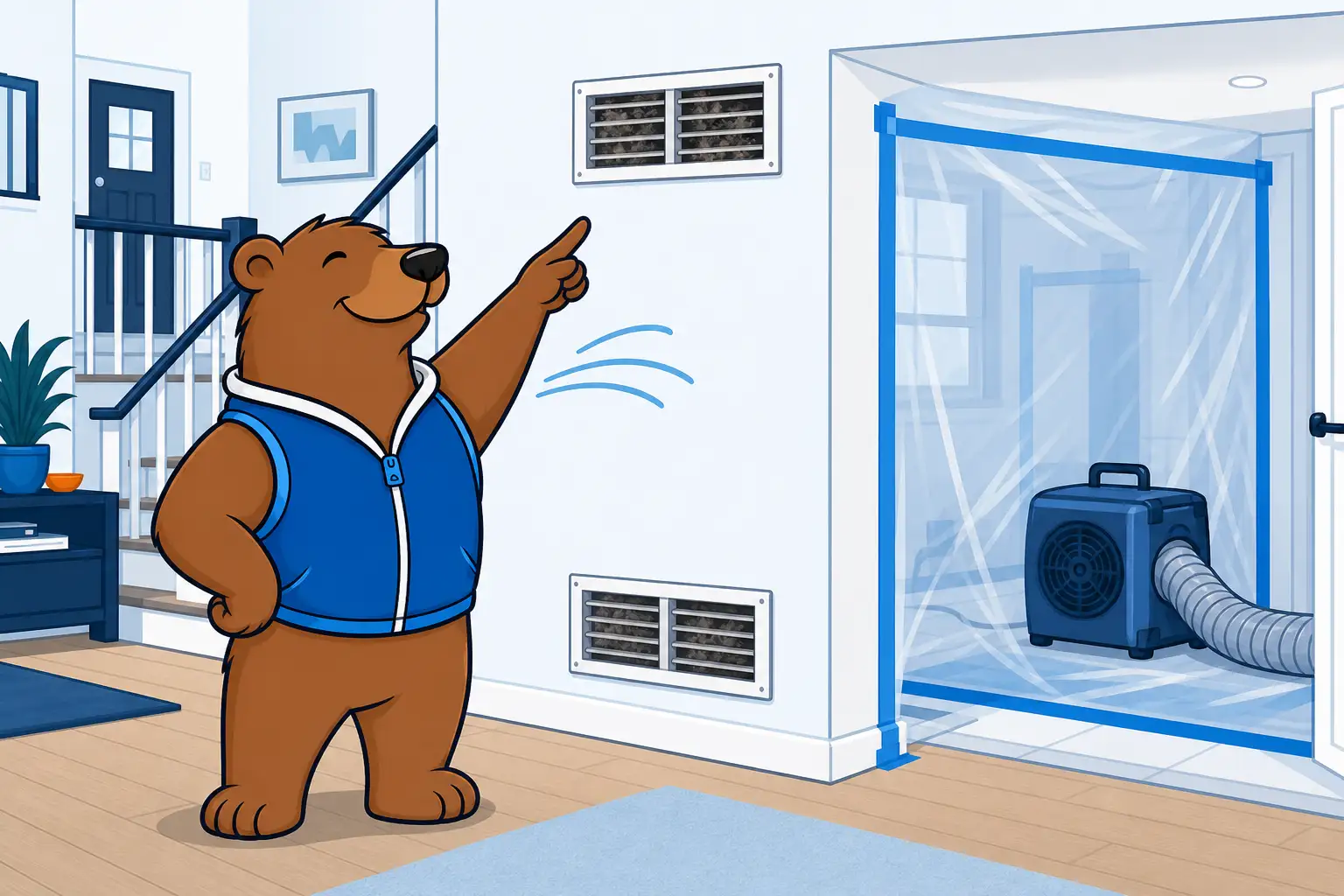
Post-renovation dust deserves special planning. Fine drywall and sanding dust settles into returns, grilles, and nearby duct openings. If you recently remodeled, our post-renovation duct cleaning guide for Nassau County explains why we look harder at return ducts, nearby trunk lines, and air handler protection.
Moving into a home is another good time to inspect. You do not always know how the previous owner handled filters, pets, renovations, or moisture. If the inspection shows buildup, cleaning before furniture is fully placed keeps the visit simpler.
Why are some advertised appointments so short?
Very short advertised appointments usually mean one of three things: the home is tiny, the visit is limited, or the coupon excludes major parts of the real duct system. A true whole-home cleaning needs enough time for supply ducts, return ducts, equipment setup, and cleanup. One hour is not enough for most Long Island single-family homes.
An advertised price is not automatically bad. The problem is when the ad hides the scope. A whole-house special should explain what the entry-level service includes, what counts as extra, and when the final price changes before work begins.
Our current air duct offer starts with a $97 whole-home basic cleaning. Based on our completed jobs from July 2026, the middle range for air duct cleaning ran from $196 to $650, with a median of $400 across 135 completed FreshBear and AirPros NY jobs. Bigger homes, heavy buildup, second systems, and add-ons push the total above the entry-level offer.
Legitimate scope changes include:
- Extra vents beyond the included duct count
- A second HVAC system or second zone
- Sanitizer, deodorizer, or mold-related treatment when appropriate
- Coil cleaning or blower compartment cleaning when requested and accessible
- Dryer vent cleaning as a separate service
- Difficult access, such as crawl spaces, attic units, or blocked mechanical rooms
- Heavy post-renovation dust or debris
Red flags include refusing to define the duct count, pushing sanitizer before inspection, skipping returns, avoiding the air handler area completely, or quoting a price that changes only after equipment is already inside. A clean quote should separate the advertised price from optional add-ons.
For deeper pricing detail, read our air duct cleaning cost guide for Nassau County.
How should you prepare so the appointment stays on schedule?
You do not need to leave the house during air duct cleaning, but we do need access to the rooms with vents, returns, and HVAC equipment. The heat or central air conditioning is turned off during active cleaning so our equipment controls airflow through the duct system instead of the HVAC blower.
Before we arrive, clear a few feet around registers, return grilles, and the air handler. Move small furniture, laundry baskets, toys, and storage bins away from vents. If you have pets, secure them in a closed room away from the work area or arrange for them to stay elsewhere during the noisy parts.
Driveway or curb access matters. Our crews bring hoses, vacuums, brushes, whips, tools, and protection materials. In dense streets in Queens, Brooklyn, Garden City, Hempstead, or apartment areas, a short walk from parking to the home adds time.
You can work from home during the appointment if you can handle intermittent noise. The negative air machine, HEPA vacuum, rotary brush, and air whip are not silent. If you have calls scheduled, pick a room away from the air handler and tell our technicians which room needs quiet first.
For scheduling expectations, our analyzed booking data from 331 jobs showed a median of 4 days from booking to visit, with an average of 5.5 days. In that same group, 22 visits happened the same day and 46 happened the next day. Arrival windows are 3 hours, and 8:00 to 11:00 AM is the most requested window, so early appointments fill faster.
For an appointment, call 631-900-2634 from 8 AM to 7 PM ET, or schedule your visit online anytime.
Can air duct cleaning be done in one visit?
Yes, most air duct cleaning is completed in one visit when the duct system is accessible and the scope is clear. Bigger homes, suspected mold, heavy debris, or multiple HVAC systems can still be handled in one appointment, but we schedule more time so the crew is not rushed.
We recommend booking extra time when:
- You just finished renovation work
- You are moving into a home before unpacking
- You have two HVAC systems or many zones
- You see debris blowing from vents
- You smell musty odors near registers or returns
- You see visible mold-like growth around ducts or equipment
- The air handler is in an attic or crawl space
- The basement is finished and duct access is limited
If mold is suspected, we slow down and inspect carefully. Duct cleaning removes loose dust and debris, but mold-related work has to match the source and material. If moisture is still entering the system, cleaning alone does not fix that moisture problem. The cause must be corrected.
This is also where National Air Duct Cleaners Association expectations are useful as a comparison point. Ask any company how they create negative pressure, how they agitate duct surfaces, and whether both supply and return sides are included. Those answers tell you more than the coupon headline.
What questions should you ask before accepting a coupon or price?
Before accepting a duct cleaning coupon, ask questions that tie price to time, scope, and system size. A fair quote should explain the included duct count, number of HVAC systems, return cleaning, access needs, add-ons, and proof of work. If the answers are vague, the appointment is likely to grow in price or shrink in quality.
Use this buyer checklist:
- How many supply vents and return grilles are included?
- Does the price cover one HVAC system or more than one?
- Are return ducts included, or only supply vents?
- Is the air handler area inspected before cleaning starts?
- Will a negative air machine or HEPA vacuum be used?
- What agitation tools are used, such as a rotary brush or air whip?
- Are trunk lines and branch lines addressed within the quoted scope?
- What changes the appointment length?
- Which add-ons are optional, and which are required by the condition of the system?
- Will I see what was found before approving extra work?
A real quote should survive those questions. We would rather inspect first and explain the scope than sell a rushed visit that does not match the home. Clean ducts move more air, collect less loose debris, and stop feeding old dust back through the registers. The appointment takes the time needed to do that work correctly.
Frequently Asked Questions
A one-hour visit is only realistic for a very small system, a limited service, or an inspection. Most Long Island single-family homes need more time because the crew has to set up negative-pressure equipment, clean supply and return sides, work through registers and grilles, and review the system before leaving.
Written by
MikeField Technician
Mike is a field technician at FreshBear. He cleans dryer vents, air ducts, and chimneys in Long Island homes, so the guides under his name come from the jobs he runs: what a vent line actually looks like when it comes apart, and what he finds behind the dryer. Everything published under his byline is checked against that first-hand experience.
Keep Reading
Post Renovation Duct Cleaning Nassau County Guide
Not every renovation needs duct cleaning. Learn when Nassau County homeowners should book, what is included, what costs extra, and when to wait.

Duct Cleaning Before Moving In Long Island Homes: Should You?
Moving into a Long Island home? Here is when duct cleaning is worth doing before furniture arrives, when it can wait, and how to book it without surprises.
Professional Duct Cleaning Process Long Island: What Happens?
A no-surprises walkthrough of what happens during professional duct cleaning in Long Island homes, from booking and written quotes to equipment, cleanup, and verification.